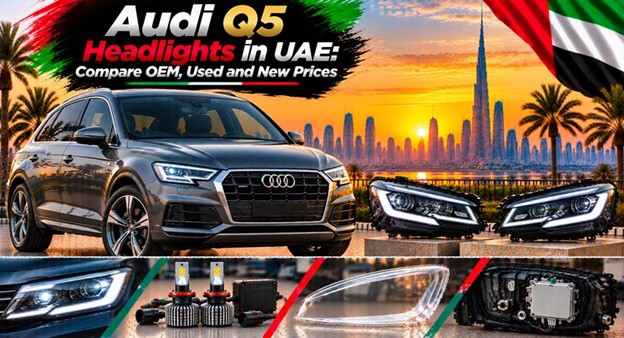
Audi Q5 Headlights in UAE: Compare OEM, Used and New Prices
October 23, 2026
An Audi Q5 headlight is a small piece of engineering with a surprisingly large bill attached to it. Behind that sculpted lens sit reflectors or projector optics, lighting electronics, adjustment mechanisms and, on some versions, adaptive or Matrix LED technology. Replace the wrong assembly and the mounting screws might line up, yet the electronics, beam pattern or lighting functions may not. That is the trap when comparing Audi Q5 headlights in UAE: two lamps can look almost identical in a photograph and still be wrong for the same model year.
The sensible approach is to identify the lighting system first, then compare genuine, aftermarket and used prices on equal terms. Otherwise, the cheapest advert is just a number.
A headlight is an optical system, not a plastic shell
Look at an Audi Q5 headlamp from the front and the lens dominates the view. Turn it over, though, and the real complexity starts to show: connectors, mounting points, ventilation arrangements, adjustment mechanisms and, depending on specification, electronic control equipment.
The assembly must do more than switch on. It needs to distribute light correctly, keep the beam aligned, withstand vibration and resist moisture entering the housing. Advanced versions also manage lighting functions that a basic replacement may not support.
That explains why a complete headlamp can cost far more than a bulb or a small repair part. You're buying a coordinated unit, not simply a clear cover with a bright light behind it.
And no, a matching shape is not enough. The internal design and vehicle specification matter just as much.
The first price comparison: what is actually available in the UAE?
The following are advertised UAE-facing prices checked on 12 October 2026. They relate to different generations, conditions and lighting specifications, so they should not be treated as direct substitutes.
| Advertised Audi Q5 headlight | Price shown | Condition and qualification |
|---|---|---|
| Left full-LED headlamp, reference 80A941035E, selected 2021–2023 Q5/SQ5 application | AED 3,499 | Listed as new; seller describes it as European-spec, left-hand-drive equipment |
| Right full-LED headlamp, reference 80A941034A, selected 2018–2020 application | AED 2,500 | Listed as used; stated origin Mexico |
| Left LED headlamp, reference 80A941033F, 2021 onwards | AED 2,350 | UAE-facing retail listing; confirm exact version and current stock |
| DEPO right xenon headlamp, 8R0941030, selected 2009–2012 application | US$93 | Listed by a Sharjah supplier; price is in US dollars, not AED |
| DEPO left headlamp, 80A941043 / 80A941043FF, listed for selected 2018–2024 applications | US$275 | UAE supplier listing; verify the exact lighting type and vehicle fitment |
The AED listings come from UAE-facing parts retailers, while the DEPO prices are displayed in US dollars by a supplier based in Sharjah. Advertised availability can change, and none of these prices should be assumed to include fitting, delivery or every required electronic part.
The first lesson is already clear: a price only becomes useful when the part number, side, condition and lighting technology are known.
How the Q5's generations change the job
The first-generation Q5, commonly identified by the 8R platform, arrived in 2008. The second generation, commonly identified as FY, followed for the 2018 model year in many markets. Later cars brought further lighting and equipment variations, including LED and Matrix LED options.
That broad split helps you begin a search, but it cannot finish the fitment check. The Q5's model year, facelift status, original market, trim and installed lighting package can all affect which assembly is correct.
A listing that says “Q5 2018 onwards” is therefore a broad sales description, not a guarantee. It may cover selected versions only, or the seller may be using a part number associated with one configuration while the title suggests wider compatibility.
Start with the chassis generation. Then narrow the search using the VIN and the number on the existing lamp. That's how you move from a plausible-looking part to a defensible purchase.
Halogen, xenon, LED and Matrix LED: four different propositions
Not every Audi Q5 uses the same lighting technology. Earlier cars may have halogen or xenon systems depending on specification, while later versions can use LED headlamps, with Matrix LED available on selected trims and markets.
The difference isn't merely brightness. Xenon systems use a gas-discharge light source and associated electronics; LED systems use semiconductor light sources and their own control arrangements. Matrix LED adds more sophisticated control over portions of the beam, subject to the vehicle's equipment and operating conditions.
These systems are not interchangeable just because the housing looks similar. A lamp designed for one arrangement may lack the optics, electronics or functions required by another.
Before shopping, check which system your car actually has. If you're unsure, the original part number and a VIN-based parts lookup are better evidence than a seller's guess from a photograph.
The 8R generation: why an older Q5 can still be expensive to repair
The original Q5's 8R platform spans several years and equipment changes. For selected 2009–2012 applications, a Sharjah supplier advertises a DEPO right xenon headlamp under reference 8R0941030 for US$93. The listing identifies the part as a right-hand lamp and names DEPO as the manufacturer.
That is a useful lead for owners of an earlier Q5, but don't read it as a universal price for every 8R headlight. The listing specifies a particular application, and the price is in US dollars despite the seller being based in the UAE.
Check the existing lamp's number, whether the car has xenon lighting and whether the replacement includes the necessary equipment. Ask about stock, VAT, delivery and warranty before ordering.
Older does not automatically mean simple. A used or aftermarket assembly still needs to match the car's exact setup.
The 2013–2017 Q5: check the facelift and the lighting package
The later years of the first-generation Q5 bring another reason to avoid broad year filters. Facelift styling, equipment levels and lighting specifications can change which assembly you need, even when the car's overall shape remains familiar.
A headlight listed for a 2009–2012 xenon model should not be assumed to fit a 2015 or 2016 car. Equally, the fact that a seller advertises a part for “Q5 2009–2017” does not establish that it covers every version across those years.
Find the part number on the original unit if possible. If the lamp has already been replaced, check the number against the VIN rather than blindly copying a reference from a potentially incorrect previous repair.
The distinction is particularly important when buying used. A genuine Audi lamp can still be the wrong genuine Audi lamp for your vehicle.
The 2018 transition: a new generation, not just a new year
The second-generation Q5 arrived around the 2018 model year in many markets. That change matters because the new body and lighting architecture brought different headlamp references from the earlier 8R platform.
A UAE supplier lists a DEPO left headlamp under 80A941043 / 80A941043FF, advertising it for selected 2018–2024 Q5 applications at US$275. The listing identifies the part as a left-hand xenon headlamp, although the broad year range should be checked carefully against the exact car.
Do not take “2018 onwards” literally without checking the specification. Model-year boundaries and equipment changes can make broad catalogue descriptions misleading, especially when the vehicle was imported from another market.
Ask the supplier to confirm the complete reference against your VIN and to state exactly what is included. A price is only worth comparing after fitment has been established.
What Matrix LED changes
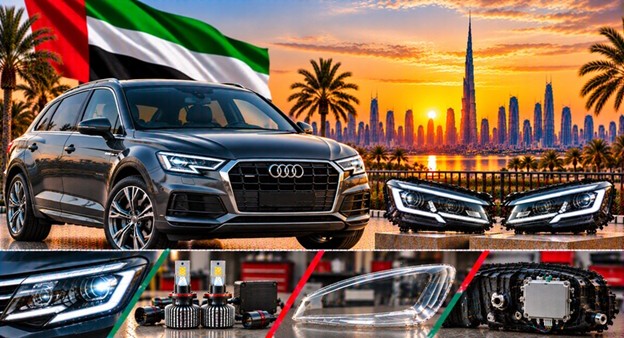
Matrix LED headlamps can selectively manage parts of the light distribution, rather than relying only on a conventional fixed beam. The precise functions vary with the Audi's equipment and market specification, but the underlying point is straightforward: the assembly is more than a set of LEDs inside a housing.
Audi parts catalogues distinguish standard LED and Matrix LED applications for selected 2021–2025 Q5 models. For example, the catalogue lists 80A-941-773-F for a left-side LED assembly without Matrix Beam and 80A-941-783-E for a left-side assembly with Matrix Beam. The corresponding right-side references are 80A-941-774-F and 80A-941-784-E.
Those are specific catalogue references, not universal fitment numbers for every Q5 sold in the UAE.
If your vehicle has Matrix LED, tell the seller explicitly. Do not substitute a standard LED unit without verified compatibility, and do not assume the car's advanced functions will work simply because the replacement illuminates.
Why the part-number suffix matters
Audi part numbers often contain a main reference followed by a letter suffix. That suffix can identify a revision or a different application, and catalogue records may show one number replacing another.
For example, the genuine Audi parts listing identifies 80A-941-773-F as replacing 80A-941-033-H for specified LED headlamp applications. That is a documented replacement relationship for the listed application, not permission to swap any similar-looking number.
A seller may tell you that a number is “the same part” because the housing appears identical. Ask for the basis of that claim. Is it an official supersession, a verified interchange or simply a visual comparison?
If the part is being imported or bought used, get the fitment confirmation in writing. This is especially worthwhile when the lamp is expensive or return shipping will be awkward. One letter can matter; so can the equipment behind it.
Genuine Audi, OEM and aftermarket: what are you comparing?
The terms are often used interchangeably in adverts, but they do not necessarily mean the same thing.
- Genuine Audi: supplied as an Audi-branded original part, with provenance that can be checked.
- OEM: a term sellers use in different ways. Ask whether they mean genuine Audi, an original-equipment supplier's product or a replacement described as OEM quality.
- Aftermarket: a replacement produced outside Audi's branded parts range. Quality and specification depend on the maker and the particular product.
- Used genuine: an original assembly removed from another vehicle, with condition and remaining service life to assess.
- Reconditioned: a repaired or refurbished unit whose actual work needs to be explained.
DEPO, for example, is named as the manufacturer in the Sharjah supplier's listings for selected Q5 headlamps. That is more useful than an anonymous “premium quality” claim, although the exact fitment still needs to be verified.
Don't pay a genuine-part premium because a seller has typed “OEM” into a title. Ask for the manufacturer, part number, condition and warranty, then make the comparison.
The new genuine LED price can climb quickly
For selected 2021–2023 Audi Q5 and SQ5 applications, a UAE parts retailer lists a new left full-LED headlamp, reference 80A941035E, at AED 3,499. The seller describes it as a European-specification unit for left-hand-drive vehicles.
That last detail deserves attention. A European-specification lamp is not automatically the correct choice for every Q5 in the UAE, particularly if the vehicle was supplied for another market or carries a different lighting package. The part number and vehicle configuration still need to be checked.
Also, AED 3,499 is an advertised parts price, not a fitted quotation. Confirm whether the assembly includes the required electronics, whether delivery is extra, and what warranty applies. If the supplier says it is new, ask for the packaging and part label to match the invoice.
A large bill is not proof of a correct part. Verification still comes first.
Used OEM: the attraction is obvious, the condition is the catch
A used headlamp can be an attractive alternative when a new genuine assembly costs several thousand dirhams. One UAE-facing listing offers a right full-LED headlight, reference 80A941034A, for selected 2018–2020 Q5 applications at AED 2,500. The listing describes it as used and gives Mexico as its origin.
The saving against a new unit is substantial on paper. But what condition is the actual lamp in? Has it been tested? Are the mounting tabs intact? Is there any moisture inside the housing? Are the control electronics included, and does the seller offer a usable warranty?
Ask for clear photographs of the exact item, including the rear label and connectors. A stock image won't show whether a tab has snapped off or the casing has been repaired.
Used genuine is a category, not a quality grade. Inspect the item and establish the return terms before paying.
A new aftermarket lamp can be the middle ground
A reputable aftermarket assembly may offer a lower purchase price than a new genuine Audi unit while avoiding some of the uncertainty attached to used parts. But the manufacturer, exact application and supplied equipment matter.
The DEPO listings provide examples for selected Q5 applications: a right xenon headlamp for the 2009–2012 generation is advertised at US$93, while a left headlamp listed for selected 2018–2024 applications is US$275. Both prices are shown in US dollars by a Sharjah-based supplier.
These prices are not directly comparable with the AED 3,499 new full-LED listing. They cover different generations and lighting specifications, and the newer listing's exact application requires confirmation.
Ask whether the replacement includes bulbs, adjustment mechanisms and any required electronics. Also check the warranty and return policy. A well-matched aftermarket unit can be a sensible purchase; an incomplete one may erase the saving.
One side or both? The optics of buying a pair
If only the left headlamp has been damaged and the right one remains in good condition, replacing one side may be perfectly reasonable. There is no automatic rule that both assemblies must be replaced together.
However, if the existing pair has aged unevenly, one lens is badly faded or both units have suffered damage, a matched pair may be worth considering. The choice depends on condition, specification and total price, not on a blanket recommendation from a seller.
Check the unit being quoted. Is it a single assembly, a pair, or a headlamp sold without its electronic modules? The UAE listings cited here identify individual left or right units, so the advertised price should not be mistaken for a pair price.
If you need both sides, ask for both part numbers and a complete quotation. Don't assume left and right assemblies share the same price or equipment.
Can you replace just the lens?
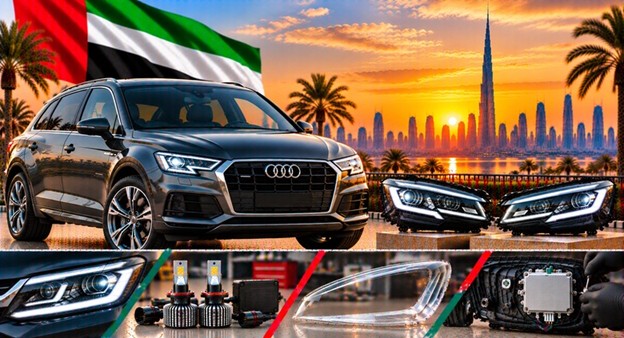
Sometimes. If the lens is cloudy or damaged while the housing, optics and electronics remain sound, a lens repair or replacement may cost less than changing the entire assembly.
But opening a headlamp is not a casual cosmetic job. The unit must be sealed correctly afterwards, or moisture may enter and cause further trouble. On an advanced LED or Matrix LED assembly, internal damage or failed electronics can make lens-only work poor value even if the outer cover looks like the main problem.
Ask a specialist to inspect the lamp before ordering anything. Surface haze may be suitable for restoration; a cracked housing, damaged internal optics or water reaching electronic parts changes the calculation.
A complete assembly is not always necessary. Nor is lens repair always the clever bargain. The fault determines the answer.
When the light fails, diagnose before replacing
A headlamp that flickers, stops working or displays a warning does not automatically need a new assembly. Depending on the version, possible causes include a failed bulb or light source, a control module, a connector, damaged wiring or a fault elsewhere in the electrical supply.
Start by reproducing the symptom and checking the relevant circuit. A technician may need diagnostic equipment to identify faults in the vehicle's lighting system, particularly where the assembly has electronic controls. Only after testing should the workshop decide whether to replace a bulb, repair wiring, change a module or fit a complete headlamp.
This distinction matters financially. Replacing a complete Matrix LED assembly to solve a connector fault is a costly way to avoid diagnosis.
If a workshop recommends a full unit, ask which test established that the assembly itself has failed. A clear explanation is reasonable, and it can prevent an expensive parts swap that doesn't fix the problem.
What UAE heat and dust can do to a headlamp
Long hours in direct sunlight, dusty roads and repeated heating and cooling can put an ageing headlamp under strain. The outer lens may haze, seals may deteriorate and a previously damaged housing may allow moisture inside.
But the symptoms need separating. A dull outer surface may be a restoration candidate; condensation inside the lens points towards a different set of possible causes. A warning message or failed light function could be electrical rather than environmental.
If your Q5 is regularly parked outside in Dubai, Abu Dhabi or Sharjah, inspect the lights periodically, especially after an impact or a previous repair. Look for cracks, water droplets, uneven beam output and loose mounting points.
Don't replace a lamp merely because the lens looks old. Have the fault assessed and ask whether restoration, resealing or a specific electrical repair is appropriate. Climate can aggravate a weakness, but it doesn't identify the failed part by itself.
The hidden costs: fitting, alignment and electronics
The price of the assembly is only one part of the repair bill. Depending on the Q5 version and the damage, the workshop may need to remove surrounding trim or the bumper cover, transfer specified parts, inspect connectors, carry out diagnostic checks and align the headlamp.
Some repairs may require additional adaptation or calibration, but don't assume every Q5 needs coding simply because the headlamp has been replaced. The requirement depends on the vehicle and the parts involved. Ask the workshop to confirm it for your exact application.
Request an itemised quotation covering:
- The assembly and any separate modules or fittings.
- Delivery and VAT treatment.
- Labour and any surrounding damage.
- Diagnostic work or adaptation, if required.
- Final beam alignment and function testing.
A quote that simply says “headlight replacement” leaves too much unanswered. Get the details before the old lamp comes out, particularly if the vehicle has been damaged in a collision.
What a workshop should inspect after an impact
A broken headlamp can be the most obvious sign of front-end damage, but it may not be the only one. An impact can crack mounting brackets, distort the surrounding panel, damage the bumper cover or pull on wiring.
If the replacement is fitted to a damaged mounting point, it may sit unevenly or fail to hold its alignment. The lamp itself could be perfectly correct, yet the finished repair would still look wrong.
Have the workshop inspect the mounting tabs and adjacent structure before ordering the assembly. If more damage appears during dismantling, ask for photographs and an updated estimate before approving extra work.
For insurance repairs, keep the original damage photographs, part details and invoices, and follow the insurer's approval process. A clear record helps establish what was replaced and why.
Check the beam pattern and traffic specification
A headlamp that fits the bodywork is not necessarily suitable for the car's original market. Beam distribution can vary according to the lighting specification, so an assembly sourced from another country needs more than a visual compatibility check.
This is particularly relevant when buying a used European-specification lamp or importing a part from a vehicle originally built for another market. The UAE drives on the right-hand side of the road, but the steering position and the lamp's beam pattern are separate questions.
Ask the seller to identify the market specification and have the beam checked after installation. Confirm that the replacement is suitable for the vehicle's intended use in the UAE.
Don't rely on a statement such as “fits all Q5 models”. The right part must fit physically, support the required functions and produce an appropriate beam.
How to inspect a used Audi Q5 headlight
A used assembly deserves a closer look than a new boxed part. Ask for photographs of the actual unit, not generic product images, and make sure the seller shows the front lens, rear casing, mounting tabs, connectors and part-number label.
Look for cracks, cloudy patches, moisture marks, damaged brackets and evidence that the housing has been opened or resealed. If the assembly has electronic modules, establish whether they are included and whether the seller has tested the functions before removal.
Then check the warranty. A short written warranty with clear terms can be more useful than a vague assurance that the part is “tested”. Ask what happens if it arrives damaged or proves incompatible after the number has been checked.
If you can inspect the lamp in person, do so before paying. A photograph can hide a broken mounting ear; a seller's description can leave out a missing module. The actual part tells you more.
What does “reconditioned” really mean?
It could mean a lens has been polished, a cracked section repaired, seals renewed, an electronic module replaced or the entire assembly tested. Those are very different levels of work, yet listings sometimes use the same word for all of them.
Ask for specifics. Was the housing opened? Were the seals replaced? Have the internal optics been inspected? If an electronic part was changed, which part was it, and was the lamp tested afterwards?
For a Q5 with advanced LED or Matrix LED lighting, a cosmetic refurbishment will not necessarily fix an internal electrical fault. Equally, an assembly with a sound housing and a properly documented repair may be worth considering if the price and warranty make sense.
Do not pay a premium for “reconditioned” without knowing what was done. The seller should be able to explain the work and state what the warranty covers. If the answers are vague, compare the offer with a new aftermarket unit instead.
Buying from Sharjah, Dubai or another emirate
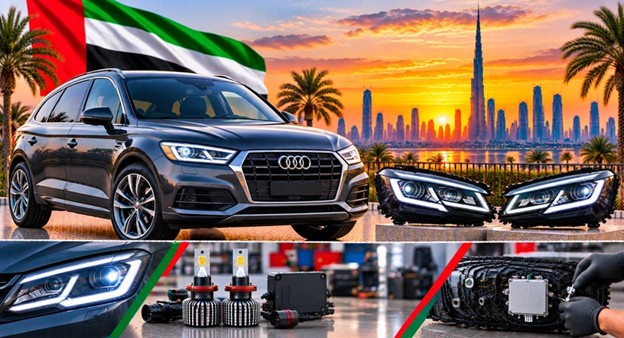
UAE parts suppliers can be useful sources for both new aftermarket and used genuine Audi parts. A retailer's location, however, does not guarantee that the correct Q5 headlamp is in stock today.
For example, the Sharjah-based Beta Auto Spare Parts Centre lists selected DEPO Q5 headlamps and provides a local contact route. Its listings are useful leads for enquiries, but you still need to confirm the exact reference, current availability and the displayed US-dollar price.
Before travelling from Dubai, Abu Dhabi, Ajman, Al Ain or elsewhere, send the seller your VIN and part number. Ask for a photograph of the actual unit and written confirmation of the condition and return terms.
If delivery is arranged, confirm who pays for it and what happens if the lamp arrives damaged. Keep the packaging until the part has been checked. A trip across the UAE is inconvenient; returning the wrong expensive headlamp is worse.
Importing a headlight: calculate the landed cost
An overseas catalogue or marketplace can reveal part numbers that are difficult to find locally, but the advertised price is not the full cost of ownership. International shipping, applicable import charges, delivery, VAT treatment and warranty handling may all affect the final amount.
The same caution applies to prices displayed in US dollars by a UAE-based supplier. Currency matters. Don't treat US$275 as AED 275, and don't convert it mentally without checking the supplier's actual payment and delivery terms.
Before ordering from abroad, ask for a written estimate of the delivered cost and a realistic arrival window. Check the return address, who pays return shipping and whether the seller will accept a return if the part is incompatible despite the supplied fitment information.
For a car already waiting at a workshop, a slightly more expensive locally available part may be worth considering if it avoids a lengthy delay. Compare the full transaction, not just the catalogue figure.
Genuine versus aftermarket: which gives better value over time?
A genuine Audi assembly may offer a straightforward route to the original specification, provided the reference is correct. Its disadvantages can include a high purchase price and the cost of replacing a complete unit when only one part has failed.
Aftermarket products can reduce the initial outlay, but their quality, fit and supplied equipment vary. A used genuine lamp may retain the original design at a lower price, yet its age and condition are unknown unless the seller provides evidence.
Think about the length of time you intend to keep the car, the warranty, the condition of the existing lamp and the cost of repeating the job if the replacement fails. For a newer Q5 with Matrix LED, preserving the correct lighting functions may justify spending more on a verified assembly. For an older vehicle, a suitable aftermarket replacement could be more proportionate.
There is no universal winner. The best value is the correctly specified part that solves the fault, works as intended and comes with terms you can rely on.
Build a realistic fitted-cost estimate
A sensible budget should separate the assembly, installation and any additional work. Avoid treating the advertised part price as the final bill.
| Cost item | What to confirm |
|---|---|
| Headlamp | Exact reference, side, technology and condition |
| Electronics and fittings | Whether required modules, brackets, bulbs and adjusters are included |
| Delivery | Local delivery or international shipping |
| VAT and import charges | Whether included or payable separately |
| Labour | Fitting and any required bumper or trim removal |
| Diagnostics and adaptation | Only where needed for the specific vehicle |
| Alignment | Confirmation that the beam will be checked and adjusted |
| Warranty | Coverage, duration and return conditions |
For reference, the UAE listings reviewed include AED 3,499 for a new left full-LED assembly and AED 2,500 for a used right full-LED assembly, each for a stated application. Those prices cannot be compared as though they describe the same side, condition and specification.
Ask a workshop to quote for your VIN and chosen part number. That gives you a usable figure rather than a guess.
A sourcing checklist for Audi Q5 owners
Before you pay, send every supplier the same information: VIN, model year, chassis generation if known, original part number, side required and lighting type. Ask for a written confirmation of fitment and a clear description of the item being sold.
When comparing offers through PartFinder UAE or contacting suppliers directly, keep genuine, aftermarket and used options separate. Ask each seller to state whether the part is complete, whether electronic modules are included and whether the advertised price covers delivery and VAT.
For used parts, request photographs of the actual assembly and establish the warranty before payment. For a new genuine unit, check the part number and packaging against the invoice. For aftermarket parts, identify the manufacturer rather than relying on an “OEM quality” claim.
Finally, confirm the return process. A low price is useful only if the supplier can deliver the correct part and stand behind what was sold.
The final decision: what should you buy?
The right choice depends on what has failed and what your Q5 needs.
- Choose new genuine Audi when you want the original-brand part and can verify the exact specification and provenance.
- Consider new aftermarket when the manufacturer is identifiable, fitment is confirmed and the warranty is worthwhile.
- Consider used genuine when the assembly is inspected, the electronics are accounted for and the seller offers clear return terms.
- Consider repair or refurbishment when the housing and optics remain suitable and the fault can be repaired reliably.
- Avoid any option where the seller cannot confirm the part number, side, lighting system or condition.
If the headlamp has stopped working, establish whether the assembly itself has failed before buying a replacement. If it is damaged beyond repair, get a VIN-based quotation and compare equivalent parts.
That is the difference between buying a headlight and solving the problem.
UAE Update Reference: October 2026
The UAE-facing listings checked on 12 October 2026 provide several concrete price references, but they do not establish a single market-wide price for Audi Q5 headlights.
| Listing checked | Advertised price | Evidence limitation |
|---|---|---|
| New left full-LED assembly, 80A941035E, selected 2021–2023 Q5/SQ5 | AED 3,499 | Seller identifies European-specification, left-hand-drive fitment |
| Used right full-LED assembly, 80A941034A, selected 2018–2020 Q5 | AED 2,500 | Used condition; seller lists Mexico as origin |
| Left LED assembly, 80A941033F, 2021 onwards | AED 2,350 | Confirm exact version and current availability |
| DEPO right xenon assembly, 8R0941030, selected 2009–2012 Q5 | US$93 | UAE supplier listing, price displayed in foreign currency |
| DEPO left assembly, 80A941043 / 80A941043FF, selected later Q5 applications | US$275 | UAE supplier listing; confirm lighting configuration |
The listings show why condition, lighting technology and exact fitment must be compared alongside price. They do not confirm the complete fitted cost, and current stock should be checked directly with each seller.
For the most reliable quotation, provide the VIN and original headlamp reference, then ask the supplier to confirm the side, lighting type, included electronics, warranty, VAT and delivery. Where the vehicle has Matrix LED, request explicit confirmation that the replacement supports the correct specification.
Frequently Asked Questions
Categories
- Audi
- BMW
- Car Accessories
- Car Tips
- Ford
- Land Rover
- Mazda
- Range Rover
- Top 10
- UAE Car Parts
- Used Car Parts
- Toyota
- Replacement Engines
- Nissan
- Hyundai
- Mitsubishi
- Volkswagen
- Honda
- Kia
- Chevrolet
- Dodge
- Jeep
- Subaru
- Renault
- Lexus
- Mercedes
- Suzuki
- Hummer
- Porsche
- Infiniti
- Peugeot
- GMC
- Mini
- Volvo
- Replacement Gearboxes
- MG
- Jaguar
- Skoda
- Cadillac
- Daihatsu
- Fiat
- German Car Parts
- Japanese Car Parts
- Aftermarket Car Parts
- Genuine Car Parts
- New Car Parts
- Reconditioned Car Parts
- European Car Parts
- American Car Parts
- Korean Car Parts
- British Car Parts
- Chinese Car Parts
- Sports/Exotic Car Parts
- Luxury Car Parts
- Performance Car Parts
- SUV/4x4 Spare Parts
- Truck Spare Parts
- EV Car Parts
- Hybrid Car Parts
- Auto Spare Parts in UAE
- Tesla
- Isuzu
- Ram
- Ferrari
- Bentley
- Lamborghini
- Genesis
- Maserati
- Lincoln
- Chrysler
- Opel
- Citroen
- SsangYong
- Seat
- McLaren
- Aston Martin
- Rolls Royce
- Maybach
- Alfa Romeo
- Bugatti
- Scion
- Abu Dhabi Car Parts
- Ajman Car Parts
- Al Khan Car Parts
- Al Sajaa Car Parts
- Deira Car Parts
- Dubai Car Parts
- Fujairah Car Parts
- Industrial Area 6 Car Parts
- Mussafah Car Parts
- Ras Al Khaimah Car Parts
- Sharjah Car Parts
- Umm Al Quwain Car Parts
- Acura
- BYD
- Chery
- Dacia
- DS
- Geely Emgrand
- EXEED
- GAC
- GAC Gonow
- Geely
- Gonow
- Great Wall
- Haima
- Haval
- Holden
- Iveco
- JAC
- Jaecoo
- Jetour
- Lotus
- Omoda
- Proton
- Renault Samsung
- Roewe
- Lucid
- Replacement Headlight
- Replacement Bumper