How to Avoid Fake Car Parts and Scam Websites in the UAE

January 23, 2026
A practical guide for UAE drivers on identifying fake car parts, avoiding scam websites, and buying spare parts online with confidence.
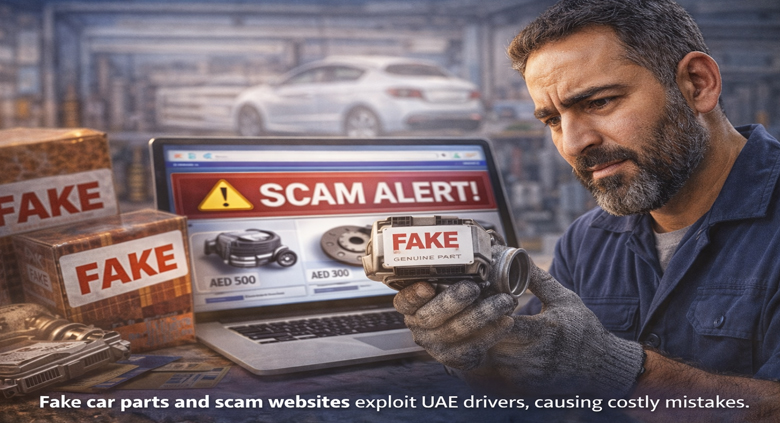
The UAE has one of the most active online car parts markets in the region. While this gives buyers access to thousands of options, it has also created opportunities for counterfeit sellers and scam websites to operate under the radar.
Fake car parts and fraudulent platforms do not always look suspicious at first glance. In fact, many scams today are carefully designed to appear professional, affordable, and trustworthy. This guide explains how scams actually work in the UAE auto parts market and how buyers can protect themselves before making a purchase.
Why the UAE Is a Target for Fake Car Parts
Several factors make the UAE an attractive market for counterfeiters:
- High demand for spare parts across all vehicle brands
- A large used-car market with frequent repairs
- Buyers searching urgently for parts to reduce downtime
- Heavy reliance on online sourcing and messaging apps
Scammers exploit urgency, price sensitivity, and lack of verification to push fake or misrepresented parts into the market.
Fake Parts vs Scam Websites – Know the Difference
Understanding the difference helps buyers identify risk faster.
Fake Car Parts
These are physical components that:
- Imitate genuine branding
- Use copied part numbers or packaging
- Are often lower-quality replicas
They may be sold through otherwise legitimate-looking sellers.
Scam Websites
These platforms:
- Often do not own any stock
- Collect advance payments
- Disappear or stop responding after payment
In many cases, the buyer never receives any part at all.
The Most Common Scam Tactics in the UAE
1. Unrealistically Low Prices
Scam listings often undercut the market heavily to create urgency. If a price is far below every other seller, there is usually a hidden reason.
2. Stock Images Only
Scammers avoid sharing real photos of the actual part. They rely on catalogue images or images copied from manufacturer websites.
3. No Interest in Vehicle Details
A major red flag is when a seller does not ask for:
- Make and model
- Year
- Engine type
- VIN number
Professional sellers cannot confirm compatibility without these details.
4. Pressure to Pay Quickly
Phrases such as:
- “Last piece available”
- “Price valid today only”
- “Pay now to reserve”
are commonly used to rush buyers into mistakes.
How Scam Websites Appear Legitimate
Modern scam sites often include:
- Professional-looking layouts
- Fake customer reviews
- Generic UAE phone numbers
- Copied product descriptions
What they usually lack:
- A verifiable business address
- Clear return or warranty policy
- Multiple communication channels
- Traceable seller identity
Always check who is behind the website—not just how it looks.
Why Social Media Deals Are High Risk
Many scams originate from:
- Social media marketplaces
- Direct messages
- Comment-based selling
While some sellers are genuine, there is little buyer protection. Once payment is made, tracing the seller can be extremely difficult.
If a seller avoids phone calls, video confirmation, or real-time communication, proceed with caution.
How Genuine Sellers Behave Differently
Reliable sellers in the UAE usually:
- Ask detailed vehicle questions
- Share real photos or videos of the part
- Explain part condition clearly
- Are comfortable with follow-up questions
- Do not rush payment
The quality of communication is often more revealing than the listing itself.
Why Comparison Reduces Scam Risk
Scammers thrive when buyers deal with one seller only. Comparing multiple sellers exposes:
- Inconsistent pricing
- Vague explanations
- Incorrect part descriptions
This is why buyers increasingly use multi-seller platforms that allow direct communication with more than one verified supplier.
Platforms such as Partfinder UAE reduce this risk by matching buyer enquiries with relevant verified sellers, allowing buyers to compare responses before committing.
How to Verify Parts Before Payment
Before sending any money:
- Request real photos showing part numbers
- Ask where the part was sourced from
- Confirm whether the part has been tested
- Clarify warranty or return options
- Avoid full advance payments to unknown sellers
If answers are vague or inconsistent, walk away.
What to Do If You Suspect a Scam
If you believe a seller or website is fraudulent:
- Stop communication immediately
- Do not send further payments
- Save all messages and payment details
- Report the platform if applicable
Early action can prevent financial loss.
Final Thoughts: Trust Is Built Before Payment
Avoiding fake car parts and scam websites in the UAE is not about technical expertise—it’s about buyer discipline.
The safest buyers:
- Ask better questions
- Compare sellers
- Verify before paying
- Stay patient
When you prioritise verification over speed or price, scams lose their power. To learn more about buying car parts online in UAE and staying protected, read this.
Categories
- Audi
- BMW
- Car Accessories
- Car Tips
- Ford
- Land Rover
- Mazda
- Range Rover
- Top 10
- UAE Car Parts
- Used Car Parts
- Toyota
- Replacement Engines
- Nissan
- Hyundai
- Mitsubishi
- Volkswagen
- Honda
- Kia
- Chevrolet
- Dodge
- Jeep
- Subaru
- Renault
- Lexus
- Mercedes
- Suzuki
- Hummer
- Porsche
- Infiniti
- Peugeot
- GMC
- Mini
- Volvo
- Replacement Gearboxes
- MG
- Jaguar
- Skoda
- Cadillac
- Daihatsu
- Fiat
- German Car Parts
- Japanese Car Parts
- Aftermarket Car Parts
- Genuine Car Parts
- New Car Parts
- Reconditioned Car Parts
- European Car Parts
- American Car Parts
- Korean Car Parts
- British Car Parts
- Chinese Car Parts
- Sports/Exotic Car Parts
- Luxury Car Parts
- Performance Car Parts
- SUV/4x4 Spare Parts
- Truck Spare Parts
- EV Car Parts
- Hybrid Car Parts
- Auto Spare Parts in UAE
- Tesla
- Isuzu
- Ram
- Ferrari
- Bentley
- Lamborghini
- Genesis
- Maserati
- Lincoln
- Chrysler
- Opel
- Citroen
- SsangYong
- Seat
- McLaren
- Aston Martin
- Rolls Royce
- Maybach
- Alfa Romeo
- Bugatti
- Scion
- Abu Dhabi Car Parts
- Ajman Car Parts
- Al Khan Car Parts
- Al Sajaa Car Parts
- Deira Car Parts
- Dubai Car Parts
- Fujairah Car Parts
- Industrial Area 6 Car Parts
- Mussafah Car Parts
- Ras Al Khaimah Car Parts
- Sharjah Car Parts
- Umm Al Quwain Car Parts
- Acura
- BYD
- Chery
- Dacia
- DS
- Geely Emgrand
- EXEED
- GAC
- GAC Gonow
- Geely
- Gonow
- Great Wall
- Haima
- Haval
- Holden
- Iveco
- JAC
- Jaecoo
- Jetour
- Lotus
- Omoda
- Proton
- Renault Samsung
- Roewe
- Lucid
- Replacement Headlight
- Replacement Bumper