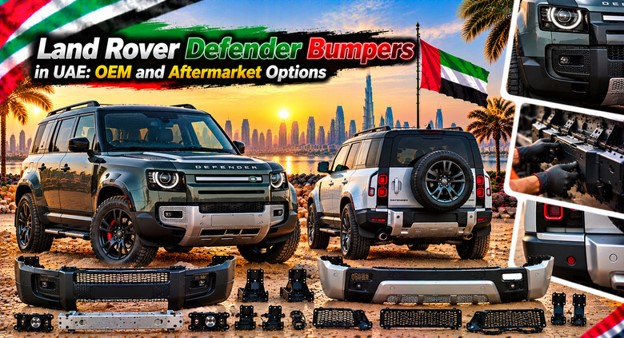
Land Rover Defender Bumpers in UAE: OEM and Aftermarket Options
27 October 2026
The Defender’s Bumper Is More Than a Styling Choice
A Land Rover Defender can spend Monday crawling over rocky ground, Tuesday sitting in Sheikh Zayed Road traffic and Friday parked nose-first against a sandy kerb outside a family home. Its bumper has to suit the vehicle’s actual life, not just the photograph used to sell the replacement.
That distinction matters when damage appears. A cracked outer cover, a bent mounting bracket and an impact that has disturbed a parking sensor are three different jobs, even if all three leave a scuff across the front of the car. Buy the wrong bumper and the bill can grow before the workshop has finished taking the old one off.
For Defender owners in the UAE, the sensible starting point is exact fitment, followed by condition, equipment compatibility and the full fitted cost. Genuine, OEM-described, aftermarket and used parts can all make sense—but not for every Defender, and certainly not on the strength of a vague listing.
Which Defender Do You Have? The Generation Changes Everything
“Land Rover Defender bumpers in UAE” is no longer a sufficiently precise description for ordering a bumper. The classic Defender, produced in numerous forms before the modern model arrived, is mechanically and visually different from the newer L663-generation Defender introduced for the 2020 model year.
Even within the modern range, the 90, 110 and 130 body styles, trim levels, model updates and equipment packages can affect the bumper arrangement. A part advertised simply as fitting a “Defender 2020 onwards” needs further checking before anyone takes payment.
Start with the VIN, production date, body style and trim. Then confirm the original part number or a verified replacement reference. Registration year helps narrow the search, but it cannot settle every fitment question.
Genuine Land Rover, OEM and Aftermarket: Know the Difference
Parts descriptions can get slippery. A listing may use “OEM” to suggest original-equipment quality without clearly identifying the manufacturer or proving that the part matches the genuine specification.
- Genuine Land Rover: Supplied through the genuine-parts channel and identified accordingly.
- OEM: A term associated with original-equipment manufacturing, but one that sellers sometimes use loosely. Ask who actually made the part.
- Aftermarket: Produced for the replacement-parts market. Quality and fit vary by manufacturer and design.
- Used original: Removed from another vehicle; potentially good value, provided its condition and compatibility are established.
- Repaired or reconditioned: Previously damaged or used material restored for reuse. The quality depends on the original damage and the repair work.
The label is only the beginning. What matters is whether the bumper fits the exact Defender, accepts the required equipment, arrives in the promised condition and comes with fair return terms.
When Genuine Land Rover Is Worth the Premium
There are jobs where paying more for a genuine bumper is entirely reasonable. A newer Defender with expensive exterior trim, active driver-assistance equipment or a carefully maintained factory specification is one example. The owner may simply want the closest match to the original build, with less uncertainty about the part's provenance.
But genuine does not mean ready to bolt on. A replacement may arrive as an outer cover, with grilles, brackets, trims, sensor holders and other pieces priced separately. Painting and installation remain separate costs unless the quotation explicitly includes them.
Ask the supplier for the genuine part number and a written list of included items. If the price is substantially higher than an aftermarket alternative, find out precisely what that extra money buys: documented origin, better fitment confidence, a specific finish, warranty support or simply the branding.
When an Aftermarket Defender Bumper Makes Sense
An aftermarket bumper can be a sensible purchase for an older daily-driven Defender, particularly when the owner wants to restore the vehicle without paying genuine-parts prices. It can also make sense for a vehicle used regularly on dusty roads or around busy car parks, where cosmetic wear is part of ownership.
The trouble starts when “aftermarket” is treated as a quality grade. It isn't. Two replacement covers can differ in material, mould accuracy, finish and provision for the Defender's equipment.
Ask who manufactured the part, whether it is designed for the exact body style and specification, and whether the seller will accept a return if it proves incompatible before fitting. A supplier who can answer those questions is more useful than one who simply promises a perfect fit.
Used Original Bumpers: A Bargain or a Hidden Repair Job?
A used original can be excellent value, especially if the part has come off a vehicle with the same specification and has retained its original mounting points and fittings. You may also avoid some of the uncertainty associated with an unfamiliar aftermarket mould.
Still, don't buy a used bumper from a flattering front-on photograph. The rear surface tells a different story. Look for cracked tabs, stress marks, repaired plastic, distorted edges and damage around sensor openings. Ask whether the bumper has been repainted or repaired, and whether all the promised trim pieces are included.
There is another catch: colour. A used bumper in the right factory colour may still look different on your Defender because the existing paint has aged or faded. If it needs repainting anyway, recalculate the saving before handing over the money.
New, Used or Reconditioned: Which Is the Better Buy?
The answer depends on the bumper's condition, the vehicle's specification and how much preparation the replacement needs.
| Option | Main attraction | Main drawback | Worth considering when |
| New genuine | Original supply-channel provenance | Higher purchase price; fittings and paint may cost extra | The vehicle is newer or originality matters |
| New aftermarket | Potentially lower upfront cost | Fitment and finish depend on the manufacturer | Compatibility and quality can be verified |
| Used original | May offer good fitment at a lower price | Hidden damage, previous repairs or faded paint | A matching part is available in sound condition |
| Repaired original | Retains the existing cover | Not all cracks or distortions are repairable | Damage is localised and the mounting points remain sound |
| Reconditioned | Can cost less than a new replacement | The quality of previous repairs may be uncertain | The repair process and final condition are documented |
Don't compare a bare cover with a fully assembled bumper and call the cheaper one a bargain. Compare like with like: the same part position, equivalent specification, included fittings, delivery, paint and installation.
Front Bumper Replacement: What Must Match?
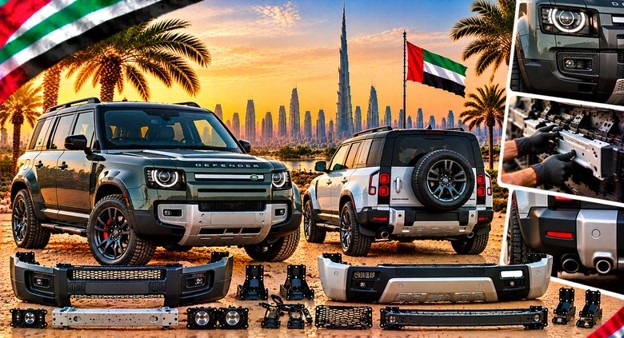
On the modern Defender, the front bumper area may incorporate several separate parts and openings. Depending on the vehicle's equipment and trim, the arrangement can include grilles, fog lamps or other lighting, parking sensors, brackets and provisions for driver-assistance equipment.
That is why a generic “Defender front bumper” search is only a starting point. Confirm the bumper's exact part reference, then compare the relevant openings and mounting arrangements with the vehicle. If the old bumper is still available, photographs of its front and rear can help identify differences—but they do not replace a proper part-number check.
After a collision, inspect the parts behind the cover too. A replacement bumper cannot correct a bent support, damaged bracket or displaced sensor mounting. If the impact was significant, the workshop should assess the surrounding structure before deciding that the outer cover is the only item needing attention.
Rear Bumper Replacement: Don't Overlook the Lower Section
Rear bumper designs can differ in their lower trim, diffuser-style finish, sensor layout and associated fittings. The Defender's body style and specification matter here as much as they do at the front.
A listing may show the outer cover but not the lower trim or other pieces needed to complete the assembly. Ask for a clear description of what is included and, ideally, photographs of the actual item rather than generic catalogue imagery.
If the rear bumper was pushed inwards during an impact, have the mounting points and nearby structure inspected before fitting another cover. Check the parking sensors and their wiring, where fitted, and make sure the finished bumper sits evenly against the surrounding bodywork.
A tidy exterior is the goal, of course. But it should be tidy because the parts fit correctly, not because someone has pulled a mismatched cover into place with extra force.
Defender 90, 110 and 130: Confirm the Body Style
The Defender 90, 110 and 130 are not simply different lengths of the same shopping list. Their body configurations and equipment can differ, and a parts catalogue may separate applications that appear broadly similar in a photograph.
Tell the supplier which body style you own, alongside the VIN and production details. Confirm whether the bumper is intended for the exact vehicle and whether any trim or mounting pieces differ between versions.
This is particularly important when buying used parts. A dismantler may advertise a bumper as suitable for a modern Defender without listing every variant it fits. Don't let the seller's broad description substitute for confirmation against your vehicle's specification.
Standard, X-Dynamic and Other Trim Differences
Defender trim levels can alter exterior styling and the parts surrounding a bumper. Depending on the year and specification, the lower trim, grille treatment, finish and equipment provisions may differ.
If the replacement is intended to restore the vehicle to its original appearance, match the original trim rather than choosing a bumper that merely fits the general model family. If you're deliberately changing the styling, establish the full conversion cost first. You may need compatible grilles, trims, brackets or additional fittings, and the total can climb quickly.
Ask the supplier to confirm the intended trim application in writing. A photograph may reveal obvious differences, but the part number and verified fitment are what matter when the bumper is actually installed.
Parking Sensors and Driver-Assistance Systems
A bumper can look correct and still cause trouble if its sensor provisions do not match the vehicle. Parking sensors need the correct openings, holders and positioning; where driver-assistance equipment is fitted, its mounting arrangements also need to be considered.
Before removing the old bumper, record any existing warning messages and confirm which systems are fitted. After installation, check the relevant functions and scan for faults where appropriate. If a sensor or its mounting position has been disturbed, the vehicle-specific procedure will determine whether calibration is required.
Don't assume every Defender has the same equipment, and don't assume every bumper replacement needs calibration either. The answer depends on the actual vehicle and the work performed. Ask the workshop to explain what it has checked and what remains outside the agreed scope.
The VIN and Part Number: Two Checks Worth Making
The VIN helps a parts specialist identify the vehicle's build specification. The original bumper's part number can then help confirm the correct replacement or an approved superseding number.
Neither should be treated casually. A seller may need additional details to distinguish between production versions, body styles or equipment packages. If the original part number is available, compare it with the proposed replacement and ask the supplier to explain any difference.
Get fitment confirmation in writing before paying. Keep the invoice, part reference and any compatibility statement. If the part turns out to be wrong, those records give you a much firmer basis for resolving the issue than a message saying it “should fit”.
Inspecting a Used Bumper Before You Commit
A used bumper needs a proper look, not a quick glance at the paint.
Check the mounting tabs and screw points first. These can crack when a bumper is removed carelessly, and a broken tab may leave the cover loose even when the visible surface looks fine. Inspect the underside, edges and corners for repairs, distortion or missing sections.
Then look at the finish. Overspray, uneven texture and colour differences can indicate previous refinishing, although appearance alone cannot establish the full repair history. Ask the seller directly whether the bumper has been repaired or repainted.
Before collection, confirm that all advertised grilles, trims, brackets and sensor holders are included. If the seller cannot show the actual item or refuses reasonable inspection, walk away. There are cheaper mistakes than buying a bumper twice.
UAE Sun and Heat: Paint Matching Is Not Just About the Code
A Defender that spends long periods outdoors can develop a different finish from a freshly painted replacement. Strong sunlight, heat, dust, washing and previous polishing all affect how the existing paint looks over time.
A factory paint code is useful, but it does not guarantee a perfect match. Metallic and special finishes can be especially unforgiving when the light changes. A bumper may look close under workshop lights, then stand out in daylight beside the wings.
Ask the paint shop to assess the existing finish before quoting. Confirm whether the price includes preparation, primer where required, colour matching and clearcoat, and whether blending adjacent panels may be recommended. If the bumper arrives already painted, inspect it in natural light before final acceptance.
A colour mismatch is not a mechanical failure, but it is still money spent on a repair that doesn't look right.
What Do Land Rover Defender Bumpers Cost in the UAE?
A useful price comparison starts with a real listing, not a made-up market average. One currently advertised UAE example for a new aftermarket front bumper assembly for the modern Defender L663 is AED 2,400, including VAT, reduced from a displayed AED 3,000. That is a listing price for the stated aftermarket assembly—not a confirmed genuine Land Rover price and not a complete fitted quotation.
Smaller bumper-related parts are advertised separately. For example, a front bumper corner cover for the L663 is listed at AED 250, reduced from AED 350, while a bumper upper grille is listed at AED 250, reduced from AED 350. These are individual parts, not substitutes for the complete bumper assembly.
| Advertised item | Listed price | What the figure represents |
| New aftermarket front bumper assembly, Defender L663 | AED 2,400 including VAT | Advertised assembly price; confirm the exact contents |
| New aftermarket front bumper corner cover, Defender L663 | AED 250 | Separate bumper-related part |
| New aftermarket upper grille, Defender 2020 onwards | AED 250 | Separate grille, not a complete bumper |
These are advertised prices reviewed on 23 October 2026, not independently confirmed purchase quotes. The listings do not establish the price of a genuine Land Rover bumper, the availability of every specification, or the cost of paint and installation. Ask for a VIN-matched quote before using any of these figures to set a repair budget.
Labour and Paint: Where the Final Bill Grows
The parts price is only one line on the invoice. Removal, transfer of existing fittings, paint preparation, refinishing and installation can all add to the total, and the work required depends on the particular Defender and the damage it has suffered.
Ask the workshop to separate the quote into three broad stages: removing and inspecting the old bumper, preparing or painting the replacement, and fitting it with the necessary checks. If the old bumper has taken a hard hit, ask whether the workshop will inspect the brackets and nearby structure before proceeding.
Don't accept a single unexplained figure if you are comparing several garages in Dubai, Abu Dhabi or Sharjah. Ask whether the quoted price includes VAT, delivery, clips, grilles, sensor holders, paint and any diagnostic work. If an item is excluded, have that written down.
A sensible quote should also explain what happens if the new cover doesn't fit properly. Discovering that problem after paintwork has been completed is an expensive way to learn that the wrong part was ordered.
Repair or Replace? The Decision Should Follow the Damage
A scrape does not automatically justify a new bumper. Nor should every crack be patched up simply because a replacement is expensive.
| Damage or condition | Option to investigate | Important limitation |
| Light scuff or paint transfer | Cleaning, polishing or local refinishing | Deep gouges may need repair and paint |
| Localised cosmetic crack | Specialist plastic repair | Suitability depends on location and extent |
| Broken mounting tab | Repair or replacement assessment | A poor repair may leave the bumper insecure |
| Extensive cracking or distorted cover | Replacement | Inspect supporting brackets and nearby structure |
| Damage around sensor mounts | Inspect and repair the affected area correctly | Sensor positioning and operation must be checked |
| Impact damage with misalignment | Broader collision inspection | Replacing the cover alone may not solve the problem |
The key question is not whether a workshop can make the damaged bumper look better. It is whether it can restore the part properly and secure it as intended.
If a repair is proposed, ask what work will be performed, whether the mounting points remain sound and what warranty applies. Then compare that written repair scope with the cost of a suitable replacement.
UAE Heat, Dust and Off-Road Use
The Defender's tough-looking exterior can encourage owners to worry less about bumper damage than they might with a road-focused SUV. That can be a mistake. Repeated knocks, loose mounting points and poorly repaired cracks can become more troublesome over time.
In the UAE, prolonged sun exposure can make an ageing paint finish look different from a freshly refinished bumper. Dust and grit can also mark lower surfaces, while rough tracks or steep approaches may expose the underside to knocks. These conditions do not prove that a particular bumper will fail, but they make careful inspection worthwhile.
If the Defender regularly travels on unpaved roads, check the lower bumper and its mounting areas rather than focusing only on the visible front face. Look for scuffs that have become cracks, missing fixings and signs that the cover has been pushed out of shape.
A vehicle used mostly for urban commuting may need a different buying decision from one regularly driven over rocks and uneven ground. Buy for the actual use, not the image of the vehicle.
How Long Does Bumper Replacement Take?
There is no honest universal completion time. A correct, available bumper that needs little preparation is a different job from one that must be sourced from abroad, painted and fitted after hidden damage has been found.
A typical repair process involves confirming the part, inspecting it before installation, removing the damaged bumper, checking the mounting areas, transferring the necessary fittings, refinishing the replacement if required, then installing it and checking the equipment.
Ask the workshop when it expects to have the exact part in hand, not merely when it expects to place the order. Then ask whether the promised completion date includes paintwork and final checks.
If the Defender is used for business, family transport or regular long-distance journeys, downtime matters too. A cheaper part that takes considerably longer to source may not be the cheapest practical choice.
Warranty and Returns: Get the Terms Before Paying
Warranty descriptions can sound reassuring while leaving the expensive bits uncovered. A seller might offer a warranty on the part but exclude damage during installation, paintwork, labour or the cost of returning an oversized bumper.
Ask whether the warranty covers defects in the bumper itself, how long it lasts and what evidence is required for a claim. Confirm whether an unused part can be returned if the fitment proves incorrect before installation, and who pays for collection or delivery.
Read the conditions before the bumper is painted or modified. Once a part has been refinished or altered, a return may become much harder.
Be cautious if a seller cannot provide a clear part number, actual photographs or written compatibility confirmation. Those omissions don't prove dishonesty, but they leave you carrying more of the risk.
What a Proper Installation Should Look Like
A bumper should sit correctly without being forced into position. The gaps against adjoining panels should be even, the fixings should be secure, and the grilles, trims and other agreed pieces should be present.
Before installation, the workshop should inspect the mounting brackets and surrounding areas for damage. If the bumper was struck hard enough to push inwards or shift out of alignment, the inspection should extend beyond the outer cover.
After fitting, check the front or rear of the vehicle from several angles. Look along the edges, inspect the lower section and compare the finish in daylight. Confirm that the parking sensors and other relevant equipment operate as expected.
Don't sign off on a poor fit because the replacement was inexpensive. If the part is incompatible or defective, that needs to be addressed rather than disguised with improvised fixings or excessive force.
Insurance, Accident Records and Documentation
If the damage resulted from a collision, check your insurance requirements before authorising repairs. The correct process depends on the policy and circumstances; some claims may require an assessment or approval before the work starts.
Keep the quotation, invoice, part number and any records of additional repairs. Photographs taken before and after the job can also help establish what was damaged and what was replaced.
Don't assume that every insurer will accept every aftermarket or used part, and don't assume that using one automatically invalidates a claim. Check the applicable terms and obtain approval where required.
If you pay privately, documentation still matters. A clear record of the part's condition, the work completed and any warranty makes the repair easier to explain if the Defender is sold later.
Choosing Bumpers in UAE for Your Type of Ownership
The right option depends on what you expect from the vehicle. An older Defender used for everyday commuting may not need the same parts strategy as a newer model whose owner wants to preserve its original specification. A working vehicle that regularly travels across the emirates may put more value on confirmed availability and a reliable installation date.
| Ownership priority | Option to investigate | What deserves the most attention |
| Keep costs controlled | Used original or quality aftermarket | Total fitted cost and return terms |
| Preserve original specification | Genuine Land Rover or verified used original | Part number, finish and equipment compatibility |
| Regular off-road use | Correctly specified replacement suited to the vehicle | Mounting integrity and damage inspection |
| Newer, carefully maintained Defender | Genuine or well-supported aftermarket | Fitment, finish and warranty |
| Business or fleet use | The suitable part that can be sourced and fitted reliably | Downtime, availability and predictable cost |
For owners in Dubai, Abu Dhabi, Sharjah, Ajman or the northern emirates, delivery and installation arrangements can also influence the practical choice. Ask where the part is located and whether the quoted delivery time is confirmed.
The cheapest item is not always the cheapest repair. What counts is getting the correct bumper fitted once, properly.
Can the Wrong Bumper Affect Resale Value?
Buyers notice more than a badge on the part. Uneven panel gaps, poor colour matching, missing trim and loose edges can make even a relatively small repair look careless. On a well-kept Defender, those details stand out.
A genuine bumper is not automatically the only acceptable choice. A quality aftermarket replacement or a clean used original can produce a good result if it fits correctly and the repair is documented. Conversely, an expensive part badly fitted may leave a worse impression than a cheaper replacement installed properly.
Keep the invoice and details of the part used. If the collision affected brackets or other parts behind the bumper, retain those records too. Clear documentation helps a future buyer understand the repair rather than guessing what happened.
Buying Mistakes That Can Cost You Twice
The expensive mistakes are usually avoidable.
Ordering by model name alone is one. A seller's description may cover several Defender versions without confirming the exact fitment. Another is assuming that a bumper assembly includes every grille, bracket and trim piece visible in the product photograph.
Used parts create their own traps: cracked tabs, repaired plastic, faded paint and missing fittings can remain hidden until installation. And if a bumper is painted before anyone checks its fit, an incompatibility can waste both time and money.
Before paying, get the exact part reference, condition, included items, delivery cost, warranty and return terms in writing. Ask whether the seller is supplying a complete assembly or a cover only. If a quote is unusually low, don't immediately assume you've found a bargain; first work out what is missing.
The Defender Bumper Buying Checklist
Use this before ordering or authorising the repair.
Pre-purchase check
0 of 12 completed
Confirm the VIN, production details and Defender 90, 110 or 130 body style.
Verify the exact bumper part number or approved replacement reference.
Confirm trim level and relevant equipment openings.
Establish whether the offer is genuine, aftermarket, used or reconditioned.
Check whether the price covers a complete assembly or only the outer cover.
Inspect used parts for cracks, repairs, distortion and damaged mounting tabs.
List all included grilles, trims, brackets, clips and sensor holders.
Confirm delivery time, VAT, paint and installation costs.
Read the warranty and return conditions before payment.
Ask the workshop to inspect hidden damage behind the bumper.
Check sensor operation and any required calibration after fitting.
Keep the invoice, part reference and repair photographs.
If you cannot confirm the part number or fitment, pause the order. It is much better to delay a purchase than to pay for a bumper, its delivery and a workshop visit only to discover that it doesn't belong on your Defender.
Comparing Supplier Quotes Properly
When comparing quotes through a parts supplier or workshop, give each seller the same information: VIN, body style, production details, part number if available, and whether you need the front or rear bumper.
For example, if you are sourcing through PartFinder UAE, ask for confirmation of the precise application and a written breakdown of what the quoted price includes. A useful quote should remove uncertainty, not simply return a number.
| Quote detail | Supplier A | Supplier B |
| Exact part reference and vehicle fitment | Confirm | Confirm |
| Genuine, aftermarket, used or reconditioned | Confirm | Confirm |
| Complete assembly or cover only | Confirm | Confirm |
| Included trims, grilles and brackets | List items | List items |
| Delivery and expected arrival | Confirm | Confirm |
| Paint and preparation | Included or excluded | Included or excluded |
| Fitting labour | Included or excluded | Included or excluded |
| Sensor checks or calibration, if applicable | Confirm | Confirm |
| VAT and other charges | Confirm | Confirm |
| Warranty and return conditions | Written terms | Written terms |
| Comparable final cost | Calculate | Calculate |
Once the scope matches, the cheaper quote may well be the better one. Before that, you're comparing incomplete information.
UAE Price Reference Update: 23 October 2026
The clearest current price reference found for a modern Defender L663 is an advertised AED 2,400, including VAT, for a new aftermarket front bumper assembly, shown at a reduced price from AED 3,000. This is a seller's advertised price, not a confirmed genuine Land Rover quote or a complete installed cost.
Other advertised prices include AED 250 for an aftermarket front bumper corner cover and AED 250 for an upper grille for the Defender 2020 onwards. These are separate bumper-related parts; neither price represents a complete bumper replacement.
| Part advertised in the UAE | Listed price | What to establish before buying |
| New aftermarket front bumper assembly, Defender L663 | AED 2,400 including VAT | Exact assembly contents, fitment and condition |
| New aftermarket front bumper corner cover, Defender L663 | AED 250 | Whether this small cover is the only damaged part |
| New aftermarket upper grille, Defender 2020 onwards | AED 250 | Exact compatibility and whether the grille is required for the repair |
These prices were reviewed on 23 October 2026. They are advertised listing references, not independently confirmed stock or purchase quotations. No verified genuine Land Rover bumper price or complete fitted price has been established here.
Before committing, request a dated quote that identifies the exact part number, body style, condition, included fittings, delivery, paint, labour and any applicable diagnostic work. Ask the supplier to confirm availability rather than assuming an online listing means the part is ready to dispatch. A price is useful only when you know exactly what it buys.
Frequently Asked Questions
Categories
- Audi
- BMW
- Car Accessories
- Car Tips
- Ford
- Land Rover
- Mazda
- Range Rover
- Top 10
- UAE Car Parts
- Used Car Parts
- Toyota
- Replacement Engines
- Nissan
- Hyundai
- Mitsubishi
- Volkswagen
- Honda
- Kia
- Chevrolet
- Dodge
- Jeep
- Subaru
- Renault
- Lexus
- Mercedes
- Suzuki
- Hummer
- Porsche
- Infiniti
- Peugeot
- GMC
- Mini
- Volvo
- Replacement Gearboxes
- MG
- Jaguar
- Skoda
- Cadillac
- Daihatsu
- Fiat
- German Car Parts
- Japanese Car Parts
- Aftermarket Car Parts
- Genuine Car Parts
- New Car Parts
- Reconditioned Car Parts
- European Car Parts
- American Car Parts
- Korean Car Parts
- British Car Parts
- Chinese Car Parts
- Sports/Exotic Car Parts
- Luxury Car Parts
- Performance Car Parts
- SUV/4x4 Spare Parts
- Truck Spare Parts
- EV Car Parts
- Hybrid Car Parts
- Auto Spare Parts in UAE
- Tesla
- Isuzu
- Ram
- Ferrari
- Bentley
- Lamborghini
- Genesis
- Maserati
- Lincoln
- Chrysler
- Opel
- Citroen
- SsangYong
- Seat
- McLaren
- Aston Martin
- Rolls Royce
- Maybach
- Alfa Romeo
- Bugatti
- Scion
- Abu Dhabi Car Parts
- Ajman Car Parts
- Al Khan Car Parts
- Al Sajaa Car Parts
- Deira Car Parts
- Dubai Car Parts
- Fujairah Car Parts
- Industrial Area 6 Car Parts
- Mussafah Car Parts
- Ras Al Khaimah Car Parts
- Sharjah Car Parts
- Umm Al Quwain Car Parts
- Acura
- BYD
- Chery
- Dacia
- DS
- Geely Emgrand
- EXEED
- GAC
- GAC Gonow
- Geely
- Gonow
- Great Wall
- Haima
- Haval
- Holden
- Iveco
- JAC
- Jaecoo
- Jetour
- Lotus
- Omoda
- Proton
- Renault Samsung
- Roewe
- Lucid
- Replacement Headlight
- Replacement Bumper
- bugatti chiron