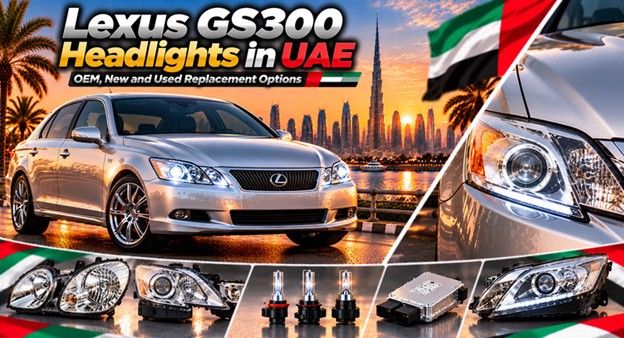
Lexus GS300 Headlights in UAE: OEM, New and Used Replacement Options
07 November 2026
A Lexus Headlight Is More Than a Plastic Shell
A Lexus GS300 can still look properly smart after years of Dubai traffic, but cloudy lenses, broken mounting tabs or a headlight that keeps cutting out can make the front end look tired in a hurry. More importantly, poor light output becomes a real concern on unlit roads, during winter fog and on long drives between emirates.
The sensible response is not always to buy a complete replacement. Sometimes the lens can be restored; sometimes a failed bulb, ballast, igniter or wiring connection is responsible; and sometimes the headlamp assembly really has had its day.
That distinction matters when searching for Lexus GS300 headlights in UAE. A cheap listing may show only a lens, a used housing without its electronics, or a headlamp intended for a different GS generation. They can look almost identical in a photograph. They are not necessarily interchangeable.
For a GS300 owner, the first job is to identify the car correctly, then compare the cost of a repair with the cost of replacing the whole assembly. Get that order wrong and the bargain can become an expensive mistake.
Which Lexus GS300 Do You Own?
The GS300 name covers more than one generation, and the differences are not merely cosmetic.
First generation and early models
Older GS300 versions use a different front-end design from later cars. Age-related haze, brittle mounts and previous accident repairs deserve particular attention. Confirm the chassis code and production year before ordering.
Second-generation GS300, commonly JZS160
This generation has its own headlamp shapes and internal arrangements. Catalogue examples include part numbers such as 81150-3A860 for a particular left-hand assembly and 81110-3A740 for a particular right-hand assembly, but these are application-specific references, not universal GS300 part numbers.
Later GS, including cars sold as GS300 in some markets
The later-generation headlamp is a different design. Catalogue entries for the 2006-era GS family list multiple assemblies according to production date, headlamp-cleaner equipment, adaptive lighting and market specification. Verify the vehicle identity rather than ordering by badge alone.
There is a wrinkle here. The GS model range and engine badges varied by market, and some parts catalogues group several engine variants under the same headlamp family. A listing that says “fits Lexus GS300” is a starting point, not proof that it fits your particular car.
Check the Chassis Code, Production Date and VIN
Before asking a parts supplier for a price, gather three details.
- VIN or chassis number: gives the supplier a reliable starting point for checking the original specification.
- Production date: a car registered in one year may have been manufactured in another, and a mid-generation change can affect fitment.
- Chassis or model code: helps distinguish the older JZS-series car from later GRS-series versions.
Then establish whether the headlamp is for the left or right side. That sounds obvious, yet listings sometimes use “driver side” and “passenger side” according to the market in which the part was originally sold. A UAE-imported car may not follow the assumptions made by an overseas seller.
Ask for a photograph of the label on the existing assembly, including the part number if it is legible. Compare it with the proposed replacement and have the supplier confirm any superseding number in writing.
A VIN-based catalogue check is particularly useful when the car has adaptive front lighting, headlamp washers or factory xenon equipment. These details can change what is needed, and they are not always obvious from a front-facing photograph.
Xenon, Halogen or Adaptive Lighting?
The lighting system is one of the biggest things to establish before you buy. Two GS300s from broadly the same period may not use the same equipment, especially if one has factory discharge lighting, headlamp washers or adaptive front lighting.
| Lighting setup | What to check | Buying implication |
|---|---|---|
| Halogen | Bulb type, reflector or projector design, connector | Often simpler to repair, but the assembly must still match the original specification |
| Factory xenon or HID | Bulb, ballast, igniter, wiring and levelling system | A fault may sit in the electronics rather than the complete headlamp |
| Adaptive front lighting | Moving projector mechanism, sensors and control system | A basic non-adaptive unit may not provide equivalent functionality |
| Aftermarket LED conversion | Legality, beam pattern, heat management and compatibility | A brighter-looking bulb does not guarantee a safe or correctly shaped beam |
The older GS300 catalogue, for example, lists discharge-headlamp assemblies and separate bulbs, while the later GS family has variants that include adaptive lighting and headlamp cleaners. That is why a supplier needs more than a photograph of the front of the car.
Don't let anyone sell you a complete assembly simply because a bulb has failed. Diagnose first.
OEM, Genuine Lexus and Aftermarket Are Not the Same Thing
These labels get thrown around rather casually in spare-parts discussions. They shouldn't be.
- Genuine Lexus: supplied as a Lexus-branded part through the relevant genuine-parts channel.
- OEM: generally refers to original-equipment manufacturing, but a seller using this label should be able to identify the actual manufacturer and specification. It does not automatically mean the part is boxed or approved by Lexus.
- Aftermarket: produced for the replacement market by a company other than the vehicle's genuine-parts channel. Quality, beam performance and finish can vary.
- Used original: removed from another vehicle. It may be genuine, but its age, condition and history still matter.
- Reconditioned: repaired or refurbished, potentially with a replacement lens, restored coating, repaired mounts or renewed internal parts. The work performed needs to be specified.
A genuine headlamp is not automatically the best purchase at any price, particularly for an older car whose market value is modest. Equally, the cheapest aftermarket unit can prove poor value if its beam pattern is uneven, its seals let in moisture or its mounting points refuse to line up.
Buy the actual specification you need, not the label that sounds most reassuring.
What Does a New Genuine GS300 Headlight Cost?
New genuine assemblies can be expensive. Overseas catalogue prices give a useful indication of the potential gap between a premium original part and a used alternative, but they are not UAE retail quotations.
For a 2005 Lexus GS300, an overseas genuine-parts catalogue lists a left-hand discharge-headlamp assembly, part number 81150-3A860, at US$1,136.57, against a displayed list price of US$1,575.43. A corresponding right-hand assembly, 81110-3A740, is listed at US$1,136.65. These are specific catalogue applications, not a universal pair for every 2005 GS300.
For a 2006 GS-family application, another catalogue lists a right-hand assembly, 81140-30B51, at US$1,097.27, and a left-hand assembly, 81070-30B51, at US$1,119.70. The catalogue also identifies equipment and production-date distinctions.
Those prices are in US dollars, not AED, and exclude any UAE-specific delivery, import handling, local labour or other charges that may apply. Treat them as overseas reference points only.
Before placing an order, ask for a UAE quotation showing the exact part number, side, condition, warranty and total landed cost. If the supplier cannot confirm fitment, a discount is beside the point.
Used Lexus GS300 Headlights in Sharjah and Dubai
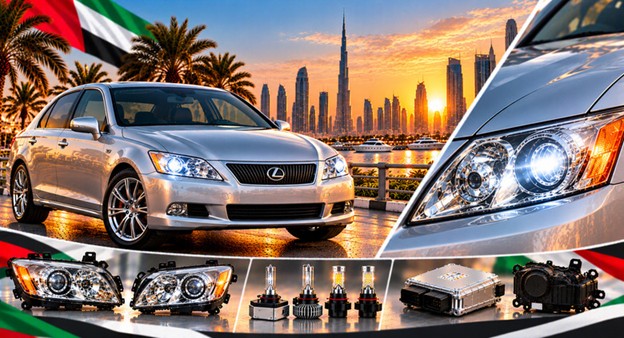
For an older GS300, a used original assembly may make more financial sense than a new genuine unit, especially when the rest of the car is well maintained but not worth spending a fortune on.
There is direct UAE listing evidence for older GS headlamps. A Sharjah parts listing dated 8 May 2023 advertised used left- and right-hand headlights for a 2004 Lexus GS at AED 150 each. That is a historical advertised price, not a verified current offer, and it does not establish the condition of any assembly available today.
That distinction matters. A headlight sitting on a shelf for years may have a cloudy lens, a damaged rear cover, missing adjusters or electronics removed before the unit was listed. An attractive price won't fix any of those problems.
When comparing used stock in Sharjah Industrial Area, Dubai or elsewhere in the UAE, request current photographs of the actual item, including its rear connectors, mounting points, lens and identification label. Ask whether the unit includes the ballast, bulbs and control gear, where fitted. A listing that says only “headlight” leaves too much unsaid.
Should You Buy One Headlight or a Pair?
If only one side is broken, replacing one assembly is often the sensible starting point. There is no automatic rule that both headlamps must be replaced together.
But compare the colour and clarity of the surviving unit with the replacement. A new clear lens beside a deeply yellowed original can look mismatched, and the light output may differ even if both lamps technically work.
A used pair can be worth considering when both original units are badly faded or damaged, provided the seller can identify them correctly and show their condition. Don't pay for a pair merely because a seller says it is better; ask what benefit you are actually buying.
| Your situation | Sensible starting point |
|---|---|
| One headlamp broken in an otherwise sound pair | Price one matching assembly |
| Both lenses badly cloudy | Compare professional restoration with the price of two assemblies |
| One unit has failed electronics | Get the electrical fault diagnosed before buying a full pair |
| Both units are damaged after a collision | Check mounting points, brackets, wiring and surrounding bodywork before ordering |
| A used unit differs noticeably in colour or condition | Inspect the pair option and compare total cost |
The right answer depends on the fault, not on a blanket rule about always replacing both sides.
Can You Restore a Cloudy Headlight Instead?
Sometimes, yes. The UAE's strong sunlight and high ultraviolet exposure can degrade the outer lens coating, leaving the plastic yellowed, dull or hazy. Fine surface scratches and oxidation can also scatter light and make an otherwise serviceable headlamp appear worse than it is.
A proper restoration may involve removing the damaged surface layer, refining the finish and applying suitable UV protection. A quick polish that leaves the plastic unprotected can look good at first, then deteriorate again.
Restoration is not the answer to every fault, though. Deep cracks, broken mounts, severe internal fogging, damaged reflectors or failed electronics may require replacement or specialist repair.
Before approving the work, ask the workshop to inspect the beam output and lens condition, not just the appearance. The headlight's job is to illuminate the road correctly. A shiny exterior is nice; a safe beam matters more.
A Failed Bulb Does Not Always Mean a Failed Headlamp
This is where owners can save money by slowing down.
If one lamp stops working, the fault could be a bulb, fuse, connector, damaged wire, ballast or igniter, depending on the fitted system. Water ingress may also corrode electrical contacts. Replacing the entire assembly without testing can leave the original problem untouched.
A useful diagnostic sequence is straightforward:
- Confirm whether the low beam, high beam, indicator or another function has failed.
- Check the relevant bulb and fuse where applicable.
- Inspect connectors and wiring for heat damage, corrosion or looseness.
- For xenon systems, test the relevant control gear using suitable procedures.
- Check for moisture, cracked seals and evidence of previous repairs.
- Replace the faulty part only after the diagnosis supports that decision.
Xenon systems can operate at high voltage. Don't probe live equipment casually or handle it as if it were an ordinary low-voltage bulb circuit. Have a qualified technician carry out the checks.
A diagnosis is cheaper than guessing twice.
Why UAE Heat, Dust and Humidity Matter
A car parked outside in Dubai or Abu Dhabi takes a daily beating from sunlight, surface heat and airborne dust. Add occasional heavy rain, humidity near the coast and repeated temperature changes, and the headlamp's outer lens, seals and electrical connections have plenty to contend with.
Common problems include faded lens coatings, brittle plastic tabs, damaged rear covers and condensation where a seal has failed. Dust can collect around poorly sealed openings, while moisture may encourage corrosion at connectors.
Still, don't assume every droplet inside a headlamp means the unit is finished. A light mist that clears under normal operation can differ from persistent water droplets or pooling, which deserve closer inspection. The pattern, amount and persistence of moisture matter.
When checking a replacement, look beyond the front lens. Inspect the rear cover, rubber seals, vents, mounting ears and connector area. A clean-looking face can hide damage at the back, where it is less obvious until the assembly has been fitted.
How to Inspect a Used Headlight Before Paying
Ask to inspect the actual unit, rather than relying on a generic photograph from an advert. If you cannot see it in person, request clear, current images and a written description of its condition.
Used headlamp inspection checklist
Lens has no cracks, deep crazing or signs of water damage
Mounting tabs and adjustment points are intact
Rear covers, seals and vents are present
Connectors show no melting, corrosion or broken locking clips
Reflectors and projector lenses are not visibly burnt or deteriorated
Part number and side match the intended vehicle
Ballast, igniter and other required electronics are included or clearly excluded
Seller states the warranty or return terms in writing
0 of 8 checks completed
Don't accept “tested” as the end of the conversation. Ask what was tested, whether the lamp was powered up, whether its adjustment mechanism works and whether any electronics were removed before sale.
If the seller will not show the mounting points or part label, think carefully before paying.
Check the Beam Pattern, Not Just the Brightness
A headlamp can appear bright while throwing light in the wrong direction. Poor beam control can leave dark patches on the road or send glare towards oncoming traffic, which is a safety issue rather than a cosmetic quibble.
After installation, have the beam aim checked with suitable equipment. Make sure the low beam has a clear, appropriate cut-off and that the high beam works correctly. If the car has automatic levelling or adaptive lighting, those functions may also need checking or calibration according to the fitted system.
Be cautious about inexpensive LED bulb conversions advertised as a universal upgrade for a halogen or xenon headlamp. The bulb's physical fit does not guarantee that the reflector or projector will control the light properly.
For a GS300 used on dark roads outside town, correct alignment can make a noticeable difference. Don't finish the job by looking at the lamps against a wall and calling it good enough.
How Much Should You Budget for Fitting?
Labour varies with the workshop, the exact GS generation, the condition of the fasteners and whether the front bumper or other trim has to come off. Access is not identical across every model, so a single universal labour price would be misleading.
The key is to request a fitted quotation rather than a headline price for the part alone.
| Cost item | What the quote should clarify |
|---|---|
| Headlamp assembly | Exact part number, side and condition |
| Labour | Removal, fitting and any necessary trim or bumper work |
| Bulb or control gear | Included, reused or charged separately |
| Aiming and calibration | Whether beam alignment or system calibration is included |
| Clips and brackets | Whether damaged or missing fixings are extra |
| VAT and delivery | Whether these are included in the quoted total |
| Warranty | Coverage for the part, labour and electrical faults |
Ask for the final figure in AED, with the exclusions written down. That way, if the workshop later says a bracket or ballast is extra, you can see whether it was genuinely outside the original quote.
For a used assembly, a short written warranty can be worth more than a small discount. If the lamp fails as soon as it is installed, you do not want to pay twice for removal and refitting.
New, Used or Reconditioned: Which Offers Better Value?
There is no single winner. The best option depends on the age of your GS300, the type of headlamp fitted, how long you plan to keep the car and what the replacement actually includes.
| Option | Main advantage | Main risk | Most suitable when |
|---|---|---|---|
| New genuine Lexus | Original specification and clear part identity | Potentially high purchase cost | Long-term ownership or a strict originality requirement |
| New aftermarket | May cost less than genuine stock | Variable fit, finish and optical performance | A reputable brand supplies a confirmed match |
| Used original | Can preserve factory design at lower upfront cost | Age, hidden damage and uncertain remaining life | The unit is inspected and backed by clear terms |
| Reconditioned original | May retain the original housing while addressing a specific fault | Quality depends on the work carried out | Repairs are documented and sealing and beam performance are checked |
| Lens restoration | Avoids replacing a sound assembly | Won't fix broken mounts, failed electronics or internal damage | The main fault is external haze or oxidation |
The cheapest purchase price is only one part of the equation. A used lamp that needs a ballast, new seals and extra labour may cost more by the time it is working properly than a better-condition unit bought upfront.
How to Avoid a Fitment Mistake
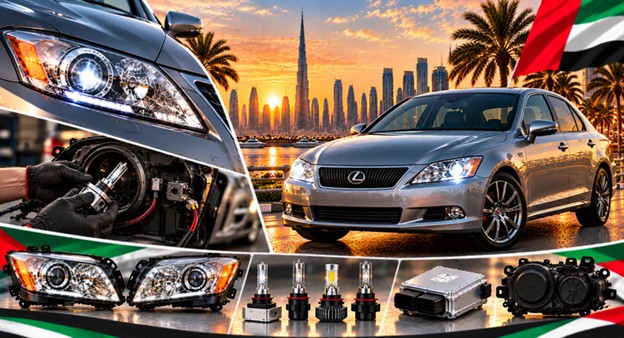
Use the existing headlamp's label as your reference point, then ask the supplier to confirm compatibility against the VIN or chassis number. If the original unit is missing, damaged beyond recognition or already replaced with the wrong part, the VIN-based catalogue check becomes even more important.
Confirm all of the following before ordering:
- Correct generation and production period.
- Correct left- or right-hand side.
- Correct lighting technology and connector arrangement.
- Compatibility with adaptive lighting and headlamp washers, if fitted.
- Correct mounting points, adjustment mechanism and rear cover.
- Any relevant market-specification differences.
A part number is especially valuable because it narrows the search beyond broad phrases such as “GS300 2005 headlight”. If the supplier proposes a replacement number, ask for confirmation that it supersedes the original for your exact vehicle, rather than assuming similar numbers mean the same thing.
What About Imported or Non-GCC Headlights?
Imported assemblies can widen the choice, especially when a new genuine part is expensive or difficult to source locally. But an overseas part may have been built for a different market or lighting arrangement, and the seller's fitment list may combine several variants.
Check the beam pattern and market specification, not just the shape of the housing. Ask whether the unit is new, used or refurbished, and whether any required electronics come with it. Get the delivered price, estimated arrival time and return conditions in writing.
The word “compatible” also needs a little scrutiny. It may mean that the housing can be installed, not necessarily that every original function will operate exactly as intended.
For a car registered in the UAE, the sensible route is to have the supplier and fitting workshop confirm the unit is appropriate for the vehicle and its road use before you commit.
Installation Time: What Can Hold Up the Job?
A straightforward swap may be completed within a workshop visit, but the time required depends on access, parts availability and the condition of the car. It is not sensible to promise an exact turnaround without seeing the vehicle and knowing which assembly is being fitted.
Delays can come from brittle clips, previously repaired brackets, seized fasteners, damaged wiring or a replacement that arrives without the necessary ballast or covers. Adaptive systems can add checks, too.
Before leaving the car, ask whether the workshop has the part in hand, whether it has checked the part number and whether the quoted time includes beam alignment and any required calibration.
If the headlamp is being imported, the delivery window is a separate issue from fitting time. A workshop cannot complete the repair until the correct assembly arrives, and a second order for a missing control unit can stretch a small job into several days.
Warranty, Returns and the Small Print
A warranty is only useful if you understand what it covers. A seller may guarantee the assembly against an initial fault but exclude bulbs, ballasts, water ingress, accidental damage or labour. Another may offer no return once the part has been installed.
Before paying, get clear answers to four questions.
- How long is the warranty, and when does it begin?
- Does it cover electrical faults as well as physical damage?
- Who pays for removal, return delivery and refitting if the unit fails?
- Can you return the assembly if a qualified fitter confirms that it does not match the agreed specification?
For used parts, ask whether the warranty is written on the invoice and whether the seller has recorded the part number. Photograph the unit before installation, including its label and mounting points.
Do not assume that a seller's general warranty covers every possible fault. Read the terms for the actual item being sold.
Hidden Costs That Can Change the Decision
The price on a parts listing is not necessarily the amount you will spend to get the headlamp working.
A used assembly may arrive without its ballast or bulbs. An aftermarket unit may require different fixings. A cracked mounting bracket might only become apparent when the bumper is removed, while a persistent electrical fault could turn out to be in the vehicle's wiring rather than the lamp.
| Potential extra | Why it matters |
|---|---|
| Ballast, igniter or control unit | May be separate from the housing |
| Bulbs | May be missing, old or incompatible |
| Brackets and clips | Broken fixings can prevent secure installation |
| Seals and rear covers | Missing or damaged parts can invite moisture |
| Delivery and import charges | Can raise the final cost of an overseas order |
| Beam alignment | Needed to check that the lamp illuminates correctly |
| Calibration or diagnostics | May be relevant to adaptive or electronically controlled systems |
| Repeat labour | Can make a cheap but faulty part an expensive purchase |
Ask for a complete fitted cost before authorising the work. It is the only meaningful way to compare a new genuine assembly with a used original or an aftermarket alternative.
Can You Replace the Lens Without Replacing the Whole Assembly?
Possibly, but inspect the damage first.
If the outer lens is cloudy or scratched while the housing, mounts, reflectors and electronics remain sound, professional restoration may be the most economical route. A lens-only replacement may also be possible for certain assemblies, depending on parts availability and how the headlamp is constructed.
The risk lies in opening and resealing the housing. Poor workmanship can lead to leaks, persistent condensation or an assembly that no longer holds together properly. A replacement lens must also match the optical design and be sealed correctly.
If the headlamp has a cracked housing, damaged mounting points or failed internal equipment, changing the lens alone will not solve the problem. Ask the workshop to explain which parts are damaged and why restoration or lens replacement is appropriate.
A written repair scope is useful here. “Headlight repair” could mean anything from a quick polish to dismantling the entire assembly.
Resale Value: Is a Genuine Headlight Worth the Extra Money?
A tidy, correctly functioning front end helps a used Lexus present well, especially when buyers are comparing older cars with high mileage. Matching lamps, sound mounts and a proper beam pattern suggest that the car has been maintained rather than patched up in a hurry.
But don't expect a new genuine headlamp to return its full purchase price when you sell the car. The cost of a premium assembly can be disproportionate to the value of an older GS300, and there is no reliable universal figure for how much a replacement headlight adds to resale value.
Keep the invoice and record the part number and work carried out. If the assembly was used or reconditioned, describe it honestly. A buyer is more likely to appreciate clear documentation than a vague claim that the headlamp is “like new”.
For a car you intend to keep for years, reliability and light output may justify spending more. If you plan to sell soon, a safe, correctly fitted and well-presented repair may be the more proportionate choice.
Insurance and Accident-Related Damage
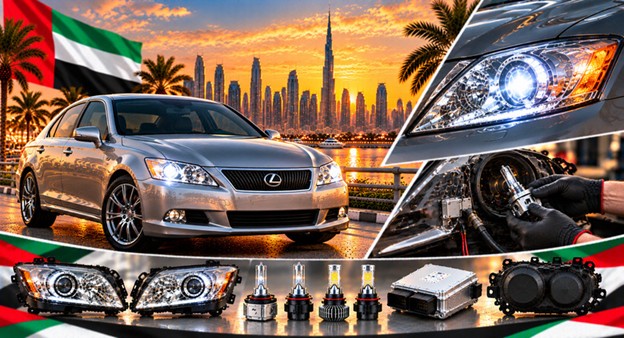
If the headlamp was damaged in a collision, photograph the damage before repairs begin and check the terms of your motor insurance policy. Whether a replacement is covered depends on your policy, the circumstances of the incident and the insurer's approval process.
Don't assume that a cracked headlamp is an isolated problem. The impact may have damaged the bumper brackets, front wing, wiring, mounting panel or other nearby parts. A replacement assembly will not correct those faults.
Ask the workshop to document any related damage and separate the cost of the headlamp from additional bodywork or electrical repairs. If an insurer is involved, confirm whether it requires an inspection or authorisation before the work starts.
Keep the invoice and any relevant part identification. That record can help explain the repair to a future buyer and establish what was actually replaced.
Workshop Red Flags to Watch For
Be wary if a seller or fitter dismisses fitment questions with “all GS headlights are the same”. They are not. The catalogues themselves show different assemblies, production-date ranges and equipment configurations across the model family.
Other warning signs include:
- No part number, label or clear photographs of the actual assembly.
- A refusal to confirm whether the ballast, bulbs or control gear are included.
- No explanation of warranty or return terms.
- A promise that a generic LED conversion will work perfectly without checking the headlamp design.
- A quotation that excludes labour or alignment but presents itself as a complete replacement price.
- Pressure to replace the entire unit before anyone has diagnosed the fault.
- A refusal to check the beam pattern after fitting.
You do not need a dramatic confrontation. Ask for the details in writing and compare another quotation if the answers remain vague.
A Practical Buying Decision Matrix
Use this as a starting point, then adjust it to the car's actual condition and the price of the available parts.
| Your priority | Option worth investigating first | What must be confirmed |
|---|---|---|
| Lowest reasonable upfront spend | Used original assembly | Condition, exact fitment, included electronics and warranty |
| Long-term ownership | New genuine or reputable aftermarket | Correct specification, warranty and complete fitted cost |
| Cloudy lens but sound housing | Professional restoration | Lens condition, UV protection and beam performance |
| Failed xenon lighting | Diagnosis before buying an assembly | Bulb, ballast, igniter, wiring and control system |
| Both lamps aged or mismatched | Compare the cost of a pair | Condition, optical match and total installed price |
| Rare or hard-to-find specification | Imported or specialist-sourced part | Market specification, delivery, return terms and compatibility |
The best decision is the one that fixes the actual fault, matches the vehicle and leaves you with dependable lighting without spending money on parts you do not need.
Pre-Installation Checks for Your GS300
Before the new or used assembly goes into the car, check the part against the original unit and the vehicle's specification. This is the moment to catch a wrong connector or missing bracket, not after the bumper has been refitted.
Ask the fitter to check the following:
- The part number, side and housing shape match the confirmed application.
- All mounting tabs, adjustment screws, covers and seals are present.
- The connector and included electronics match the vehicle.
- Any damaged wiring or surrounding brackets have been identified.
- The lamp can be adjusted correctly once fitted.
- The old assembly has been retained until the replacement is tested, if practical.
If the car has adaptive lighting or automatic levelling, ask whether the system needs diagnostic checks or calibration. Do not assume that a lamp which physically fits will automatically work with every electronic function.
A few minutes spent checking the part before installation can save a second workshop visit.
What Should Be Tested After Installation?
Once the headlamp is fitted, test all relevant lighting functions rather than checking only that the low beam switches on.
Confirm the low and high beams, indicators, position lamps and any other functions built into the assembly. Check the adjusters and, where fitted, the levelling or adaptive system. The workshop should also inspect the seal and rear covers and make sure the lamp is secured without stressing its mounting points.
Have the beam alignment checked with suitable equipment. If the replacement uses different optics from the original, visual brightness alone will not establish that the road is illuminated properly.
After rain or a car wash, look for signs of persistent moisture. A little temporary mist may behave differently from water droplets that remain or accumulate, but recurring condensation deserves investigation.
Keep the invoice and part details with the vehicle records. It is a small administrative job that can be useful later.
Finding the Right Part Without Guesswork
When comparing options through PartFinder UAE, or any other parts-sourcing route, give the supplier enough information to identify the correct assembly. Start with the VIN or chassis code, production year, side and original part number where available. Include photographs of the existing headlamp and its label if you can.
Ask each supplier to quote on the same basis. Is the unit genuine, aftermarket, used or reconditioned? Does it include the ballast, bulbs and rear covers? Is the price for one side or a pair? Is delivery included, and what happens if the item arrives damaged or proves incompatible?
That last question matters more than it may seem. A cheap listing is not a proper comparison if one quote covers a complete assembly and another covers only the housing.
For older GS300s, where the vehicle may have had previous repairs or imported parts fitted, physical identification is especially useful. If the existing unit does not match the factory catalogue, ask a technician to establish what is currently installed before ordering its replacement.
UAE Price Reference Update: 19 October 2026
The available evidence gives a useful starting point, but it does not establish a complete, freshly confirmed UAE quotation for every GS300 generation. The figures below should be treated according to their actual age, currency and application.
| Price reference | Advertised price | What it tells you |
|---|---|---|
| Used 2004 Lexus GS headlight, Sharjah listing dated 8 May 2023 | AED 150 per side | Historical used-parts reference, not a current offer. |
| New genuine 2005 GS300 left-hand discharge assembly, part 81150-3A860 | US$1,136.57 | Overseas catalogue price for a specified application, not a UAE retail quotation. |
| New genuine 2005 GS300 right-hand discharge assembly, part 81110-3A740 | US$1,136.65 | Overseas catalogue price for a specified application, not a UAE retail quotation. |
| New genuine 2006 GS-family left-hand assembly, part 81070-30B51 | US$1,119.70 | Overseas catalogue reference for a particular equipment and vehicle application. |
| New genuine 2006 GS-family right-hand assembly, part 81140-30B51 | US$1,097.27 | Overseas catalogue reference for a particular equipment and vehicle application. |
These are not like-for-like prices. The UAE used-part reference is more than three years old, while the genuine-part figures are displayed in US dollars and do not establish the delivered cost in the Emirates. None of these figures should be presented as a confirmed current fitted price.
For a reliable decision, obtain two or three current quotations for the same part number and side. Ask each supplier to distinguish the assembly itself from bulbs, ballast or other electronics, delivery, VAT where applicable, labour, alignment and any required calibration. For imported parts, confirm the landed cost and return conditions before paying.
The important point is simple. Do not compare AED 150 for a historical used listing with more than US$1,000 for a new genuine assembly as though both offers cover the same thing. First confirm fitment and condition; then compare the complete cost of getting the headlight safely installed.
Frequently Asked Questions About Lexus GS300 Headlights in UAE
Categories
- Audi
- BMW
- Car Accessories
- Car Tips
- Ford
- Land Rover
- Mazda
- Range Rover
- Top 10
- UAE Car Parts
- Used Car Parts
- Toyota
- Replacement Engines
- Nissan
- Hyundai
- Mitsubishi
- Volkswagen
- Honda
- Kia
- Chevrolet
- Dodge
- Jeep
- Subaru
- Renault
- Lexus
- Mercedes
- Suzuki
- Hummer
- Porsche
- Infiniti
- Peugeot
- GMC
- Mini
- Volvo
- Replacement Gearboxes
- MG
- Jaguar
- Skoda
- Cadillac
- Daihatsu
- Fiat
- German Car Parts
- Japanese Car Parts
- Aftermarket Car Parts
- Genuine Car Parts
- New Car Parts
- Reconditioned Car Parts
- European Car Parts
- American Car Parts
- Korean Car Parts
- British Car Parts
- Chinese Car Parts
- Sports/Exotic Car Parts
- Luxury Car Parts
- Performance Car Parts
- SUV/4x4 Spare Parts
- Truck Spare Parts
- EV Car Parts
- Hybrid Car Parts
- Auto Spare Parts in UAE
- Tesla
- Isuzu
- Ram
- Ferrari
- Bentley
- Lamborghini
- Genesis
- Maserati
- Lincoln
- Chrysler
- Opel
- Citroen
- SsangYong
- Seat
- McLaren
- Aston Martin
- Rolls Royce
- Maybach
- Alfa Romeo
- Bugatti
- Scion
- Abu Dhabi Car Parts
- Ajman Car Parts
- Al Khan Car Parts
- Al Sajaa Car Parts
- Deira Car Parts
- Dubai Car Parts
- Fujairah Car Parts
- Industrial Area 6 Car Parts
- Mussafah Car Parts
- Ras Al Khaimah Car Parts
- Sharjah Car Parts
- Umm Al Quwain Car Parts
- Acura
- BYD
- Chery
- Dacia
- DS
- Geely Emgrand
- EXEED
- GAC
- GAC Gonow
- Geely
- Gonow
- Great Wall
- Haima
- Haval
- Holden
- Iveco
- JAC
- Jaecoo
- Jetour
- Lotus
- Omoda
- Proton
- Renault Samsung
- Roewe
- Lucid
- Replacement Headlight
- Replacement Bumper
- bugatti chiron