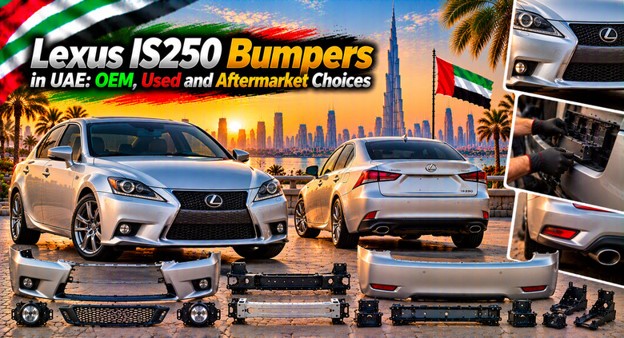
Lexus IS250 Bumpers in UAE: OEM, Used and Aftermarket Choices
October 27, 2026
The bumper choice that makes sense for your Lexus IS250
A cracked bumper on a Lexus IS250 can turn a relatively ordinary repair into an awkward buying decision. The car may be perfectly sound mechanically, yet a split corner, broken mounting tab or badly matched replacement can make its front end look tired. In the UAE, where strong sunlight exposes fading paint and bumper-to-bumper commuting leaves little room for careless parking, the difference between a cheap replacement and a well-chosen one is more than cosmetic.
The sensible choice depends on the damage, the car’s model year and how long you intend to keep it. The used original Lexus IS250 bumpers in UAE may fit more convincingly than a low-priced aftermarket shell; a new OEM bumper may be worth the extra outlay if the car is in excellent condition and you plan to retain it. But neither option wins every time.
The rule is simple: buy for correct fitment and total fitted cost, not merely the price attached to the bumper.
Which Lexus IS250 generation do you own?
Before comparing prices, pin down the car. The IS250 name covers more than one body design, and a bumper that belongs to an earlier car will not automatically suit a later facelift just because the badge says Lexus.
| Lexus IS250 version | What to check before buying |
| First-generation IS250, where applicable to the market | Confirm the exact chassis and body style; do not rely on registration year alone |
| Second-generation IS250, commonly associated with the GSE20/GSE21 family | Check pre-facelift versus facelift styling, bumper shape and mounting points |
| Later IS250 variants, including market-specific versions | Confirm the VIN, original part number and the precise bumper specification |
The second-generation car is particularly important when shopping for a replacement. Genuine parts catalogues distinguish between bumper covers for different production years and equipment combinations, including sport-package versions and cars with parking sensors or headlamp washers. Those differences are not trivial: the wrong cover may require extra work or may simply be unsuitable.
Use the VIN as your starting point. Ask the supplier to confirm the part number against it, then compare that number with the number supplied by the seller. If the seller cannot identify the bumper beyond “IS250, fits most years”, keep looking.
Front bumper or rear bumper?
A front bumper often takes the brunt of parking mishaps, road debris and low obstacles. The rear one has its own hazards: reversing into a post, catching a high kerb or scraping the corner while squeezing into a tight space.
The damage location changes what you need to buy. A cracked outer bumper cover may be replaceable without changing every fitting behind it, but broken retainers, damaged brackets or bent mounting points can make a seemingly straightforward repair more involved.
Before ordering, photograph the whole bumper, both corners, the lower edge and the area around the grille or number plate. For a rear bumper, include the parking-sensor positions and any reflectors or trim inserts. A single close-up of the crack rarely tells the whole story.
OEM, used original or aftermarket: what is the real difference?
“Original” is an overloaded word in spare-parts listings. It can mean a genuine Lexus part, a used bumper removed from a Lexus, or simply a replacement advertised as being made for the car. Ask exactly which one is being offered.
| Option | Main advantage | Main drawback | Best suited to |
| New genuine OEM | Original specification and part-number traceability | Usually the highest purchase price; painting may still be needed | Owners prioritising original fitment and long-term ownership |
| Used genuine OEM | Can retain the original design and mounting geometry at a lower price | Condition, repairs, fading and hidden cracks vary | Older cars where value matters |
| Aftermarket replacement | May cost less and be easier to source | Fit, surface finish and material quality vary by manufacturer | Budget-conscious repairs with a reputable supplier |
| Repaired existing bumper | Avoids buying a full replacement if damage is minor | Repair quality depends on the damage and the method used | Localised cracks, scuffs or broken tabs that can be properly restored |
There is no universal winner. A clean used genuine bumper can be a better purchase than a poorly made new aftermarket one; a quality aftermarket cover may be entirely sensible when a genuine part is prohibitively expensive. What matters is the specific part in front of you, not the label on the invoice.
When is a new genuine Lexus bumper worth the extra money?
Choose new genuine OEM when the vehicle is in very good condition, the repair needs to preserve its original appearance, or a previous poor repair has already left the front or rear end looking uneven.
A genuine bumper cover may still arrive unpainted. That means the quoted part price is only one line in the bill, not the finished job. Confirm whether the price includes the grille, lower trim, sensor holders, clips, tow-eye cover and any other separate pieces required for your exact specification.
There is another catch. A genuine part number does not, by itself, guarantee that the bumper will suit every IS250 of a similar year. The catalogue evidence shows multiple front-cover part numbers and equipment distinctions for the same broad model range.
If a seller says a particular bumper is “OEM” but cannot provide a manufacturer part number, packaging details or a clear explanation of its origin, ask for clarification before paying.
Is a used original bumper a sensible buy in the UAE?
Often, yes — provided you inspect it properly.
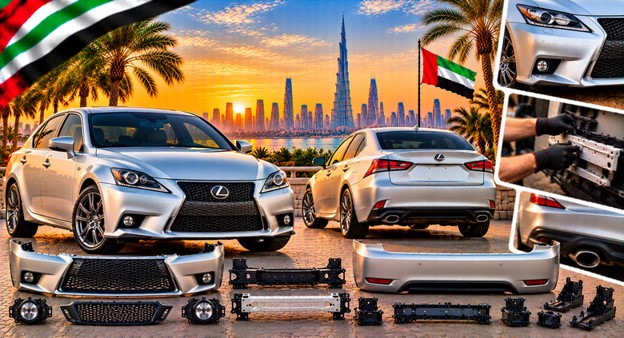
A used bumper removed from a donor Lexus may offer the right shape and factory mounting points without the cost of a new genuine cover. But it has already lived a life. The paint may have faded in the sun, a corner might have been repaired, or the underside may carry damage that is invisible while the bumper sits upright in a warehouse.
Look for:
- Cracks around the mounting tabs and corners.
- Plastic welding, filler or fresh paint that has not been disclosed.
- Warping along the upper edge and wheel-arch joins.
- Missing sensor holders, grilles, reflectors or trim covers.
- Scratches and fading that will show through after fitting.
- Signs that the bumper was forced into place after an earlier collision.
Ask for photographs taken from the front, rear and underside. If the seller refuses to show the mounting points, treat that as a warning rather than a small inconvenience.
A used bumper is only a bargain if it arrives complete enough to fit, can be painted or colour-matched sensibly, and does not send you back to the parts counter for a second round of purchases.
Are aftermarket Lexus IS250 bumpers any good?
Some are. Some are a headache in a cardboard box.
The term “aftermarket” covers a wide range of products, from carefully manufactured replacement covers to cheaper shells with inconsistent contours or mounting positions. Without inspecting the exact item or reviewing credible manufacturer information, it would be misleading to declare all aftermarket bumpers good or bad.
Ask the supplier three practical questions. Who made it? What warranty applies if the mounting points do not line up? Can the workshop dry-fit it before painting?
That last question matters more than it might sound. Paint is expensive to redo, and a bumper that needs trimming or excessive adjustment after it has been painted can turn a low initial quote into an irritating bill. Confirm the workshop’s policy before authorising the work.
Lexus IS250 bumper prices: what can be verified?
Online genuine-parts catalogues provide useful reference points, but they do not establish the price of a bumper sitting in a UAE warehouse today.
For example, one overseas catalogue lists a front bumper cover for certain 2006–2009 Lexus IS250 applications under part number 52119-53925 at a displayed price of US$382.43, against a listed MSRP of US$530.10. Another listing shows US$303.95 for part number 52119-53990, a front bumper cover associated with specified 2010–2013 IS250/IS350 configurations. These are overseas advertised catalogue prices, not confirmed UAE quotations.
Do not convert those figures into a supposed UAE market price and call the result a quote. Shipping, import charges, availability, VAT treatment, paint, clips and labour can all change the final amount. The listings also illustrate why matching the part number matters: similar-looking bumper covers may have different equipment specifications.
For a useful comparison, request a written quote with the bumper’s condition, part number, delivery, paint and fitting costs itemised. If a seller gives only one total, ask what is included.
What changes the fitted price?
The bumper itself is only the beginning. A garage may need to remove the old cover, transfer reusable fittings, replace broken clips, prepare the new surface, match the paint and refit everything without leaving uneven gaps.
| Cost item | Why it affects the bill |
| Bumper cover | Genuine, used and aftermarket options carry different purchase costs |
| Delivery or import | Particularly relevant when the part is sourced from outside the UAE |
| Paint and preparation | A bare cover generally needs preparation and colour matching |
| Removal and installation | Labour depends on access, damage and the work needed to transfer fittings |
| Clips and retainers | Old fasteners may be brittle, missing or damaged |
| Grilles and trim | These may be separate from the main bumper cover |
| Parking sensors and wiring | Damaged holders or connectors can add work |
| Additional repairs | Broken brackets or damage behind the cover may only become clear after removal |
Ask for a complete fitted quotation, not simply the lowest bumper price. Request separate figures for the part, paint, labour and any additional fittings. That makes it much easier to compare two garages fairly.
How to compare quotes without being misled
Imagine two offers for the same Lexus IS250. One appears cheaper but excludes painting and several missing fittings; the other costs more upfront but includes preparation, installation and replacement clips. The first quote may look attractive until the workshop starts adding items.
Use the same checklist for each supplier:
| Question | Quote A | Quote B |
| Exact part number confirmed against VIN? | Yes / No | Yes / No |
| New genuine, used original or aftermarket? | Specify | Specify |
| Front or rear bumper cover? | Specify | Specify |
| Paint included? | Yes / No | Yes / No |
| Required trim and clips included? | Yes / No | Yes / No |
| Installation included? | Yes / No | Yes / No |
| Sensor-related work included, if applicable? | Yes / No | Yes / No |
| Warranty and return terms written down? | Yes / No | Yes / No |
| Final fitted total in AED? | Amount | Amount |
Do not fill the table with guessed prices. Obtain actual offers from suppliers and workshops, and compare like with like. A written quote is more useful than a confident promise over the phone.
Can the existing bumper be repaired instead?
Before buying a replacement, ask a competent body-repair workshop whether the damage is repairable.
A shallow scuff or a localised crack may be repairable, depending on the plastic, the location and whether the bumper can be restored without compromising its fit or finish. A bumper with multiple broken mounts, substantial deformation or extensive previous repairs is a different proposition.
The question is not simply, “Can you fix it?” Almost anything can be made to look better with enough filler and paint. Ask whether the repaired area will remain secure, whether the mounting tabs can be restored properly and whether the finished surface is likely to match the surrounding panels.
For a small scrape, replacement can be unnecessary spending. For a badly split bumper that has lost several mounting points, repeated repairs may cost more and still leave you with an untidy fit.
Which Lexus IS250 bumper parts may need replacing too?
A bumper cover is not the entire bumper assembly. Depending on the year and specification, other items may be separate and may need transferring from the old cover or buying anew.
Check the condition of:
- Upper and lower grilles.
- Side retainers and mounting brackets.
- Clips, screws and fasteners.
- Fog-lamp surrounds or other lower trim, where fitted.
- Tow-eye cover.
- Parking-sensor holders and wiring connections.
- Reflectors and rear trim, where fitted.
- Lower undertray connections and wheel-arch liners.
The genuine-parts listings distinguish bumper covers from items such as clips, retainers and tow-eye covers. That is a useful reminder not to assume every small fitting comes with the main cover.
Before ordering, have the workshop inspect the existing fittings. Reusing undamaged parts can keep costs down, but worn or broken clips should not be forced back into service merely to save a few dirhams.
Parking sensors and other equipment: get the details right
A bumper with the wrong sensor openings can leave you with unnecessary holes, blank spaces or extra work. Some bumper-cover listings distinguish between vehicles with and without parking sensors; other equipment differences can affect the required cover as well.
Check the car itself rather than relying on a generic description. Does it have front or rear parking sensors? Are there washers for the headlamps? Is the bumper part of a sport-package specification? Does the vehicle have any additional camera or driver-assistance equipment that needs to be accommodated?
Not every Lexus IS250 has the same equipment, and not every market specification is identical. If your car has sensors, confirm that their holders fit securely and that the wiring has not been stretched, trapped or left disconnected during installation.
After refitting, test the relevant equipment before accepting the car. A smooth-looking bumper is not a successful repair if a parking sensor now gives a constant warning.
Facelift styling and sport-package differences
The Lexus IS250’s appearance changed across production years, and bumper covers can differ even within a broad year range. Sport-package variants and different equipment combinations can also call for different parts.
This is where a photograph can mislead. Two bumper covers may look nearly identical from the front while differing around a grille opening, lower edge, sensor position or mounting detail. A supplier may genuinely believe the part fits, yet still be working from an incomplete listing.
Compare the replacement with your existing bumper before the paint goes on. Check the overall profile, grille openings, wheel-arch edges and the shape around the lamps. If the supplier has a catalogue illustration, use it as a guide, not as proof of fitment.
When there is doubt, confirm the part number through the VIN and ask the workshop to verify the physical fit before painting.
UAE heat, sunlight and the condition of used bumpers
A used bumper can look tidy in a shaded store and rather less convincing once it is parked outside in full daylight.
In the UAE, sustained heat and strong sun can contribute to fading, brittle plastic and deterioration of exposed finishes. The exact condition depends on the part’s age, storage, prior repairs and exposure; a bumper should not be rejected simply because it is used, but it should be inspected carefully.
Look along the top edge and around the corners, where stress and previous repairs may be easiest to miss. Check for uneven paint texture, cracking around fastener holes and differences in colour between the bumper and adjacent body panels.
Do not assume a used bumper will match your Lexus’s paint just because the donor car was the same colour. Paint ages, and two cars with the same factory colour code may look different after years of sun exposure. A body shop should assess the colour match under suitable lighting and explain whether blending adjacent panels is likely to be necessary.
What to inspect before paying for a used bumper
Treat the purchase like an inspection, not a lucky dip.
Check the mounting points
Look for cracked tabs, missing retainers and repairs hidden behind the cover.
Inspect the whole surface
Ask for clear photographs of the corners, lower edge and areas around every opening.
Confirm all included parts
Establish whether grilles, trim, sensor holders and covers are included or sold separately.
Get the return terms in writing
Clarify what happens if the bumper arrives damaged or does not match the confirmed specification.
If the bumper is being delivered, ask how it will be packaged. Large plastic covers can be damaged in transit, particularly around the corners and mounting tabs. Keep the listing, messages and delivery photographs until the part has been inspected and accepted.
How long does bumper replacement take?
There is no reliable single timeline for every Lexus IS250 repair. Removing and fitting a straightforward bumper cover may be relatively quick, but a painted replacement often requires additional preparation and drying time. Damage behind the cover, missing fittings or a delayed part can extend the job.
Ask the workshop to separate the work into three stages:
- Fitment check: remove or test-fit the cover and verify the mounting points.
- Paint preparation: prepare the surface, apply the colour and finish, and allow suitable curing time.
- Final installation: refit trim and sensors, align the bumper and test the relevant equipment.
If the car is needed for daily commuting or business use, confirm the expected handover time before leaving it. A workshop that has the correct part in stock and can verify the fit may be a safer choice than one offering a lower price but an uncertain delivery date.
What should a workshop do before fitting the replacement?
The old bumper should not simply be pulled off and the new one pushed on without checking what lies behind it.
A sensible workshop will inspect the retainers, brackets, wheel-arch connections and any visible damage to the surrounding bodywork. It should also check whether the bumper has been repaired previously and whether the new cover needs additional fittings.
Before paint, the workshop should verify the part’s fit against the car. This is especially important for aftermarket covers, where adjustments may be needed. Painting first and discovering fitment problems afterwards risks extra labour and a second paint job.
Ask the workshop to explain any recommended additional work before authorising it. If it finds damaged brackets or other problems once the old bumper is removed, request photographs and a revised estimate rather than an unexplained increase in the final bill.
What should you check after installation?
Stand back and look at the car in daylight. Then get closer.
The gap between the bumper and the bonnet, wings, lamps or boot-area panels should look consistent for the vehicle’s design. Check that the corners sit securely, the wheel-arch liners are attached and the lower edge has not been left loose. Inspect the paint for obvious differences in shade, texture or finish.
Then test any equipment that could have been disturbed. If the car has parking sensors, check their operation in a safe setting. Confirm that trim pieces, grilles and covers are present and firmly fitted.
Keep the invoice and any warranty paperwork. If a corner pops out, a sensor warning appears or the paint begins to show a problem, contact the workshop promptly and document the issue with photographs. Do not wait until a small fitment issue becomes a bigger repair.
How a bumper replacement can affect resale value
A well-fitted replacement bumper does not automatically damage a Lexus IS250’s resale prospects. Buyers are more likely to be concerned about poor repairs, inconsistent paint, visible gaps and evidence of an unexplained accident.
If you intend to sell the car later, retain the invoice and note whether the bumper was new genuine, used original or aftermarket. Clear paperwork helps explain what was replaced and why. It cannot prove that the car has never been in an accident, but it gives a future buyer a more useful record than a vague statement that “the bumper was changed”.
For a well-kept IS250, matching the original appearance may justify spending more on a suitable part and professional paintwork. For an older daily driver with existing cosmetic wear, a clean used bumper may be the more proportionate decision.
Do not spend heavily on cosmetic perfection without considering the car’s overall condition. The bumper should make sense as part of the vehicle’s value, not become an expensive standalone project.
Insurance, accident repairs and documentation
If the damage followed a collision, check your insurance policy and the applicable claims process before authorising repairs. The right steps depend on your cover, the circumstances of the incident and the requirements that apply to your case.
Do not assume you can replace the bumper first and sort out the paperwork afterwards. Ask the insurer whether an inspection, estimate or approval is required, and clarify which repair options are permitted. Keep photographs of the damage, the repair estimate, invoices and any approval or claim reference.
If you are paying privately for a minor scrape, retain the same basic records. A dated invoice that identifies the part and work performed is useful for future maintenance and resale.
Where the collision may have affected brackets, sensors or other equipment behind the bumper, make sure the repair scope includes the necessary inspection rather than only restoring the exterior appearance.
The cost of delaying a bumper repair
A cracked bumper does not always require immediate replacement, but leaving it unattended can create avoidable problems.
A loose corner may catch on a kerb or be pulled further out of place. Broken retainers can allow movement, and a damaged lower edge may worsen with repeated contact. If the bumper has sharp or loose sections, it may also present a practical safety concern.
There is a difference between cosmetic damage and a cover that is no longer securely attached. Ask a workshop to assess the damage rather than deciding from a photograph alone.
If the bumper is stable and the damage is purely cosmetic, you may be able to plan the repair around your budget. If it is hanging loose, obstructing equipment or exposing damaged fittings, have it checked promptly. Delaying a small repair is not always a saving if it leads to further damage or a second visit.
Choosing a supplier for Lexus IS250 bumpers in UAE
A useful supplier does more than quote a price and ask for payment. They should be able to identify the bumper, explain its condition and confirm which fittings are included.
When comparing suppliers, ask for the part number, clear photographs, the bumper’s origin and written return terms. If it is used, ask whether it has been repaired or repainted. If it is aftermarket, request the manufacturer or product reference and clarify how fitment problems are handled.
For a replacement in the UAE, also confirm delivery arrangements and whether the bumper is physically available or must be sourced elsewhere. “Available” can mean several things in a parts conversation; get a realistic dispatch or collection date.
PartFinder UAE can be included as a route for buyers to organise their search, but the final choice should still depend on the actual item, its compatibility and the terms offered. A listing is a starting point, not a substitute for checking the part.
Common buying mistakes to avoid
The most expensive mistake is not always buying the wrong bumper. Sometimes it is buying the right bumper on terms that leave the buyer responsible for all the missing pieces.
Watch out for these traps:
- Choosing by model name alone without confirming year and specification.
- Assuming the quoted price includes paint and installation.
- Treating every “OEM-style” listing as a genuine Lexus part.
- Buying a used bumper without seeing the mounting points.
- Ignoring sensor openings or other equipment differences.
- Paying before confirming the return policy and delivery condition.
- Approving paintwork before the cover has been test-fitted.
- Comparing a bare bumper price with another supplier’s complete fitted quotation.
A good deal should survive a few sensible questions. If it falls apart as soon as you ask for a part number or a written breakdown, it probably was not much of a deal.
A practical decision matrix for Lexus IS250 owners
Your best option depends on the car’s condition, your budget and how long you plan to keep it.
| Your situation | Option worth considering | What to verify |
| Newer or exceptionally well-kept car | New genuine OEM | Correct part number, finish and warranty |
| Older car with a limited repair budget | Used genuine OEM | Structural condition, previous repairs and paintwork |
| Replacement genuine part is difficult to source | Quality aftermarket | Manufacturer, fitment policy and return terms |
| Minor scuff or localised crack | Repair existing bumper | Whether the damage can be restored properly |
| Broken mounts or extensive damage | Replacement may be more sensible | Brackets, retainers and hidden damage |
| Car has parking sensors or special trim | Any option, after exact specification check | Openings, holders and included fittings |
The matrix is a guide, not a substitute for inspecting the damaged bumper. A repairable cover can be worth keeping; a used one with poor repairs may not be worth taking home even if it is cheap.
What to tell a supplier before requesting a quote
You can save time by sending the essential details together rather than exchanging a dozen messages.
Include the Lexus IS250’s model year, VIN or chassis information, front or rear bumper position, and photographs of the current bumper. Mention parking sensors, headlamp washers, sport-package styling or any unusual trim if fitted.
Ask the supplier to confirm:
- Exact part number and fitment.
- Whether the bumper is new genuine, used genuine or aftermarket.
- Its condition and whether it has been repaired.
- Which grilles, covers, clips and fittings are included.
- Whether it is painted or supplied unpainted.
- Delivery time and return conditions.
- The complete price, with delivery, paint and fitting separated.
That gives the seller enough information to provide a more meaningful answer. It also gives you a record of what was promised if the delivered part turns out to be different.
How to keep the repair within budget
Set the budget around the finished job rather than the part alone. If you are choosing a used bumper, leave room for paintwork, missing clips or a small amount of preparation. If you are buying a new cover, confirm whether separate trim pieces will need to be transferred or replaced.
Do not cut costs by skipping the fitment check or ignoring damaged retainers. Those shortcuts can produce loose edges, uneven gaps or repeat labour. Equally, do not replace every fitting automatically if the workshop can establish that some are sound and suitable for reuse.
For an older IS250, a tidy used original bumper can be a reasonable compromise. For a car you intend to keep for years, the extra cost of a correct new part may be easier to justify. Either way, ask the workshop to explain the trade-off before you approve the bill.
The buyer’s final checklist
Before paying, make sure you can answer these questions without relying on guesswork.
- Have I confirmed the exact model year, chassis and bumper specification?
- Has the supplier verified the part number against the VIN or chassis details?
- Do I know whether the bumper is new genuine, used genuine or aftermarket?
- Have I checked the mounting points and surface condition?
- Are all necessary grilles, clips, covers and sensor holders accounted for?
- Is paintwork included, and if not, have I priced it separately?
- Does the written quote show the full fitted cost in AED?
- Have I checked delivery, return and warranty conditions?
- Will the workshop verify fitment before painting?
- Have I allowed for inspection of brackets and fittings behind the old bumper?
If several answers are still unclear, hold off on the purchase. A short delay to verify the details is better than paying for a bumper that cannot be fitted properly.
UAE Price Reference Update: 23 October 2026
The available online catalogue evidence provides overseas reference prices for selected genuine Lexus IS250 bumper covers, but it does not establish current UAE retail prices or local stock availability.
| Reference part | Application shown in the catalogue | Displayed overseas price | What the figure does not include or confirm |
| 52119-53925 | Selected 2006–2009 IS250 applications | US$382.43 | UAE availability, import costs, paint and fitting |
| 52119-53990 | Selected 2010–2013 IS250/IS350 configurations | US$303.95 | UAE availability, delivery, paint and fitting |
| 52119-53979 | Selected 2011–2013 applications without sport package, headlamp washers or front sensors | US$345.35 | Whether the specific car matches this configuration and the final UAE cost |
Price references: overseas genuine-parts catalogue listings checked for this article. These are displayed US-dollar prices, not confirmed UAE quotations; listings and availability can change.
For a reliable UAE comparison, obtain dated quotations from suppliers in Dubai, Abu Dhabi, Sharjah or your nearest emirate. Ask each supplier to confirm the exact part number, condition, availability, VAT treatment, delivery, painting and labour. A used bumper and a new genuine bumper should not be compared as if they were equivalent products.
The most useful figure is the complete fitted price in AED. Until a supplier confirms that figure for your particular Lexus IS250, any claimed local price range should be treated cautiously rather than presented as established market evidence.
Frequently Asked Questions
Categories
- Audi
- BMW
- Car Accessories
- Car Tips
- Ford
- Land Rover
- Mazda
- Range Rover
- Top 10
- UAE Car Parts
- Used Car Parts
- Toyota
- Replacement Engines
- Nissan
- Hyundai
- Mitsubishi
- Volkswagen
- Honda
- Kia
- Chevrolet
- Dodge
- Jeep
- Subaru
- Renault
- Lexus
- Mercedes
- Suzuki
- Hummer
- Porsche
- Infiniti
- Peugeot
- GMC
- Mini
- Volvo
- Replacement Gearboxes
- MG
- Jaguar
- Skoda
- Cadillac
- Daihatsu
- Fiat
- German Car Parts
- Japanese Car Parts
- Aftermarket Car Parts
- Genuine Car Parts
- New Car Parts
- Reconditioned Car Parts
- European Car Parts
- American Car Parts
- Korean Car Parts
- British Car Parts
- Chinese Car Parts
- Sports/Exotic Car Parts
- Luxury Car Parts
- Performance Car Parts
- SUV/4x4 Spare Parts
- Truck Spare Parts
- EV Car Parts
- Hybrid Car Parts
- Auto Spare Parts in UAE
- Tesla
- Isuzu
- Ram
- Ferrari
- Bentley
- Lamborghini
- Genesis
- Maserati
- Lincoln
- Chrysler
- Opel
- Citroen
- SsangYong
- Seat
- McLaren
- Aston Martin
- Rolls Royce
- Maybach
- Alfa Romeo
- Bugatti
- Scion
- Abu Dhabi Car Parts
- Ajman Car Parts
- Al Khan Car Parts
- Al Sajaa Car Parts
- Deira Car Parts
- Dubai Car Parts
- Fujairah Car Parts
- Industrial Area 6 Car Parts
- Mussafah Car Parts
- Ras Al Khaimah Car Parts
- Sharjah Car Parts
- Umm Al Quwain Car Parts
- Acura
- BYD
- Chery
- Dacia
- DS
- Geely Emgrand
- EXEED
- GAC
- GAC Gonow
- Geely
- Gonow
- Great Wall
- Haima
- Haval
- Holden
- Iveco
- JAC
- Jaecoo
- Jetour
- Lotus
- Omoda
- Proton
- Renault Samsung
- Roewe
- Lucid
- Replacement Headlight
- Replacement Bumper