SUV and 4x4 Spare Parts in UAE: Buyer’s Guide for Dessert, City and Off-Road Driving
July 21, 2026
Understanding the UAE SUV and 4x4 Spare Parts Market
The UAE isn't simply a country where SUVs are popular.
It's a country where they make sense.
From weekday school runs in Dubai to long business journeys between Abu Dhabi and Sharjah, weekend desert adventures around Al Badayer, mountain drives through Jebel Jais and heavy towing duties across the Emirates, SUVs and 4x4s have become an essential part of everyday life. Their versatility explains why models such as the Toyota Land Cruiser, Nissan Patrol, Toyota Prado, Mitsubishi Pajero, Ford Everest, Jeep Wrangler, Land Rover Defender and Toyota Fortuner remain among the country's most trusted vehicles.
That popularity brings another reality.
Every vehicle eventually needs replacement parts.
Whether you're replacing worn suspension after years of off-road driving, sourcing cooling components before another UAE summer or looking for body panels after an unexpected incident, choosing the right SUV and 4x4 spare parts in UAE has a direct impact on safety, reliability and long-term ownership costs.
The challenge isn't finding parts.
The challenge is choosing the right ones.
Today's market offers genuine, OEM, aftermarket, used and reconditioned components, each promising value in different ways. Some deliver exactly that. Others become expensive lessons once installed.
This guide is designed to help you make informed decisions before spending your money.
Throughout this article, you'll learn which parts deserve investment, where savings make sense, how UAE driving conditions influence component wear and how to buy confidently without compromising quality.
Because building a dependable SUV starts with informed choices rather than impulse purchases.
Why SUVs and 4x4 Vehicles Dominate UAE Roads
SUV ownership in the UAE continues to grow because these vehicles adapt remarkably well to the country's varied driving conditions.
Families appreciate the additional passenger space.
Businesses rely on their durability.
Adventure enthusiasts value their off-road capability.
Towing enthusiasts need their strength.
One vehicle often fulfils several roles.
That's a compelling proposition.
Unlike smaller passenger cars, modern SUVs comfortably handle motorway cruising, city traffic, beach access, mountain roads and desert tracks while carrying passengers, luggage and equipment with ease. This versatility makes them particularly attractive to UAE residents who expect one vehicle to perform reliably throughout the year.
Common Reasons UAE Drivers Choose SUVs
- Family travel and daily commuting.
- Desert camping and dune driving.
- Boat and trailer towing.
- Long-distance motorway journeys.
- Business and commercial use.
- Weekend off-road adventures.
- Improved driving position and visibility.
UAE Reality
High ambient temperatures, fine desert sand, occasional flooding, heavy traffic and long motorway journeys create operating conditions that accelerate wear on cooling systems, suspension, brakes, tyres and air filtration components.
That's why preventive maintenance is especially important for SUV owners across the Emirates.
Brand Spotlight
Among the most commonly serviced SUVs in UAE workshops are:
- Toyota Land Cruiser
- Nissan Patrol
- Toyota Prado
- Mitsubishi Pajero
- Jeep Wrangler
- Land Rover Defender
- Ford Everest
- Chevrolet Tahoe
- GMC Yukon
- Lexus LX
Each model has its own strengths, maintenance requirements and common replacement parts.
Choosing the Right SUV and 4x4 Spare Parts in UAE
Buying replacement parts isn't simply about replacing something that's broken.
It's about preserving the vehicle's performance, reliability and resale value.
The best purchasing decisions begin with understanding exactly what your vehicle requires.
An SUV that spends most of its life on Sheikh Zayed Road has very different maintenance priorities from one tackling rocky trails in Hatta or soft sand near Liwa.
Driving conditions influence component wear more than many owners realise.
Before purchasing any replacement component, consider:
- Your driving habits.
- Vehicle mileage.
- Maintenance history.
- Intended future use.
- Manufacturer recommendations.
- Budget and long-term ownership plans.
These factors should influence every buying decision.
Not marketing claims.
Workshop Insight
Experienced UAE technicians rarely recommend replacing a failed component without inspecting related parts at the same time.
A worn shock absorber, for example, often accelerates tyre wear, suspension bush deterioration and steering component fatigue.
Repairing the complete system usually proves more economical than replacing individual parts repeatedly.
Expert Tip
Always verify compatibility using your VIN, engine code and production year before ordering replacement parts.
Small specification differences can prevent correct installation.
Genuine vs OEM vs Aftermarket vs Used vs Reconditioned Parts
One of the biggest decisions SUV owners face is selecting the right category of replacement parts.
There isn't a universal answer.
Each option offers advantages depending on your priorities.
Spare Parts Comparison
| Part Type | Quality | Cost | Warranty | Best For |
| Genuine Parts | Excellent | Highest | Manufacturer | Long-term ownership |
| OEM Parts | Excellent | High | Usually Included | Reliable replacement |
| Aftermarket Parts | Varies | Moderate | Depends on Brand | Budget-conscious buyers |
| Used Parts | Good (Condition Dependent) | Lower | Limited | Older vehicles |
| Reconditioned Parts | Very Good | Moderate | Often Available | Major components |
Genuine Parts
Manufactured to the exact specification supplied by the vehicle manufacturer, genuine parts generally offer the highest confidence in terms of fit, durability and reliability.
They usually carry the highest price.
OEM Parts
OEM (Original Equipment Manufacturer) components are produced by the same companies that often manufacture parts for the vehicle's original assembly but are sold without the vehicle manufacturer's branding.
They frequently deliver excellent value.
Aftermarket Parts
Quality varies considerably.
Premium aftermarket brands often produce excellent replacement components, while low-cost alternatives may compromise durability or fitment.
Research matters.
Used Parts
Used parts remain popular for older SUVs where new components may be difficult or expensive to source.
Condition should always be verified before purchase.
Reconditioned Parts
Engines, gearboxes, steering racks, alternators and turbochargers are commonly reconditioned to restore performance while reducing replacement costs.
Choose suppliers offering documented refurbishment processes and warranty support.
Real Buyer Question
"Should I always buy genuine parts?"
Not necessarily.
For many maintenance items, reputable OEM components provide virtually identical performance at a more competitive price.
Critical safety systems, however, deserve particular attention to quality.
How the UAE Climate Affects SUV Components
Few automotive environments place as much continuous stress on vehicles as the UAE.
Summer temperatures frequently exceed 45°C.
Road surfaces become significantly hotter.
Air conditioning systems operate almost continuously.
Cooling systems work harder.
Engine oils experience greater thermal stress.
Dust enters air filtration systems more frequently.
These conditions accelerate wear on several key components.
Components Most Affected by UAE Conditions
| Component | Primary Cause |
| Radiators | High operating temperatures |
| Air Filters | Fine desert dust |
| Suspension Bushes | Heat and rough terrain |
| Shock Absorbers | Off-road driving and towing |
| Tyres | High road temperatures |
| Batteries | Continuous heat exposure |
| Brake Components | Heavy vehicle weight and heat |
Workshop Insight
Cooling systems are among the most frequently inspected areas during UAE summers because even minor weaknesses quickly become significant problems under sustained high temperatures.
Preventive maintenance costs considerably less than engine repairs.
Desert Driving vs City Driving vs Off-Road Driving Requirements
Not every SUV experiences the same life.
Some spend years commuting between Dubai Marina and Downtown Dubai.
Others cross dunes every weekend.
Many do both.
That's why replacement part selection should reflect how the vehicle is actually used.
Driving Condition Comparison
| Driving Style | Components That Need Extra Attention |
| City Driving | Brakes, batteries, air conditioning |
| Motorway Driving | Cooling system, tyres, wheel alignment |
| Desert Driving | Air filters, suspension, cooling system |
| Off-Road Trails | Suspension, steering, underbody protection |
| Heavy Towing | Transmission, brakes, cooling components |
Buyer Psychology
Many owners buy replacement parts based on what other enthusiasts recommend.
The better approach is choosing components that match your own driving habits rather than someone else's.
A family SUV used mainly in the city doesn't require the same specification as a dedicated desert vehicle.
Common Mistakes Buyers Make When Purchasing SUV Spare Parts
Most expensive mistakes happen before installation.
They happen during the buying process.
Avoid these common pitfalls:
- Buying parts based solely on the lowest price.
- Ignoring VIN compatibility.
- Mixing low-quality components with premium systems.
- Delaying cooling system repairs.
- Replacing individual suspension parts instead of inspecting the complete assembly.
- Purchasing unknown brands without warranty support.
- Overlooking labour and installation costs.
- Assuming every aftermarket part offers the same quality.
SUV Spare Parts Buyer's Checklist
Before purchasing replacement parts, ask yourself:
- Is the part compatible with my exact vehicle?
- Do I genuinely need genuine parts, or will OEM components provide the same performance?
- Does the supplier provide warranty coverage?
- Has the workshop confirmed the diagnosis?
- Will supporting components also require replacement?
- Is installation included in the quoted price?
- Are replacement parts readily available in the UAE if future servicing is required?
Key Takeaways
Choosing the right SUV and 4x4 spare parts in UAE is about far more than replacing worn components. It requires understanding how your vehicle is used, recognising the demands of the UAE's climate and selecting parts that balance quality, reliability and value.
Whether you're searching for genuine, OEM, used or reconditioned parts for Sale, taking the time to compare options can save significant money and prevent unnecessary repairs in the future. Platforms such as PartFinder UAE make it easier to compare trusted suppliers, helping owners source compatible SUV and 4x4 components with greater confidence while keeping their vehicles ready for city commuting, family travel, desert exploration and demanding off-road adventures.
Engine and Cooling System Parts
An SUV can forgive a lot. Miss a wash after a desert trip? Fine. Delay replacing a scratched bumper? Hardly a catastrophe. Ignore the engine or cooling system because "it still drives normally"? That's where expensive stories begin.
The UAE has a habit of exposing weaknesses that cooler climates never reveal. A radiator that copes perfectly well in northern Europe may struggle after months of crawling through Dubai traffic in peak summer. A neglected air filter becomes more than just dirty once fine desert dust starts restricting airflow. Even a minor coolant leak can escalate rapidly when outside temperatures push well beyond 45°C.
For that reason, the engine and cooling system deserve more attention than almost any other part of a modern SUV. They don't simply keep the vehicle moving; they determine how confidently it performs whether you're towing a boat to the marina, climbing mountain roads in Ras Al Khaimah or spending hours exploring desert tracks.
Engine Components That Wear Out Faster in the UAE
Every engine contains hundreds of moving parts, yet only a relatively small number account for the majority of workshop repairs across the Emirates.
Heat accelerates wear.
Dust increases contamination.
Heavy loads raise operating temperatures.
Traffic extends idle time.
None of those conditions are unusual in the UAE.
Engine Components That Commonly Require Replacement
| Component | Why It Wears Prematurely | Typical Warning Signs |
| Air Filter | Desert dust | Reduced performance, poor fuel economy |
| Spark Plugs | High combustion temperatures | Rough idle, difficult starting |
| Ignition Coils | Continuous heat cycles | Misfires, warning light |
| Engine Mounts | Heavy vehicle weight | Excessive vibration |
| Timing Belt/Chain Components | High mileage | Rattling noises, poor timing |
| Belts and Tensioners | Heat and age | Squealing sounds |
| Gaskets and Seals | Thermal expansion | Oil or coolant leaks |
These parts rarely fail without warning.
Owners simply overlook the warning signs until the repair becomes significantly more expensive.
Workshop Insight
Technicians often discover that what appears to be a serious engine problem actually begins with something remarkably ordinary—a clogged air filter, ageing spark plugs or deteriorating ignition coils. Regular inspections prevent many unnecessary repairs.
Radiators, Water Pumps and Cooling Systems
Cooling systems don't receive much attention until the temperature gauge climbs.
By then, options become limited.
Modern SUVs generate considerable heat, particularly when carrying passengers, towing trailers or navigating soft sand where engines work much harder than they do on normal roads.
A healthy cooling system keeps operating temperatures stable regardless of driving conditions.
It isn't just the radiator doing the work.
Several components share the responsibility.
Key Cooling System Components
- Radiator
- Water pump
- Thermostat
- Cooling fan
- Expansion tank
- Radiator hoses
- Coolant reservoir
- Pressure cap
- Temperature sensors
A weakness anywhere within this system can affect the entire engine.
Signs Your Cooling System Needs Attention
- Temperature gauge rising unexpectedly.
- Coolant loss without obvious leaks.
- White steam beneath the bonnet.
- Sweet smell after driving.
- Cooling fan operating constantly.
- Engine overheating in traffic.
- Reduced air-conditioning efficiency during hot weather.
Expert Tip
Never continue driving an overheating SUV simply because the engine appears to recover once it starts moving again. Intermittent overheating often signals an underlying cooling issue that will eventually worsen.
Air Filters for Desert Dust Protection
Few countries challenge air filtration systems quite like the UAE.
Fine desert sand is everywhere.
It enters engine bays, accumulates inside intake systems and gradually restricts airflow if filters are neglected.
The consequences aren't always dramatic.
Instead, performance slowly declines.
Fuel consumption increases.
Throttle response feels less immediate.
Owners often blame the engine itself rather than the inexpensive filter protecting it.
Why Air Filters Matter
A clean air filter helps:
- Improve engine efficiency.
- Maintain fuel economy.
- Reduce engine wear.
- Protect turbochargers.
- Preserve airflow.
- Extend engine lifespan.
Replacing an air filter at appropriate intervals is one of the simplest maintenance tasks with one of the highest returns.
Buyer Psychology
Many motorists happily spend thousands upgrading suspension or wheels while delaying a relatively inexpensive air filter replacement.
Ironically, the cheaper maintenance item often delivers a more noticeable improvement in daily driving.
Turbochargers and Intercoolers for Modern SUVs
Turbocharged engines have become increasingly common as manufacturers seek better performance alongside improved fuel efficiency.
When operating correctly, turbochargers provide excellent torque for towing, motorway overtaking and off-road climbing.
They also generate substantial heat.
That's where intercoolers become essential.
An intercooler reduces the temperature of compressed intake air before it enters the engine, improving combustion efficiency and protecting internal components.
Warning Signs of Turbocharger Problems
| Symptom | Possible Cause |
| Loss of power | Turbo wear |
| Excessive smoke | Oil seal failure |
| High oil consumption | Turbo bearing wear |
| Whining noise | Damaged compressor |
| Poor acceleration | Boost leaks |
Workshop Insight
Oil quality plays a greater role in turbocharger longevity than many owners appreciate. Delayed oil changes allow contaminants to circulate through turbo bearings operating at extremely high rotational speeds.
Engine Mounts, Belts and Timing Components
These components rarely receive the same attention as engines or transmissions.
Yet they quietly support the entire powertrain.
Engine mounts isolate vibration.
Drive belts power auxiliary systems.
Timing components synchronise valve operation with crankshaft rotation.
Failure isn't always immediate.
Sometimes deterioration develops gradually over thousands of kilometres.
Components Worth Inspecting Regularly
- Engine mounts
- Serpentine belts
- Timing belts
- Timing chain guides
- Belt tensioners
- Idler pulleys
Ignoring unusual noises simply because the vehicle still drives normally is rarely a wise decision.
Small mechanical problems have a habit of introducing larger ones.
When to Repair or Replace an SUV Engine
It's rarely an easy decision.
Repairing an engine may appear cheaper initially.
Replacing it can offer greater long-term value.
The correct answer depends on the extent of damage, vehicle age, mileage and future ownership plans.
Repair vs Replacement Comparison
| Factor | Repair Existing Engine | Replace Engine |
| Initial Cost | Usually Lower | Higher |
| Downtime | Moderate | Moderate to High |
| Long-Term Reliability | Depends on Damage | Often Better |
| Warranty | Limited | Usually Available |
| Best For | Minor Internal Repairs | Severe Engine Failure |
Real Buyer Question
"Is replacing an engine always too expensive to justify?"
Not necessarily.
For well-maintained SUVs with strong resale value—particularly popular models such as the Toyota Land Cruiser, Nissan Patrol or Lexus LX—a professionally installed replacement engine can often be considerably more economical than purchasing another vehicle of comparable condition.
The decision should be based on total ownership costs rather than the engine price alone.
Cost Factors Buyers Should Consider
- Engine purchase price.
- Labour charges.
- Fluids and filters.
- Mounts and gaskets.
- Cooling system inspection.
- ECU programming where required.
- Warranty coverage.
- Future maintenance costs.
Focusing only on the advertised component price often leads to unrealistic budgeting.
Engine Buying Checklist
Before purchasing an engine or major cooling system component, confirm the following:
- VIN compatibility.
- Engine code matches your vehicle.
- Complete service history where available.
- Compression or diagnostic test results.
- Warranty terms.
- Included accessories.
- Installation costs.
- Delivery time.
- Supplier reputation.
- Availability of future replacement components.
Brand Spotlight
SUV owners in the UAE frequently seek engine and cooling system components for:
- Toyota Land Cruiser
- Nissan Patrol
- Toyota Prado
- Mitsubishi Pajero
- Ford Everest
- Jeep Wrangler
- Chevrolet Tahoe
- GMC Yukon
- Land Rover Defender
- Lexus GX and LX
Because these models are widely used for family transport, towing and off-road adventures, replacement engines, radiators, water pumps, intercoolers and related components remain consistently in demand across the country.
Key Takeaways
The engine and cooling system form the mechanical heart of every SUV. Under UAE conditions, where extreme temperatures, fine dust and demanding driving are part of everyday ownership, preventative maintenance is often the difference between years of dependable service and an unexpectedly expensive repair.
If you're comparing engine, radiator, turbocharger or cooling components for Sale, don't focus solely on price. Prioritise compatibility, warranty, condition and supplier credibility. Platforms such as PartFinder UAE simplify the search by helping owners compare trusted suppliers and source quality genuine, OEM, used and reconditioned SUV parts with greater confidence, whether the vehicle is destined for city commuting, family holidays or demanding desert expeditions.
Transmission, Drivetrain and 4WD System
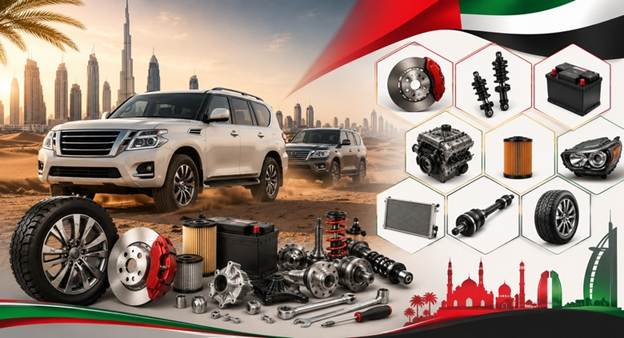
A powerful engine means very little if its power never reaches the wheels efficiently.
That's easy to forget because most transmission and drivetrain components do their work quietly, hidden beneath the vehicle and largely ignored until something feels... different. A slight hesitation pulling away from traffic lights. A faint vibration at motorway speed. An unfamiliar clunk when shifting between Drive and Reverse. Small symptoms, perhaps. Yet experienced technicians know these are often the first chapters of a much larger repair bill.
SUVs and 4x4s ask more of their drivetrains than ordinary passenger cars ever will. They're heavier. They tow more. They venture onto loose sand, rocky tracks and steep inclines where traction constantly changes. Every one of those situations places additional strain on transmissions, differentials, transfer cases and driveshafts.
Treat those systems well and they'll often reward you with years of dependable service. Ignore them because the vehicle "still drives"? That's a gamble many owners regret.
Automatic vs Manual Transmission Parts
Automatic gearboxes dominate the UAE SUV market, and for understandable reasons. Long commutes through Dubai, Abu Dhabi and Sharjah become far less tiring without a clutch pedal, while modern automatic transmissions also improve towing performance and fuel efficiency.
Manual gearboxes haven't disappeared, particularly among older 4x4s and dedicated off-road vehicles, but they're increasingly the exception rather than the rule.
Regardless of transmission type, internal components gradually wear with age, heat and heavy use.
Transmission Components That Commonly Need Replacement
| Component | Function | Common Symptoms |
| Torque Converter | Transfers engine power | Shuddering, slipping |
| Clutch Pack | Engages gears | Delayed acceleration |
| Valve Body | Controls hydraulic pressure | Harsh shifting |
| Solenoids | Manage gear changes | Warning lights, erratic shifting |
| Transmission Filter | Removes contaminants | Poor shift quality |
| Seals and Gaskets | Prevent fluid leaks | Oil beneath vehicle |
Transmission faults rarely appear overnight.
Most develop gradually.
Drivers simply become accustomed to the changing behaviour until the gearbox eventually forces the issue.
Workshop Insight
Many transmission failures begin with neglected fluid rather than catastrophic mechanical damage. Clean transmission fluid removes heat, lubricates internal components and maintains hydraulic pressure. Skipping routine servicing often shortens gearbox life far more than owners realise.
Transfer Case Components Explained
Ask someone what makes a 4x4 different from a conventional SUV and they'll usually mention four-wheel drive.
Ask a technician, and the conversation quickly turns to the transfer case.
The transfer case distributes engine power between the front and rear axles. Without it, a four-wheel-drive system simply can't perform as intended.
Although built for durability, transfer cases aren't immune to wear.
Heavy towing, repeated off-road driving and neglected lubrication all contribute to premature deterioration.
Common Transfer Case Components
- Drive chain
- Internal gears
- Bearings
- Oil seals
- Shift motor
- Selector mechanism
- Electronic actuators
Signs of Transfer Case Problems
- Grinding noises underneath the vehicle.
- Difficulty engaging four-wheel drive.
- Fluid leaks.
- Vibration while accelerating.
- Unusual clicking during tight turns.
- Warning lights relating to drivetrain systems.
The earlier these symptoms are investigated, the more likely repairs remain manageable.
Differentials and Axle Components
Differentials perform a task most drivers never notice.
That's exactly how they're supposed to work.
They allow wheels on the same axle to rotate at different speeds while cornering, improving stability and reducing tyre wear.
Off-road driving, however, places considerably greater demands on these components.
Loose sand, uneven terrain and heavy loads create continuous stress that gradually affects gears, bearings and axle shafts.
Components Worth Inspecting
| Component | Why It Matters |
| Differential Gears | Smooth power distribution |
| Pinion Bearings | Reduce friction |
| Axle Shafts | Transfer torque |
| Oil Seals | Prevent lubricant loss |
| Differential Housing | Protects internal components |
| Locking Differential Components | Improve off-road traction |
Expert Tip
Differential oil is inexpensive.
Replacing an entire differential isn't.
Routine fluid changes are among the simplest ways to extend drivetrain life.
Propeller Shafts and CV Joints
These components rarely receive much attention until vibration appears.
Then everyone notices.
The propeller shaft carries rotational power from the transmission to the differential, while constant velocity (CV) joints allow power to reach the wheels through varying steering angles and suspension movement.
Both experience significant stress during off-road driving.
Repeated impacts, suspension articulation and exposure to sand gradually accelerate wear.
Common Warning Signs
- Vibration under acceleration.
- Clicking while turning.
- Clunking noises.
- Torn CV boots.
- Grease leakage.
- Excessive driveline movement.
Replacing a damaged CV boot promptly often prevents the need for replacing the entire joint later.
Four-Wheel Drive System Maintenance
Many owners engage four-wheel drive only occasionally.
Unfortunately, infrequent use doesn't eliminate maintenance requirements.
In fact, systems left unused for extended periods can develop their own problems.
Electronic actuators seize.
Lubricants degrade.
Seals dry out.
Moving parts become less responsive.
Regular operation helps maintain system health.
Essential 4WD Maintenance
- Check transfer case oil.
- Inspect differential lubricants.
- Examine CV boots.
- Test four-wheel-drive engagement.
- Inspect driveshaft universal joints.
- Check axle seals.
- Verify electronic actuator operation.
- Inspect underbody protection after off-road trips.
Buyer Psychology
Some drivers assume that because four-wheel drive isn't engaged every day, it requires little attention.
The opposite is often true.
Ignoring maintenance for a system designed to operate under extreme loads can lead to expensive repairs precisely when it's needed most.
Signs Your Drivetrain Needs Replacement Parts
Mechanical systems rarely fail without warning.
The problem is recognising those warnings before they become failures.
Symptoms You Should Never Ignore
| Symptom | Possible Cause |
| Delayed gear engagement | Transmission wear |
| Slipping gears | Internal clutch deterioration |
| Vibrations while driving | Driveshaft or CV joint wear |
| Grinding noises | Differential damage |
| Fluid leaks | Failed seals or gaskets |
| Difficulty selecting 4WD | Transfer case fault |
| Clunking during acceleration | Universal joint or axle wear |
Any one of these symptoms deserves professional inspection.
Several appearing together usually indicate a drivetrain requiring immediate attention.
Repair or Replace the Transmission?
No owner enjoys hearing that a gearbox may need replacing.
But replacing isn't always the wrong decision.
Modern automatic transmissions are complex assemblies containing hundreds of precision-machined components. Once internal damage becomes widespread, repeated repairs can cost more than installing a properly reconditioned or replacement unit.
Repair vs Replacement Comparison
| Factor | Repair | Replacement |
| Upfront Cost | Lower initially | Higher |
| Reliability | Depends on fault | Usually more predictable |
| Downtime | Variable | Often planned |
| Warranty | Limited | Frequently longer |
| Best Choice | Minor faults | Extensive internal damage |
The right answer depends on diagnosis rather than assumptions.
Replacing parts unnecessarily wastes money.
Repairing severely worn components sometimes delays an inevitable replacement.
Real Buyer Question
"Can I buy a used transmission with confidence?"
Yes—provided you verify compatibility, mileage, service history where available, warranty terms and supplier reputation. A professionally inspected or reconditioned transmission often represents excellent value for older SUVs, particularly when purchased from established suppliers.
Drivetrain Buyer's Checklist
Before purchasing any major drivetrain component, confirm:
- VIN compatibility.
- Transmission code.
- Transfer case specification.
- Differential ratio.
- Four-wheel-drive configuration.
- Warranty coverage.
- Supplier reputation.
- Installation costs.
- Availability of replacement fluids and filters.
- Diagnostic confirmation from a qualified workshop.
Brand Spotlight
Transmission and drivetrain components are consistently among the most sought-after SUV parts for Sale in the UAE, particularly for:
- Toyota Land Cruiser
- Nissan Patrol
- Toyota Prado
- Jeep Wrangler
- Ford Everest
- Mitsubishi Pajero
- Chevrolet Tahoe
- GMC Yukon
- Land Rover Defender
- Lexus LX
These vehicles are frequently used for towing, long-distance travel and off-road driving, making drivetrain reliability a major priority for owners.
Key Takeaways
The transmission, drivetrain and four-wheel-drive system determine how effectively an SUV converts engine power into confident, controlled movement. Whether navigating city traffic, towing heavy loads or climbing soft dunes, every component—from the gearbox to the transfer case and differentials—must operate as a complete system.
If you're comparing drivetrain components for Sale, resist the temptation to buy on price alone. Correct specifications, proven quality, warranty support and professional installation are equally important. PartFinder UAE helps owners compare trusted suppliers offering genuine, OEM, used and reconditioned transmission and drivetrain components, making it easier to find the right parts for reliable performance across every type of UAE driving condition.
Suspension, Steering and Off-Road Components
Some drivers judge an SUV by its engine.
Others by its four-wheel-drive system.
Spend enough time around experienced off-road enthusiasts or workshop technicians, however, and a different answer usually emerges: look at the suspension first. It tells a story. One glance underneath the vehicle can reveal years of towing, countless desert crossings or a lifetime spent climbing kerbs in city traffic.
The irony is that suspension components rarely fail dramatically. They wear quietly. A bush cracks. A shock absorber loses pressure. A ball joint develops the slightest amount of play. The vehicle still drives, so the warning signs are ignored—until tyre wear becomes uneven, steering loses precision or the ride starts feeling strangely unsettled.
For SUVs operating in the UAE, suspension isn't merely about comfort. It affects safety, braking, handling and how confidently the vehicle copes with everything from motorway journeys to loose sand and rocky trails.
Suspension Parts for Desert and Off-Road Driving
Desert driving asks far more of an SUV than an ordinary commute.
Each time the vehicle lands after crossing a dune or travels across corrugated sand, suspension components absorb forces far beyond those experienced on paved roads. Add a fully loaded cabin, recovery equipment or a trailer into the equation, and the demands increase again.
That doesn't mean every off-road trip damages the suspension.
It does mean regular inspection becomes essential.
Suspension Components Most Affected
| Component | Primary Role | Common Cause of Wear |
| Shock Absorbers | Control suspension movement | Heat and repeated impacts |
| Coil Springs | Support vehicle weight | Heavy loads and ageing |
| Control Arms | Maintain wheel alignment | Rough terrain |
| Suspension Bushes | Reduce vibration | Heat and dust |
| Ball Joints | Allow steering movement | Dirt ingress and impact |
| Anti-Roll Bar Links | Improve stability | Uneven road surfaces |
Heavy SUVs naturally place greater loads on these components than smaller vehicles, making preventative maintenance especially worthwhile.
Workshop Insight
It's surprisingly common to replace shock absorbers only to discover worn bushes or ball joints remain. Replacing the entire worn assembly rather than a single component often restores handling more effectively and reduces labour costs in the long run.
Shock Absorbers and Coil Springs
If tyres are your vehicle's contact with the road, shock absorbers are what keep them there.
Without properly functioning dampers, wheels lose consistent contact with the surface during braking, cornering and uneven terrain. That translates into reduced grip, longer stopping distances and less predictable handling.
Coil springs, meanwhile, carry the vehicle's weight and maintain ride height.
As they age, sagging becomes more noticeable, particularly on SUVs used for towing or carrying heavy loads.
Signs Your Shock Absorbers May Need Replacement
- Excessive bouncing after bumps.
- Nose-diving during braking.
- Increased body roll through corners.
- Uneven tyre wear.
- Oil leaking from shock absorbers.
- Reduced stability on rough roads.
Expert Tip
Replacing shock absorbers in pairs—both front or both rear—helps maintain balanced handling. Installing one new damper alongside one heavily worn unit rarely produces satisfactory results.
Control Arms, Bushes and Ball Joints
These components rarely receive much public attention.
Mechanics notice them immediately.
Control arms position the wheels correctly while allowing controlled suspension movement. Bushes isolate vibration and absorb impacts. Ball joints enable smooth steering movement as the suspension travels.
Failure usually develops gradually rather than suddenly.
The steering becomes less precise.
The suspension starts producing small knocks over speed bumps.
Tyres begin wearing unevenly.
Owners often assume wheel alignment is responsible when worn suspension components are the real cause.
Common Symptoms
| Symptom | Possible Cause |
| Knocking over bumps | Worn bushes |
| Steering wander | Ball joint wear |
| Uneven tyre wear | Control arm deterioration |
| Clunking noises | Suspension play |
| Poor cornering stability | Multiple worn components |
Ignoring these symptoms rarely saves money.
It usually increases the repair bill.
Steering Rack and Power Steering Components
Confidence behind the wheel begins with predictable steering.
Modern SUVs rely on sophisticated steering systems that combine mechanical precision with hydraulic or electric assistance. When everything works correctly, steering feels natural enough that drivers barely think about it.
Problems change that quickly.
A slight stiffness during parking.
An unusual whining sound.
Fluid appearing beneath the vehicle.
These are rarely problems that resolve themselves.
Steering Components Worth Inspecting
- Steering rack.
- Tie rods.
- Steering boots.
- Power steering pump.
- Hydraulic hoses.
- Electric steering motor where applicable.
Workshop Insight
Steering racks are frequently replaced when the actual fault lies with worn tie rods or leaking seals. Accurate diagnosis before ordering parts prevents unnecessary expense.
Lift Kits: Benefits, Risks and Compatibility
Lift kits remain popular among UAE off-road enthusiasts.
Additional ground clearance undoubtedly improves obstacle clearance and approach angles.
Yet installing a lift kit isn't simply a matter of increasing ride height.
Changing suspension geometry affects steering angles, wheel alignment, driveshaft operation and even braking behaviour.
The most successful upgrades consider the vehicle as a complete system rather than focusing solely on appearance.
Benefits
- Improved ground clearance.
- Better approach and departure angles.
- Increased suspension travel.
- Enhanced off-road capability.
Considerations
- Alignment adjustments.
- Driveshaft angles.
- Brake hose length.
- Legal compliance.
- Tyre compatibility.
- Additional wear on suspension components.
Real Buyer Question
"Does every SUV benefit from a lift kit?"
Not necessarily.
A family SUV used primarily for motorway journeys and urban commuting may gain very little practical benefit while introducing compromises in handling and fuel efficiency. Lift kits make the most sense for vehicles that genuinely spend time off-road.
Protecting Suspension from Sand and Rough Terrain
Off-road driving doesn't end when you leave the desert.
In many respects, maintenance begins there.
Fine sand works its way into moving joints.
Mud traps moisture.
Small stones damage protective boots.
Ignoring these issues after an off-road trip gradually shortens the lifespan of otherwise healthy components.
Post-Off-Road Inspection Checklist
- Inspect shock absorbers for leaks.
- Check bushes for cracking.
- Examine ball joint boots.
- Look for bent steering components.
- Wash sand from suspension assemblies.
- Inspect wheel alignment if impacts occurred.
- Check underbody protection.
- Tighten suspension fasteners where appropriate.
These inspections take far less time than replacing damaged suspension assemblies later.
Choosing Suspension Parts for Different Driving Styles
Not every SUV requires the same suspension setup.
Driving habits matter.
| Driving Style | Recommended Suspension Focus |
| Daily City Driving | Comfort and durability |
| Family Touring | Stability and load support |
| Desert Driving | Heavy-duty shock absorbers and cooling resistance |
| Rocky Off-Road Trails | Increased articulation and protection |
| Towing | Reinforced springs and controlled damping |
Selecting suspension parts based on actual vehicle use generally produces better results than chasing trends or cosmetic modifications.
Common Buying Mistakes
Suspension purchases often go wrong because buyers focus on individual parts instead of the complete system.
Avoid these common mistakes:
- Replacing only one shock absorber.
- Ignoring worn bushes during suspension repairs.
- Buying lift kits without checking compatibility.
- Choosing the cheapest available components.
- Skipping wheel alignment after major suspension work.
- Mixing incompatible suspension brands without guidance.
- Delaying repairs after noticing steering or suspension noises.
A balanced suspension system always performs better than one assembled from mismatched components.
Key Takeaways
Suspension and steering components determine far more than ride comfort. They influence braking performance, tyre life, steering precision, towing stability and off-road capability. In the UAE, where vehicles frequently alternate between smooth motorways, rough tracks and desert terrain, regular inspection becomes just as important as timely replacement.
Understanding how your SUV is used—and selecting components that match those demands—is the foundation of dependable long-term ownership.
Braking System and Safety Parts
Horsepower has a way of capturing attention. Bigger engines, aggressive tyres and upgraded suspension often dominate conversations among SUV owners. Brakes rarely do.
Until they're needed.
That's the contradiction. The faster or heavier the vehicle becomes, the more important the braking system is—yet it's often treated as routine maintenance rather than the single most critical safety system on the vehicle.
An SUV travelling at motorway speeds carries considerably more momentum than a compact hatchback. Add seven passengers, camping equipment, a trailer or a caravan, and every braking component is asked to do even more. Throw in the UAE's extreme temperatures, long descents through mountain roads and frequent stop-start traffic, and it's easy to understand why braking systems deserve far more attention than they usually receive.
Good brakes don't simply stop a vehicle.
They inspire confidence every time you press the pedal.
Brake Pads, Discs and Calipers
Brake pads are usually the first components to wear, but they are only one part of a carefully balanced system.
The pads create friction.
The discs dissipate heat.
The calipers apply controlled pressure.
If one component begins to deteriorate, the others inevitably compensate. That's why replacing only the visibly worn part isn't always the most economical decision.
Primary Brake Components
| Component | Function | Typical Signs of Wear |
| Brake Pads | Generate friction | Squealing, longer stopping distance |
| Brake Discs | Dissipate heat | Vibration, grooves, scoring |
| Brake Calipers | Apply braking force | Pulling to one side, uneven pad wear |
| Brake Hoses | Carry hydraulic pressure | Fluid leaks, soft pedal |
| Brake Fluid | Transfers pressure | Reduced braking performance |
Modern braking systems are engineered to work together. Weakness in one area affects the entire system.
Workshop Insight
Technicians frequently replace brake pads only to discover heavily worn discs shortly afterwards. Inspecting both components together often prevents repeat labour charges and delivers more consistent braking performance.
ABS Components and Sensors
Anti-lock Braking Systems have transformed vehicle safety.
Most drivers only notice ABS when it activates during emergency braking, but its sensors monitor wheel speed continuously, adjusting braking pressure within milliseconds whenever wheel lock is detected.
A faulty sensor may appear insignificant.
It isn't.
Without accurate wheel-speed information, stability systems and traction control may also become compromised.
Warning Signs
- ABS warning light.
- Traction control warning.
- Unexpected ABS activation.
- Inconsistent braking feel.
- Fault codes during diagnostics.
Replacing a failed sensor early is generally far less expensive than diagnosing multiple electronic braking faults later.
Brake Fluid and Brake Lines
Brake fluid rarely receives the attention it deserves.
Unlike engine oil, it doesn't become visibly dirty overnight.
That doesn't mean it lasts forever.
Brake fluid gradually absorbs moisture from the atmosphere. Over time, this reduces its boiling point, particularly during repeated heavy braking or towing.
When temperatures rise, braking efficiency can decline.
Why Brake Fluid Matters
- Maintains hydraulic pressure.
- Prevents internal corrosion.
- Improves pedal consistency.
- Supports ABS performance.
- Protects braking components.
Brake lines also require routine inspection.
Corrosion, physical damage or ageing rubber hoses can all affect braking performance long before complete failure occurs.
Expert Tip
Always use the brake fluid specification recommended by the vehicle manufacturer. Mixing incompatible fluid types can affect braking performance and damage seals within the hydraulic system.
Handbrake Components
Electronic parking brakes have become increasingly common, although many SUVs still use conventional mechanical handbrake systems.
Regardless of design, the purpose remains unchanged.
Hold the vehicle securely.
That becomes particularly important when parking on steep inclines, loading trailers or recovering vehicles off-road.
Components That May Require Attention
- Parking brake cables.
- Electronic parking brake motors.
- Brake shoes.
- Parking brake actuators.
- Adjustment mechanisms.
Ignoring minor handbrake issues often results in larger repairs once cables seize or electronic actuators fail.
Emergency Braking Performance in UAE Conditions
Braking distances are influenced by far more than brake quality alone.
Vehicle weight.
Road temperature.
Tyre condition.
Load distribution.
Driving speed.
All contribute.
The UAE presents additional challenges.
High road temperatures reduce tyre grip.
Heavy SUVs carry more momentum.
Desert trips often leave fine sand on braking components before cleaning.
Drivers who regularly tow trailers or boats place even greater thermal loads on the braking system.
Factors Affecting Braking Performance
| Driving Condition | Braking Challenge |
| City Traffic | Frequent stop-start braking |
| Desert Driving | Sand contamination |
| Mountain Roads | Brake heat build-up |
| Heavy Towing | Increased stopping distance |
| Motorway Driving | High-speed emergency braking |
Routine inspection becomes especially valuable for vehicles regularly exposed to these conditions.
Choosing the Right Brake Parts for Heavy SUVs
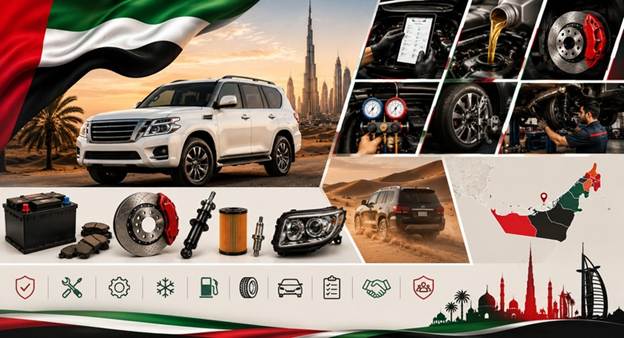
Not every replacement brake component offers the same level of performance.
Some prioritise durability.
Others focus on quieter operation.
Performance-oriented options improve heat resistance but may generate additional brake dust.
The correct choice depends on how the SUV is actually used.
Consider Before Buying
- Vehicle weight.
- Towing frequency.
- Driving style.
- Off-road use.
- Manufacturer recommendations.
- Brake disc compatibility.
- Noise expectations.
- Warranty support.
The most expensive option isn't automatically the best.
Neither is the cheapest.
Balance matters.
Brake Inspection Checklist
Routine inspections help identify problems before they become safety concerns.
Check the following:
- Brake pad thickness.
- Disc condition.
- Brake fluid level.
- Fluid replacement interval.
- Flexible brake hoses.
- ABS warning lights.
- Caliper movement.
- Brake line corrosion.
- Parking brake operation.
- Brake pedal feel.
These simple checks often prevent unexpected repairs.
Common Brake Buying Mistakes
Brake systems are remarkably reliable when maintained properly.
Problems often arise from poor purchasing decisions rather than poor engineering.
Avoid these common mistakes:
- Replacing pads without inspecting discs.
- Ignoring brake fluid age.
- Buying unknown low-quality friction materials.
- Delaying replacement after warning noises appear.
- Mixing incompatible brake components.
- Ignoring ABS warning lights.
- Choosing components solely on price.
Reliable braking depends on the complete system, not individual parts.
Real Buyer Question
"Should I replace all four brake pads at the same time?"
Not always.
Brake wear often differs between the front and rear axles because the front brakes typically handle a greater proportion of stopping force. However, pads should always be replaced in axle pairs—both front wheels or both rear wheels—to maintain balanced braking performance.
Brand Spotlight
Some SUVs are naturally harder on braking systems because of their size, weight and typical usage.
Among the models most frequently requiring brake maintenance in UAE workshops are:
- Toyota Land Cruiser
- Nissan Patrol
- Lexus LX
- Chevrolet Tahoe
- GMC Yukon
- Ford Expedition
- Toyota Prado
- Jeep Wrangler
- Land Rover Discovery
- Mitsubishi Pajero
Owners who regularly tow, carry heavy family loads or travel off-road should consider more frequent brake inspections than standard service intervals.
Key Takeaways
A braking system is only as strong as its weakest component. Brake pads, discs, calipers, hydraulic systems and electronic safety features all work together to deliver predictable stopping performance. Ignoring one part often places unnecessary stress on the rest.
For SUVs operating in the UAE, regular inspections, quality replacement components and timely maintenance are far more effective than waiting for obvious failures. A well-maintained braking system doesn't just improve safety—it also protects tyres, suspension components and overall driving confidence during every journey.
Electrical, Lighting and Electronic Components
Electrical faults have a reputation for being mysterious.
In reality, most aren't.
The difficulty is that modern SUVs rely on dozens of interconnected systems. A warning light on the dashboard might point towards a weak battery, a faulty sensor, a damaged wiring connection or a control module interpreting incorrect data. One small electrical issue can easily resemble something much larger.
That complexity has grown rapidly over the last decade. Today's SUVs contain advanced driver assistance systems, electronic four-wheel-drive controls, digital instrument clusters, large infotainment displays, adaptive lighting and sophisticated climate control systems. Convenient? Absolutely. Simple to diagnose without the right equipment? Not always.
The encouraging news is that many electrical failures follow predictable patterns, particularly in the UAE, where prolonged heat, dust and vibration gradually affect sensitive components.
Car Batteries for UAE Heat
If there's one component that suffers quietly during the UAE summer, it's the battery.
High temperatures accelerate internal chemical reactions, causing batteries to age faster than they would in cooler climates. Ironically, batteries often fail without much warning. One day the engine starts normally. The next, it barely turns over.
Vehicles driven only occasionally can be affected even sooner.
Signs a Battery May Be Reaching the End of Its Life
- Slow engine cranking.
- Dashboard warning lights.
- Dim headlights.
- Electrical accessories behaving unpredictably.
- Frequent jump-starts.
- Battery case swelling due to heat.
Replacing a battery before complete failure is usually more convenient than discovering the problem in a remote location or busy car park.
Workshop Insight
Many owners assume the battery is healthy because the engine still starts. A proper battery test often reveals declining capacity long before complete failure occurs, making preventative replacement a sensible option for older batteries.
Alternators and Starter Motors
Batteries store electricity.
Alternators produce it.
Starter motors use it.
Each performs a separate role, yet faults in one component often appear to originate elsewhere.
A weak alternator may leave the battery permanently undercharged.
A worn starter motor may struggle despite a fully charged battery.
Accurate diagnosis saves both time and unnecessary expense.
Common Symptoms
| Symptom | Likely Cause |
| Battery warning light | Alternator charging issue |
| Clicking when starting | Starter motor fault or weak battery |
| Flickering lights | Charging system instability |
| Battery repeatedly going flat | Alternator or parasitic drain |
| Burning electrical smell | Alternator overheating |
Ignoring charging problems rarely improves the situation.
Eventually, the vehicle simply refuses to start.
LED Headlights, Tail Lights and Fog Lamps
Lighting does much more than improve visibility.
It allows other road users to see you clearly.
Modern SUVs increasingly use LED technology because it offers longer service life, improved brightness and lower power consumption compared with traditional halogen bulbs.
Yet even LED systems contain components that can fail.
Drivers, modules and connectors all require attention over time.
Lighting Components Worth Inspecting
- LED headlamp units.
- Tail lamps.
- Fog lamps.
- Daytime running lights.
- Headlight levelling motors.
- Wiring connectors.
- Control modules.
Expert Tip
Condensation inside a headlamp housing isn't always harmless. Moisture can eventually damage electronic components if seals are no longer watertight.
ECU, Sensors and Electronic Modules
Modern SUVs rely on electronic information constantly.
Sensors measure.
Control units interpret.
Modules communicate.
The process happens thousands of times every second.
When one sensor begins providing inaccurate information, several seemingly unrelated symptoms may appear.
Frequently Replaced Sensors
| Sensor | Function |
| Oxygen Sensor | Fuel mixture monitoring |
| Mass Air Flow Sensor | Intake airflow measurement |
| Coolant Temperature Sensor | Engine temperature monitoring |
| Wheel Speed Sensor | ABS and stability control |
| Crankshaft Position Sensor | Engine timing |
| Camshaft Position Sensor | Valve timing control |
Fault codes provide useful clues, but they should support diagnosis rather than replace it.
Replacing sensors based solely on dashboard warnings can become unnecessarily expensive.
Buyer Psychology
Dashboard warning lights often encourage owners to replace the first component mentioned during a quick scan. Experienced workshops investigate the underlying cause before ordering replacement parts.
Air Conditioning Parts for UAE Summers
Air conditioning isn't a luxury in the UAE.
For much of the year, it's essential.
Cooling systems operate continuously during summer months, placing additional demand on compressors, condensers, blower motors and refrigerant circuits.
Small performance losses quickly become noticeable.
Air Conditioning Components
- Compressor.
- Condenser.
- Evaporator.
- Expansion valve.
- Cabin blower motor.
- Refrigerant lines.
- Cabin air filter.
Common Warning Signs
- Weak cooling performance.
- Unpleasant smells.
- Compressor noise.
- Water leaks inside the cabin.
- Uneven airflow.
- Intermittent cooling.
Ignoring early symptoms often allows relatively small faults to develop into more expensive compressor failures.
Diagnosing Electrical Problems Before Buying Parts
Electrical repairs become unnecessarily expensive when owners replace components based on assumptions rather than testing.
One warning light can have multiple causes.
One failed sensor may trigger several fault codes.
Replacing parts at random rarely solves the problem.
Diagnostic Checklist
Before ordering electrical components, confirm:
- Battery health.
- Charging voltage.
- Wiring condition.
- Fuse integrity.
- Connector corrosion.
- Fault codes.
- Live diagnostic data.
- Manufacturer technical information where available.
Systematic diagnosis almost always costs less than replacing multiple unnecessary parts.
Protecting Electrical Systems in UAE Conditions
Heat and dust cannot be eliminated.
Their effects can be reduced.
Simple maintenance habits make a noticeable difference.
- Keep battery terminals clean.
- Inspect wiring after off-road driving.
- Replace cabin air filters regularly.
- Avoid pressure washing sensitive electrical connectors.
- Investigate warning lights promptly.
- Protect engine bay wiring from excessive contamination.
- Check alternator drive belts during servicing.
These small steps often extend the lifespan of expensive electrical components.
Common Buying Mistakes
Electrical components can appear identical while differing significantly in specification.
Avoid these common errors:
- Buying incompatible electronic modules.
- Ignoring software calibration requirements.
- Replacing batteries without testing the charging system.
- Installing poor-quality sensors.
- Overlooking damaged wiring.
- Ignoring moisture inside lighting assemblies.
- Assuming fault codes always identify the failed component.
A careful diagnosis almost always produces a better outcome than guesswork.
Real Buyer Question
"Can a weak battery really cause multiple warning lights?"
Yes.
Modern vehicles depend on stable electrical voltage. A deteriorating battery or charging system can generate numerous warning messages affecting unrelated systems, including ABS, traction control, steering assistance and transmission electronics.
Brand Spotlight
Electrical and electronic repairs are increasingly common across virtually every modern SUV, particularly those equipped with advanced safety systems and premium technology. Popular models frequently requiring replacement batteries, sensors, alternators and lighting components include:
- Toyota Land Cruiser
- Nissan Patrol
- Ford Everest
- Toyota Prado
- Chevrolet Tahoe
- GMC Yukon
- Jeep Grand Cherokee
- Land Rover Discovery
- Lexus GX
- Mitsubishi Pajero Sport
As electronic systems continue to evolve, accurate diagnosis becomes just as important as selecting quality replacement parts.
Key Takeaways
Electrical systems now influence almost every aspect of SUV performance, from starting the engine and controlling the air conditioning to managing safety systems and driver assistance technologies. Because these systems are interconnected, careful diagnosis should always come before replacing components.
Routine inspections, battery health checks and prompt investigation of warning lights help prevent small electrical faults from developing into larger, more expensive repairs. Understanding how these systems work allows owners to make better maintenance decisions and keep their SUVs dependable in demanding UAE conditions.
Wheels, Tyres and Exterior Parts
The only parts of your SUV that actually touch the road are smaller than most people imagine.
Four patches of rubber.
Everything else—engine power, suspension upgrades, advanced four-wheel-drive systems—depends on those contact points doing their job properly. It's a useful reminder because wheels and tyres are often viewed as cosmetic upgrades when, in truth, they influence almost every aspect of driving. Handling. Braking. Fuel economy. Ride quality. Off-road capability. Even suspension life.
Then there are the exterior components.
Bumpers, grilles, underbody protection and roof systems don't simply shape the vehicle's appearance. They protect expensive mechanical parts, improve practicality and prepare an SUV for everything from family holidays to desert expeditions.
Ignore them, and the consequences are usually more than cosmetic.
Choosing the Right Tyres for City, Desert and Off-Road Driving
There is no universal tyre that excels everywhere.
A tyre that performs beautifully on smooth motorways may struggle in deep sand. An aggressive mud-terrain tyre capable of climbing rocky trails can generate more road noise during everyday commuting.
The best choice depends less on advertising and more on how the vehicle is genuinely used.
Comparing Popular Tyre Types
| Tyre Type | Best For | Strengths | Limitations |
| Highway Terrain (HT) | Daily commuting | Comfort, quiet operation | Limited off-road grip |
| All-Terrain (AT) | Mixed driving | Versatility | Slightly increased road noise |
| Mud Terrain (MT) | Serious off-road use | Maximum traction | Reduced on-road refinement |
| Performance SUV Tyres | High-speed road driving | Handling and braking | Limited off-road capability |
Tyres should always be selected as part of the overall driving strategy rather than simply because they look more aggressive.
Workshop Insight
Uneven tyre wear often signals suspension or alignment issues rather than tyre quality. Replacing tyres without correcting the underlying cause usually leads to the same problem returning.
Alloy Wheels vs Steel Wheels
Wheel selection often begins with appearance.
It shouldn't end there.
The material used in a wheel affects weight, durability and how the vehicle behaves under different driving conditions.
Comparison Table
| Feature | Alloy Wheels | Steel Wheels |
| Weight | Lighter | Heavier |
| Corrosion Resistance | Good | Moderate |
| Impact Resistance | Moderate | Excellent |
| Appearance | Modern | Functional |
| Off-Road Repairs | More Difficult | Often Easier |
Alloy wheels remain the preferred choice for most family SUVs because they improve handling and reduce unsprung weight.
Steel wheels continue to appeal to drivers who regularly venture into demanding off-road environments where durability outweighs appearance.
Wheel Bearings and Hub Assemblies
Wheel bearings perform a remarkably simple task.
They allow the wheels to rotate smoothly.
When functioning correctly, nobody notices them.
Once they begin wearing, the sound is difficult to ignore.
A humming noise that increases with speed.
A vibration that wasn't there before.
Excessive movement during inspection.
These are early indicators that attention is needed.
Common Warning Signs
- Low humming noise while driving.
- Wheel vibration.
- Uneven tyre wear.
- Steering instability.
- ABS warning light in some cases.
Replacing worn bearings promptly reduces the likelihood of damage spreading to surrounding components.
Body Panels, Bumpers and Grilles
Exterior parts do far more than influence appearance.
Front bumpers protect cooling components.
Grilles direct airflow towards the radiator.
Body panels preserve structural integrity and corrosion protection.
Minor damage is sometimes dismissed because the vehicle remains drivable.
That approach can be misleading.
Even a cracked bumper may reduce protection for expensive components hidden behind it.
Frequently Replaced Exterior Components
- Front bumper.
- Rear bumper.
- Front grille.
- Bonnet.
- Front wings.
- Tailgate.
- Door mirrors.
- Headlamp brackets.
After any significant impact, underlying mounting points should also be inspected rather than replacing visible panels alone.
Underbody Protection and Skid Plates
Spend enough time off-road and sooner or later the underside of the vehicle meets the terrain.
That's precisely why skid plates exist.
Engine sumps, transfer cases, fuel tanks and differentials are vulnerable to impacts from rocks, hidden obstacles and uneven ground.
Protection underneath the vehicle often prevents repairs costing many times more.
Areas Commonly Protected
| Underbody Component | Reason for Protection |
| Engine Oil Sump | Prevent punctures |
| Transmission | Reduce impact damage |
| Transfer Case | Protect drivetrain |
| Fuel Tank | Prevent leaks |
| Steering Components | Reduce off-road damage |
Not every SUV requires heavy-duty protection, but vehicles used regularly off-road benefit significantly from it.
Expert Tip
Inspect skid plates after demanding off-road trips. A heavily dented plate may have prevented serious mechanical damage, but it could also be placing pressure on the component it was designed to protect.
Roof Racks, Tow Bars and Exterior Accessories
SUV owners often expect their vehicles to perform multiple roles.
Family transport during the week.
Adventure vehicle at weekends.
Tow vehicle during holidays.
Accessories make that versatility possible.
Provided they are selected carefully.
Popular Exterior Accessories
- Roof racks.
- Roof boxes.
- Tow bars.
- Side steps.
- Recovery points.
- Mud flaps.
- Bull bars where permitted.
- Rear cargo carriers.
Accessories should never exceed manufacturer load limits.
Additional weight affects braking, suspension performance and fuel consumption.
Tyre Maintenance for Longer Service Life
Replacing tyres prematurely is expensive.
Fortunately, many common causes of early wear are preventable.
Routine Maintenance Checklist
- Check tyre pressures regularly.
- Rotate tyres at recommended intervals.
- Inspect tread depth.
- Correct wheel alignment.
- Balance wheels after tyre replacement.
- Inspect for sidewall damage.
- Remove embedded stones after off-road driving.
Small maintenance habits often extend tyre life considerably.
Common Buying Mistakes
Wheel and tyre purchases frequently focus on appearance before practicality.
That approach rarely delivers the best long-term results.
Avoid these mistakes:
- Choosing oversized wheels without considering ride quality.
- Mixing different tyre brands on the same axle.
- Ignoring tyre load ratings.
- Buying aggressive off-road tyres for city-only use.
- Delaying wheel alignment.
- Failing to inspect wheel bearings during tyre replacement.
- Installing accessories without checking payload limits.
The right combination is the one that matches how the vehicle is actually driven.
Real Buyer Question
"Are all-terrain tyres worth it if I only visit the desert a few times each year?"
For many owners, yes.
All-terrain tyres offer an excellent compromise between on-road comfort and occasional off-road capability. However, if the vehicle spends almost all of its time in urban environments, high-quality highway-terrain tyres often provide quieter operation, better fuel efficiency and longer service life.
Brand Spotlight
Large SUVs frequently used for family travel, towing and outdoor adventures place significant demands on wheels, tyres and exterior equipment. Among the models most commonly upgraded or repaired are:
- Toyota Land Cruiser
- Nissan Patrol
- Toyota Prado
- Ford Everest
- Jeep Wrangler
- Chevrolet Tahoe
- GMC Yukon
- Lexus GX
- Land Rover Defender
- Mitsubishi Pajero
Choosing quality components suited to the vehicle's real-world use helps preserve handling, safety and reliability throughout years of ownership.
Key Takeaways
Wheels, tyres and exterior components influence far more than appearance. They affect braking performance, steering precision, ride comfort, fuel efficiency and off-road capability. Selecting the right combination requires balancing daily driving needs with occasional adventures rather than following trends alone.
Regular inspections, correct tyre maintenance and thoughtful accessory choices help reduce long-term ownership costs while ensuring an SUV remains equally capable on city streets, motorways and challenging terrain.
Interior, Towing and Utility Components
People usually buy an SUV for what it can do.
Months later, they appreciate it for how easily it fits into everyday life.
School runs become simpler. Weekend luggage disappears into a generous boot. Camping equipment, bicycles, toolboxes or recovery gear all find somewhere to live. Before long, the vehicle becomes more than transport—it becomes part of the routine.
That daily workload takes its toll.
Seats begin showing wear. Interior switches lose their crisp feel. Tailgates work harder than they did when the vehicle was new. Towing equipment carries increasing loads. Storage systems become cluttered. None of these changes happen overnight, yet together they shape how practical and enjoyable an SUV remains after years of ownership.
Mechanical reliability matters enormously.
Practical reliability matters just as much.
Interior Replacement Parts for Family SUVs
The interior is where owners spend every journey, yet it is often one of the last areas to receive attention.
Children climb in and out.
Pets leave scratches.
Sunlight fades surfaces.
Constant use eventually affects buttons, trim and seating materials.
Replacing worn interior components isn't merely cosmetic. A comfortable, functional cabin makes long journeys significantly more enjoyable.
Interior Components That Commonly Wear
| Component | Why Replacement May Be Needed |
| Seat Covers | Wear, tears and fading |
| Seat Cushions | Loss of support |
| Steering Wheel Trim | Surface deterioration |
| Gear Selector Trim | Frequent use |
| Door Panels | Scratches and damage |
| Window Switches | Electrical wear |
| Floor Mats | Heavy foot traffic |
Many of these items can be replaced individually without major interior refurbishment.
Workshop Insight
Loose interior trim often results from broken clips rather than damaged panels. Replacing inexpensive fasteners can restore a factory-quality fit without replacing larger components.
Seats, Dashboard and Infotainment Components
Modern SUVs have become increasingly technology-focused.
Large digital displays.
Wireless smartphone integration.
Multiple USB charging points.
Advanced navigation.
Premium sound systems.
Owners quickly become accustomed to these conveniences until something stops working.
Components Worth Inspecting
- Infotainment screen.
- Touchscreen controls.
- Dashboard switches.
- Climate control panels.
- USB charging ports.
- Steering wheel controls.
- Speaker systems.
- Reverse camera modules.
Software updates occasionally resolve faults, but damaged hardware eventually requires replacement.
Expert Tip
Before replacing an infotainment unit, check whether the problem originates from wiring, software or a separate control module. The display itself is not always responsible.
Tow Bars and Towing Accessories
Towing places demands on an SUV that ordinary driving never will.
Additional weight changes acceleration.
Stopping distances increase.
Cooling systems work harder.
Suspension carries greater loads.
Choosing the correct towing equipment is therefore about much more than attaching a trailer.
Essential Towing Components
| Component | Purpose |
| Tow Bar | Secure trailer connection |
| Tow Ball | Connects trailer coupling |
| Electrical Wiring Kit | Operates trailer lighting |
| Trailer Brake Controller | Improves towing safety |
| Weight Distribution System | Balances heavy loads |
| Safety Chains | Secondary security connection |
Every towing system should be matched to the manufacturer's approved towing capacity.
Ignoring weight limits doesn't simply affect performance—it compromises safety.
Recovery Equipment for Desert Adventures
Every experienced off-road driver eventually learns the same lesson.
Recovery equipment is valuable long before it's needed.
Soft sand, hidden ruts and unexpected terrain changes can immobilise even capable four-wheel drives.
Preparation makes the difference.
Recommended Recovery Equipment
- Recovery straps.
- Rated recovery shackles.
- Air compressor.
- Tyre deflator.
- Recovery boards.
- Shovel.
- Winch where appropriate.
- Protective gloves.
- Tow rope.
- Tyre pressure gauge.
Owning the equipment is only half the equation.
Understanding how to use it safely is equally important.
Workshop Insight
Recovery points should always be inspected after heavy recovery operations. Even minor impacts or excessive loads can weaken mounting hardware over time.
Cargo Management and Storage Accessories
SUVs frequently carry far more than passengers.
Shopping.
Sports equipment.
Camping supplies.
Professional tools.
Roof tents.
Luggage.
Without an organised storage system, the cabin quickly becomes cluttered.
Practical Storage Solutions
- Boot organisers.
- Cargo nets.
- Load barriers.
- Roof boxes.
- Under-floor storage trays.
- Seat-back organisers.
- Luggage dividers.
Proper load management improves safety as well as convenience.
Loose items become dangerous during sudden braking.
Practical Upgrades for Daily UAE Driving
Not every upgrade is designed for extreme off-road adventures.
Many simply make everyday ownership easier.
Popular Everyday Improvements
| Upgrade | Benefit |
| Rubber Floor Mats | Easier cleaning after sand exposure |
| Window Sunshades | Improved cabin comfort |
| Dash Cameras | Additional security |
| Wireless Phone Chargers | Greater convenience |
| Seat Protectors | Preserve upholstery |
| Boot Liners | Protect luggage compartment |
| Cabin Air Purifiers | Improved interior air quality |
Small improvements often have a greater impact on daily ownership than expensive cosmetic modifications.
Preparing an SUV for Family Travel
Long-distance travel highlights strengths and weaknesses that short commutes rarely reveal.
Before setting off, consider inspecting:
- Seat adjustment mechanisms.
- Air-conditioning performance.
- Charging ports.
- Tyre pressures.
- Spare wheel condition.
- Tow equipment if required.
- Storage security.
- Interior lighting.
- Child seat mounting points.
- Emergency equipment.
A little preparation reduces the likelihood of inconvenient surprises later.
Common Buying Mistakes
Interior and utility accessories are often purchased impulsively.
That rarely produces the best results.
Avoid these common mistakes:
- Buying universal accessories without checking compatibility.
- Overloading roof racks.
- Exceeding towing capacity.
- Ignoring trailer wiring requirements.
- Installing poor-quality tow bars.
- Carrying unsecured cargo.
- Choosing appearance over practicality.
The most useful upgrade is usually the one that complements how the vehicle is genuinely used.
Real Buyer Question
"Do I need a heavy-duty tow bar if I only tow occasionally?"
Not always.
The correct tow bar depends on the weight of the trailer, the manufacturer's towing limits and how frequently towing takes place. Choosing equipment significantly beyond your needs may add unnecessary weight, while selecting an underrated system creates obvious safety risks.
Brand Spotlight
SUVs used for family transport and outdoor activities often require interior refurbishments and practical upgrades as mileage increases. Among the models most commonly fitted with towing equipment, cargo accessories and replacement interior components are:
- Toyota Land Cruiser
- Nissan Patrol
- Toyota Prado
- Ford Everest
- Chevrolet Tahoe
- GMC Yukon
- Jeep Grand Cherokee
- Land Rover Discovery
- Lexus GX
- Mitsubishi Pajero Sport
These vehicles are expected to perform many different roles throughout their lives, making practicality just as important as mechanical reliability.
Key Takeaways
Interior, towing and utility components have a direct impact on how enjoyable and practical an SUV remains over years of ownership. Comfortable seating, reliable technology, organised storage and properly matched towing equipment all contribute to a vehicle that performs confidently in everyday life as well as on longer adventures.
Choosing accessories based on genuine needs rather than trends helps create an SUV that is not only capable but also comfortable, organised and ready for whatever the next journey demands.
Buying Guide and Cost Comparison
Buying spare parts has never been easier.
Buying the right spare parts? That's another matter entirely.
A few minutes online will produce hundreds of options for almost any SUV component. Prices vary wildly. Product descriptions promise the same quality. Photographs often look identical. On the surface, every deal appears attractive.
Look a little closer and the differences begin to emerge.
Warranty terms change.
Compatibility isn't always guaranteed.
Condition varies dramatically.
Supplier reputation becomes increasingly important.
The cheapest option sometimes proves to be the most expensive purchase of all—not because it costs more initially, but because it needs replacing far sooner than expected or creates additional problems during installation.
A sensible buyer doesn't simply compare prices.
They compare value.
Genuine vs OEM vs Used vs Reconditioned Cost Comparison
Every category of replacement part has its place.
The challenge is understanding which option offers the best balance between price, durability and long-term ownership costs.
Spare Parts Comparison
| Part Type | Purchase Cost | Expected Reliability | Warranty | Best Suited For |
| Genuine | Highest | Excellent | Manufacturer-backed | Newer vehicles |
| OEM | High | Excellent | Usually Available | Long-term ownership |
| Reconditioned | Moderate | Very Good | Often Included | Major mechanical components |
| Used | Lower | Condition Dependent | Limited | Older vehicles |
| Aftermarket | Varies | Brand Dependent | Varies | Budget-conscious buyers |
The answer isn't always obvious.
A premium OEM component may offer nearly identical performance to a genuine part at a noticeably lower price. Equally, a carefully reconditioned steering rack or gearbox may provide considerably better value than an unknown used unit.
New vs Used SUV Spare Parts: Which Offers Better Value?
The debate rarely has a universal winner.
It depends entirely on the component.
Replacing brake pads with unknown used items makes little sense.
Purchasing a carefully inspected used body panel in the correct colour can save substantial money without compromising safety.
Context matters.
When New Parts Usually Make Sense
- Brake components.
- Suspension bushes.
- Filters.
- Belts.
- Sensors.
- Rubber seals.
- Cooling hoses.
When Used Parts Can Represent Good Value
- Doors.
- Tailgates.
- Bonnets.
- Alloy wheels.
- Interior trim.
- Dashboard panels.
- Exterior mirrors.
The key is understanding the risk associated with each component rather than assuming newer always means better.
Workshop Insight
Technicians often recommend new parts for wear items and quality used components for cosmetic repairs. That balanced approach frequently delivers the best value without sacrificing reliability.
How to Check Part Compatibility Using VIN
Compatibility mistakes remain one of the most common reasons buyers return parts.
Two SUVs may appear identical.
They aren't necessarily built the same.
Production dates, engine options, transmission specifications and regional differences can all affect compatibility.
That's why the Vehicle Identification Number—commonly known as the VIN—is so valuable.
Information a VIN Can Confirm
| Vehicle Detail | Why It Matters |
| Model Year | Prevents specification errors |
| Engine Type | Confirms mechanical compatibility |
| Transmission Version | Ensures correct drivetrain parts |
| Factory Equipment | Identifies optional systems |
| Market Specification | Avoids regional differences |
Never rely solely on visual similarities when purchasing major components.
Labour Costs Across UAE Workshops
Replacement parts represent only part of the overall expense.
Labour can significantly influence the final invoice.
Simple maintenance tasks require relatively little time.
Major drivetrain repairs are naturally more labour-intensive.
Estimated Labour Comparison
| Repair Type | Typical Labour Time |
| Air Filter Replacement | 15–30 minutes |
| Brake Pad Replacement | 1–2 hours |
| Shock Absorber Replacement | 2–3 hours |
| Radiator Replacement | 3–5 hours |
| Steering Rack Replacement | 5–7 hours |
| Transmission Replacement | 8–15 hours |
Actual labour charges vary depending on workshop experience, vehicle complexity and location.
Requesting a written quotation before work begins reduces misunderstandings later.
Hidden Costs Buyers Often Overlook
The advertised price rarely tells the whole story.
Replacing one component frequently requires additional items to complete the job correctly.
Ignoring those costs creates unrealistic budgets.
Expenses Often Forgotten
- Labour charges.
- Fluids.
- Filters.
- Gaskets.
- Fasteners.
- Wheel alignment.
- ECU programming.
- Diagnostic charges.
- VAT where applicable.
A complete quotation should account for the entire repair, not merely the replacement part.
Expert Tip
Whenever comparing quotations, ask whether consumables, calibration and post-installation testing are included. Two similar prices may represent very different levels of service.
Common Scams When Buying SUV Spare Parts
Most suppliers operate professionally.
A small number do not.
Recognising common warning signs helps reduce unnecessary risk.
Warning Signs to Watch For
- Prices significantly below normal market value.
- No warranty offered.
- Refusal to provide part numbers.
- Unclear compatibility information.
- Poor communication.
- Pressure to make immediate payment.
- No physical business address.
- Generic product photographs only.
Buying cautiously isn't being overly suspicious.
It's protecting your investment.
Questions Every Buyer Should Ask
Before purchasing any replacement part, ask:
- Is the part compatible with my VIN?
- What warranty is included?
- Is the part genuine, OEM, aftermarket, used or reconditioned?
- Has the component been tested?
- Are installation accessories included?
- Can the supplier provide documentation where appropriate?
- What happens if compatibility issues arise?
Clear answers today usually prevent disputes tomorrow.
Decision Matrix: Which Option Fits Your Needs?
| Buyer Type | Recommended Choice |
| New Vehicle Owner | Genuine or OEM |
| Family SUV Owner | OEM or premium aftermarket |
| High-Mileage Vehicle | Quality reconditioned components |
| Cosmetic Repairs | Carefully inspected used parts |
| Frequent Off-Road Driver | Heavy-duty OEM or genuine components |
| Budget-Conscious Owner | Selective combination of OEM and quality used parts |
Matching purchases to ownership goals generally produces better outcomes than focusing exclusively on price.
Real Buyer Question
"Should I always choose the cheapest quotation?"
Probably not.
A lower quotation may exclude labour, fluids, calibration or warranty coverage. Comparing complete repair costs rather than headline prices provides a far more accurate picture of overall value.
Common Buying Mistakes
Even experienced owners occasionally make purchasing decisions they later regret.
Avoid these common pitfalls:
- Buying without confirming VIN compatibility.
- Ignoring warranty terms.
- Comparing prices without comparing quality.
- Overlooking installation costs.
- Purchasing unknown brands without research.
- Delaying necessary repairs to save money.
- Choosing suppliers based solely on advertising.
The most economical purchase is usually the one that performs reliably for years rather than months.
Key Takeaways
Smart buying begins with informed comparisons rather than attractive prices alone. Genuine, OEM, used and reconditioned parts each have advantages when selected for the right application, while accurate compatibility checks and transparent quotations help avoid costly surprises.
Understanding the complete cost of ownership—including labour, supporting components and long-term reliability—allows SUV owners to make confident purchasing decisions that deliver genuine value instead of short-term savings.
Inspection, Maintenance and Long-Term Ownership
The most reliable SUVs rarely belong to the people who spend the most money.
They usually belong to the people who pay attention.
Listen carefully in any experienced workshop and you'll notice a pattern. Major mechanical failures are often traced back to something surprisingly ordinary—a neglected fluid change, a worn bush left unchecked, a small coolant leak that seemed harmless or a warning light ignored because the vehicle still felt perfectly normal.
Vehicles rarely move from excellent condition to serious failure overnight.
The decline is gradual.
That's precisely why routine inspections matter.
An SUV maintained consistently over ten years often proves less expensive to own than one maintained reactively for five. It sounds counterintuitive until you compare repair invoices.
Preventive maintenance isn't exciting.
Financially, though, it's difficult to beat.
Pre-Purchase Inspection Checklist
Buying an SUV without an inspection is a little like buying a house without looking inside.
It might work out well.
It might not.
A comprehensive inspection provides far more than reassurance. It identifies existing wear, predicts future maintenance and helps buyers negotiate more confidently.
Essential Inspection Areas
| Component | What Should Be Checked |
| Engine | Leaks, unusual noises, smoke |
| Transmission | Smooth shifting, fluid condition |
| Cooling System | Radiator, hoses, coolant level |
| Suspension | Bushes, ball joints, dampers |
| Brakes | Pads, discs, fluid |
| Tyres | Tread wear, age, alignment |
| Electrical System | Battery, warning lights |
| Underside | Corrosion, impact damage |
| Four-Wheel Drive | Engagement and operation |
| Interior | Electronics, switches, upholstery |
An inspection doesn't guarantee a fault-free future.
It dramatically improves the quality of the buying decision.
Workshop Insight
Many experienced technicians begin underneath the vehicle rather than under the bonnet. Fluid leaks, suspension wear and impact damage often reveal more about long-term ownership than polished paintwork ever will.
Preventive Maintenance Schedule
Maintenance intervals exist for a reason.
Not because manufacturers enjoy selling service parts, but because every mechanical component has an expected service life.
Ignoring those intervals usually shortens it.
General Maintenance Guide
| Item | Typical Inspection Frequency |
| Engine Oil | According to manufacturer schedule |
| Air Filter | Inspect regularly, especially after dusty conditions |
| Brake System | Every routine service |
| Suspension | At least annually |
| Cooling System | Before peak summer |
| Battery | Regular health checks after a few years of service |
| Tyres | Monthly pressure checks and routine inspections |
| Transmission Fluid | Follow manufacturer recommendations |
Driving conditions influence maintenance requirements just as much as mileage.
Vehicles frequently used off-road or for towing generally require more frequent inspections.
Parts That Should Always Be Replaced Together
Replacing one worn component while leaving another equally worn part in place often creates unnecessary labour costs later.
Some parts naturally wear as a pair.
Others depend on each other.
Recommended Combined Replacements
- Brake pads and brake discs when appropriate.
- Shock absorbers in axle pairs.
- Suspension bushes during major suspension work.
- Timing belt together with tensioners and water pump where applicable.
- Cooling hoses during major cooling repairs.
- Wheel bearings with damaged hubs where necessary.
Completing related repairs together usually improves reliability while reducing repeat workshop visits.
Expert Tip
Ask whether surrounding components should be inspected while the vehicle is already dismantled. The additional inspection often costs very little compared with repeating the same labour weeks later.
Extending the Life of Your SUV in the UAE
Vehicles living in the UAE face challenges that owners in many other countries rarely encounter.
Extreme heat.
Dust.
Long motorway journeys.
Occasional off-road driving.
Heavy towing.
Fortunately, these conditions can be managed.
Practical Habits That Make a Difference
- Check coolant levels regularly.
- Replace air filters after dusty trips.
- Wash the underbody following off-road use.
- Maintain correct tyre pressures.
- Investigate unusual noises promptly.
- Keep service records organised.
- Address small leaks before they grow.
Consistency matters more than perfection.
Seasonal Maintenance for Desert and Summer Driving
Summer preparation should begin before temperatures reach their highest levels.
Waiting until the vehicle overheats rather than preventing overheating is rarely a sensible strategy.
Summer Preparation Checklist
| Inspection Item | Reason |
| Coolant Condition | Prevent overheating |
| Radiator Inspection | Ensure unrestricted cooling |
| Battery Test | Heat accelerates battery ageing |
| Air Conditioning Performance | Cabin comfort |
| Tyre Pressure | Heat affects inflation |
| Drive Belts | Prevent unexpected failures |
| Engine Oil Condition | Maintain lubrication |
A few preventative checks before summer often prevent inconvenient roadside breakdowns later.
Professional Workshop vs DIY Repairs
The internet has made vehicle repairs appear deceptively simple.
Watch a ten-minute video and almost any repair seems achievable.
Reality tends to be less accommodating.
Some maintenance tasks are perfectly suitable for capable owners.
Others require specialist tools, calibration equipment and technical experience.
Suitable DIY Tasks
- Air filter replacement.
- Cabin filter replacement.
- Wiper blade installation.
- Battery inspection.
- Tyre pressure checks.
- Basic visual inspections.
Repairs Best Left to Professionals
- Transmission repairs.
- Steering system work.
- Suspension geometry adjustments.
- Air conditioning servicing.
- Electronic diagnostics.
- Brake hydraulic repairs.
Knowing when not to attempt a repair is often a sign of experience rather than inexperience.
Long-Term Ownership Strategy
Owning an SUV successfully isn't about avoiding repairs altogether.
Every vehicle requires maintenance eventually.
The goal is reducing unexpected failures.
Ownership Priorities
- Follow routine servicing.
- Investigate warning lights promptly.
- Use quality replacement components.
- Keep detailed maintenance records.
- Inspect the vehicle after demanding trips.
- Budget for preventative maintenance rather than emergency repairs.
These habits consistently reduce ownership costs over the life of the vehicle.
Common Maintenance Mistakes
Even careful owners occasionally overlook simple issues.
Avoid these common errors:
- Delaying routine servicing.
- Ignoring fluid leaks.
- Waiting for warning lights before taking action.
- Skipping post-off-road inspections.
- Mixing incompatible fluids.
- Neglecting wheel alignment after suspension repairs.
- Forgetting to inspect the spare wheel.
Good maintenance is usually proactive rather than reactive.
Real Buyer Question
"Is following the manufacturer's service schedule enough if I regularly drive off-road?"
Not always.
Manufacturer schedules are generally designed around normal operating conditions. Frequent desert driving, towing, heavy loads or repeated off-road use often justify additional inspections, particularly for suspension, cooling, tyres, air filtration and drivetrain components.
Long-Term Ownership Checklist
Before every major journey, confirm:
- Engine fluids are at the correct level.
- Tyres are correctly inflated.
- Brakes feel consistent.
- Cooling system shows no leaks.
- Battery starts the engine confidently.
- Lights operate correctly.
- Recovery equipment is secure where applicable.
- Spare tyre and tools are present.
- Warning lights are absent.
- Service intervals are up to date.
These simple checks take only a few minutes yet significantly reduce the likelihood of unexpected problems.
Key Takeaways
Long-term SUV ownership is shaped less by major repairs than by hundreds of small maintenance decisions made over the years. Regular inspections, preventative servicing and early diagnosis of minor faults help preserve reliability while reducing the risk of expensive mechanical failures.
A structured maintenance routine, combined with informed repair decisions, allows an SUV to remain dependable whether it spends its life carrying families through city traffic, towing heavy loads or exploring challenging off-road terrain.
Expert Buying Advice, FAQs and Final Recommendations
A dependable SUV isn't built by chance.
It's built through hundreds of sensible decisions made over years of ownership. Some are obvious, like replacing worn brake pads before they reach their limit. Others are less visible, such as choosing the correct coolant, inspecting suspension after an off-road trip or confirming VIN compatibility before ordering a replacement part.
Individually, these decisions seem minor.
Collectively, they determine whether an SUV remains reliable at 250,000 kilometres or becomes a constant source of unexpected repairs.
There's no secret formula.
Just informed ownership.
Complete SUV and 4x4 Spare Parts Buyer's Checklist
Whether you're replacing a single component or planning a major mechanical repair, working through a structured checklist helps eliminate unnecessary mistakes.
Before You Buy
- Confirm the VIN and part number.
- Check engine and transmission compatibility.
- Decide whether genuine, OEM, aftermarket, used or reconditioned parts best suit the repair.
- Compare warranty coverage.
- Ask whether supporting components should also be replaced.
- Confirm labour costs before authorising repairs.
- Request a written quotation.
- Verify supplier reputation.
- Inspect the condition of used parts where applicable.
- Keep invoices and warranty documents.
A few extra minutes spent checking details can prevent days of inconvenience later.
Best Spare Parts Strategy for Family, Off-Road and Fleet Owners
Every SUV serves a different purpose.
That purpose should influence every purchasing decision.
Family SUV Owners
Prioritise:
- Safety.
- Comfort.
- Reliability.
- Quiet operation.
- Long service life.
Off-Road Enthusiasts
Focus on:
- Suspension durability.
- Cooling efficiency.
- Recovery equipment.
- Underbody protection.
- Heavy-duty drivetrain components.
Fleet and Commercial Operators
Give greater attention to:
- Downtime reduction.
- Maintenance planning.
- Warranty support.
- Consistent servicing.
- Total ownership costs rather than individual repair prices.
Trying to apply one maintenance strategy to every vehicle rarely produces the best results.
How to Choose a Trusted Spare Parts Supplier in the UAE
Finding a supplier isn't difficult.
Finding one you'll happily use again is more valuable.
A trustworthy supplier does more than quote competitive prices. They help confirm compatibility, explain warranty terms and provide realistic advice instead of promising that every part fits every vehicle.
Qualities Worth Looking For
| What to Look For | Why It Matters |
| Accurate VIN Compatibility Checks | Reduces ordering mistakes |
| Transparent Warranty | Protects your investment |
| Clear Product Descriptions | Improves buying confidence |
| Responsive Customer Support | Easier problem resolution |
| Established Reputation | Greater long-term reliability |
| Wide Product Availability | Simplifies future maintenance |
Consistency matters.
A supplier who understands your vehicle often becomes a valuable long-term resource.
Workshop Insight
Experienced workshops usually maintain relationships with suppliers they trust because reliable parts reduce repeat repairs, warranty claims and customer dissatisfaction. Reputation is earned over time, not through advertising alone.
Final Verdict: Building a Reliable SUV for Desert, City and Off-Road Driving
The best SUV isn't necessarily the newest.
Nor is it the one fitted with the most expensive accessories.
The vehicles that consistently earn their owners' trust are usually those maintained with care, repaired with suitable components and driven with an understanding of their intended purpose.
Desert driving demands resilience.
City traffic rewards reliability.
Long family journeys depend on comfort and safety.
Off-road adventures require preparation rather than optimism.
Every replacement part contributes to that bigger picture.
Sometimes it's a simple air filter.
Sometimes it's a complete transmission.
Neither decision should be rushed.
Buying quality components, following sensible maintenance schedules and working with experienced professionals creates an SUV capable of serving its owner for many years, regardless of whether the journey leads through busy city streets, across mountain passes or deep into the dunes.
Choosing wisely today almost always costs less than correcting poor decisions tomorrow.
Final Takeaways
If you're comparing SUV and 4x4 spare parts for Sale in the UAE, focus on compatibility, quality, warranty and long-term value instead of headline prices alone. Genuine, OEM, quality aftermarket, used and professionally reconditioned components all have their place when selected for the right application.
Whether your vehicle is used for family commuting, towing, business operations or weekend desert adventures, PartFinder UAE provides an easier way to compare trusted suppliers offering quality SUV and 4x4 components for Sale. By making informed buying decisions and following a proactive maintenance strategy, you can reduce ownership costs, improve reliability and keep your SUV ready for every journey the UAE has to offer.
Frequently Asked Questions (FAQs)
Categories
- Audi
- BMW
- Car Accessories
- Car Tips
- Ford
- Land Rover
- Mazda
- Range Rover
- Top 10
- UAE Car Parts
- Used Car Parts
- Toyota
- Replacement Engines
- Nissan
- Hyundai
- Mitsubishi
- Volkswagen
- Honda
- Kia
- Chevrolet
- Dodge
- Jeep
- Subaru
- Renault
- Lexus
- Mercedes
- Suzuki
- Hummer
- Porsche
- Infiniti
- Peugeot
- GMC
- Mini
- Volvo
- Replacement Gearboxes
- MG
- Jaguar
- Skoda
- Cadillac
- Daihatsu
- Fiat
- German Car Parts
- Japanese Car Parts
- Aftermarket Car Parts
- Genuine Car Parts
- New Car Parts
- Reconditioned Car Parts
- European Car Parts
- American Car Parts
- Korean Car Parts
- British Car Parts
- Chinese Car Parts
- Sports/Exotic Car Parts
- Luxury Car Parts
- Performance Car Parts
- SUV/4x4 Spare Parts
- Truck Spare Parts
- EV Car Parts
- Hybrid Car Parts
- Auto Spare Parts in UAE
- Tesla
- Isuzu
- Ram
- Ferrari
- Bentley
- Lamborghini
- Genesis
- Maserati
- Lincoln
- Chrysler
- Opel
- Citroen
- SsangYong
- Seat
- McLaren
- Aston Martin
- Rolls Royce
- Maybach
- Alfa Romeo
- Bugatti
- Scion
- Abu Dhabi Car Parts
- Ajman Car Parts
- Al Khan Car Parts
- Al Sajaa Car Parts
- Deira Car Parts
- Dubai Car Parts
- Fujairah Car Parts
- Industrial Area 6 Car Parts
- Mussafah Car Parts
- Ras Al Khaimah Car Parts
- Sharjah Car Parts
- Umm Al Quwain Car Parts
- Acura
- BYD
- Chery
- Dacia
- DS
- Geely Emgrand
- EXEED
- GAC
- GAC Gonow
- Geely
- Gonow
- Great Wall
- Haima
- Haval
- Holden
- Iveco
- JAC
- Jaecoo
- Jetour
- Lotus
- Omoda
- Proton
- Renault Samsung
- Roewe
- Lucid