Toyota Camry Bumpers in UAE: New, Used and OEM Options
October 20, 2026
A Cracked Bumper Does Not Always Need Replacing
A Toyota Camry noses into a tight parking space in Dubai. The driver hears that familiar scrape, gets out, and finds a split near the lower grille, a loose corner by the wheel arch or a scuff that looks far worse under the car park lights than it did from the driver's seat.
The immediate temptation is to order a replacement bumper. Hold on a moment.
A bumper cover, the painted outer shell, is not the same thing as the reinforcement, energy absorber, mounting brackets or crash structure behind it. A scrape may need nothing more than careful refinishing. A cracked mounting tab might make replacement more sensible, while damage hidden behind the plastic can turn a seemingly minor knock into a proper repair job.
That distinction matters when comparing Toyota Camry bumpers in UAE. Owners in Dubai, Abu Dhabi, Sharjah and the other emirates face different repair quotes, parts availability and waiting times, but the first question is the same everywhere: what has actually been damaged?
Which Toyota Camry Bumper Do You Need?
Start with the model year, then narrow it down by generation, trim and equipment. “Camry front bumper” is a useful starting phrase for a search, but it is not a sufficiently precise buying specification.
The Camry has been sold in several generations, with different front-end designs, grille openings, lower trim pieces and rear bumper shapes. Even within a single generation, a sportier trim may use a different cover from a more comfort-focused version. Parking sensors and other driver-assistance equipment can change the required part, too.
| Camry version | What to check before ordering |
| Older generations | Exact model year, body shape, market specification and bumper design |
| 2012–2017-era cars | Facelift status, grille and fog-lamp openings, mounting points |
| 2018–2020 models | Standard versus sportier trim, front and rear cover design |
| 2021–2024 models | LE/XLE-style versus SE/XSE/TRD-style configuration where applicable; sensor provisions |
| 2025-onwards models | Newer body design, hybrid-market specification and exact equipment |
These are practical identification groups, not a universal fitment chart. Model years and trim names vary between markets, so do not assume a Camry sold in the UAE has exactly the same bumper specification as a US-market car of the same year.
Front or Rear? Identify the Damaged Part Properly
Front bumpers often suffer in tight parking spaces, steep driveway entrances and low-speed traffic incidents. The damage may be concentrated around the lower lip, grille surround or one corner, where the cover meets the wheel-arch liner.
Rear damage tells a different story. Reversing into a post, another vehicle nudging the car in a queue, or catching a wall while parking can crack the rear cover or pull it away from its side brackets.
Before you buy, establish whether you need the outer bumper cover alone or a larger collection of parts. The cover may be cracked while the reinforcement remains sound; equally, a cover can look almost intact while a bracket, absorber or mounting rail behind it has broken.
Ask the workshop to itemise the damaged parts. A single vague line saying “bumper replacement” does not tell you what you are paying for.
OEM, Genuine Toyota and Aftermarket Bumpers Explained
The terminology can get muddled in parts shops, so pin it down before comparing prices.
- Genuine Toyota: a part supplied through Toyota's genuine-parts channel, identified by the applicable Toyota part number.
- OEM: a term commonly used for original-equipment parts, but a seller's use of “OEM” does not, by itself, prove that the item is genuine Toyota stock or made by the original supplier.
- Aftermarket: a replacement produced outside the genuine Toyota parts channel. Quality, material, finish and fit can vary considerably.
- Used original: a previously fitted bumper, often recovered from a donor vehicle. Its condition matters as much as its origin.
- Reconditioned: a previously damaged or used cover that has been repaired or refinished. The quality depends on the repair work, not the label.
A genuine cover is not automatically the best purchase for every older Camry, and a cheap aftermarket one is not automatically poor. The real comparison is between the correct part, the condition you can verify, the work needed to fit it and the warranty you will actually receive.
Why Trim and Parking Sensors Change the Fitment
Two Camrys can look almost identical in a photograph and still need different bumper covers. Sensor openings are one reason; grille inserts, trim mouldings and lower sections are others.
Toyota's US parts catalogue, for example, lists different front bumper covers for 2021–2024 Camry versions depending on trim and whether parking-alert equipment is fitted. The 2025 catalogue also distinguishes bumper covers with and without front parking aid. These differences are not cosmetic trivia. Order the wrong version and the workshop may have to modify the cover, source extra trim or send it back.
Before paying, confirm:
- Whether the car has front or rear parking sensors.
- Whether the bumper includes openings for those sensors.
- Whether the grille, lower trim, reflectors and brackets are included.
- Whether any camera, radar or other driver-assistance equipment is mounted in or near the bumper.
- Whether the replacement matches the car's original market specification.
A clear photograph of the existing bumper helps. The VIN and a verified part number help more.
UAE-Spec Camry Versus an Imported-Market Bumper
This is where a bargain can become a nuisance.
The Camry is sold in different markets, and the same model year does not guarantee identical trim, equipment or part numbers. A bumper listed for a North American SE, for instance, should not be treated as a confirmed match for a UAE-spec Camry merely because the year and engine size look right.
Imported parts can still be perfectly suitable, but the seller or installer needs to establish that. Check the mounting points, grille openings, sensor provisions, reflectors and lower trim against the car you actually own.
For a Camry brought into the UAE from another country, give the supplier the VIN and, where possible, the original bumper's part number. If the vehicle has had a previous front-end repair, inspect that repair too. A car may carry a mixture of original and replacement parts, which makes visual matching less reliable.
Repair the Existing Bumper or Replace It?
Not every damaged bumper deserves the bin. Nor is every cracked cover worth rescuing.
| Damage found | Possible route | What needs checking |
| Light surface scuffs | Polish or local refinishing | Whether the mark has cut through the paint |
| Paint scratches without a split | Spot repair or repaint | Colour match and clear-coat condition |
| Small crack in an accessible area | Plastic repair, if suitable | Crack location, material and mounting strength |
| Broken mounting tabs | Repair or replace | Whether the cover can be secured correctly |
| Distorted cover or several broken mounts | Replacement may be more practical | Hidden damage and correct fitment |
| Damage after a substantial impact | Full inspection before deciding | Reinforcement, absorber, brackets and nearby systems |
A repair can save money, especially on an older Camry, but it should not be used to disguise structural damage or leave the cover hanging on improvised fixings.
Ask the body shop to explain why it recommends repair or replacement. A good answer refers to the actual damage, not simply the price of the part it happens to have in stock.
Genuine New Toyota Bumpers: When Are They Worth It?
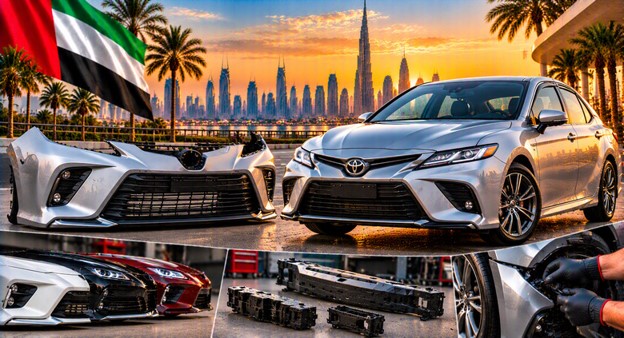
A new genuine Toyota bumper is worth considering when exact fit, original specification and predictable finishing matter more than the lowest initial price. It can be particularly appealing for a newer Camry, a vehicle still under warranty, or a car whose owner wants to preserve a factory-standard appearance.
But “new genuine” does not necessarily mean ready to bolt on and drive away. Some bumper covers are supplied unpainted or unprimed, so preparation, colour matching and fitting add to the bill. Toyota's US catalogue notes that certain 2021–2024 Camry bumper covers require preparation before painting.
Check exactly what the quote includes. Does it cover the bare cover only, or the grilles, mouldings, clips and sensor retainers as well? Is painting included? Are any required brackets damaged and therefore priced separately?
The part price is only the beginning of the calculation.
Aftermarket Bumpers: A Sensible Saving or False Economy?
Aftermarket covers can be a sensible option when a genuine replacement costs more than the car's age and condition justify. The catch is variation: one cover may line up well and need little preparation, while another arrives with awkward edges, uneven gaps or mounting points that require extra work.
Ask the supplier who makes the part, what warranty applies and whether the cover is intended for the exact Camry trim and market specification. If the answer is merely “fits Camry”, ask for more.
A workshop should dry-fit the cover before painting it. That gives the technician a chance to check the bonnet gap, headlamp edges, grille alignment, wheel-arch joins and fixing points before the colour is applied. Discovering a poor fit after paintwork has been completed is an expensive way to learn a lesson.
A lower purchase price is useful only if the finished job still looks right and stays secure.
Used Original Bumpers: What to Inspect Before Buying
A used genuine bumper can be a good match for an older Camry, particularly if it comes from the same generation and trim. It may even be available in the right factory colour, reducing the amount of repainting required. But never buy one on colour alone.
Inspect it in daylight. Look along the surface for ripples, sanding marks, overspray and paint that has begun to peel. Check every mounting tab, not just the visible face, and look closely around sensor holes, grille openings and the lower corners where covers often split.
Ask whether the bumper has been repaired previously. A clean-looking surface can hide a plastic weld or filler beneath the paint, and a repaired cover is not automatically bad; what matters is whether the repair is sound and the fixings remain secure.
Get photographs of the rear face as well as the outside. If the seller cannot show the mounting points, you are being asked to take a gamble.
Reconditioned Bumpers: Judge the Work, Not the Label
“Reconditioned” is not a single quality grade. It might mean a used cover has been cleaned, repaired and painted properly, or it might mean someone has filled a crack, sprayed over it and moved it on quickly.
Ask what was repaired and where. A reputable repairer should be able to identify cracks, welded areas, replaced tabs and any sections that needed reshaping. Inspect the reverse side if possible, because that is where the repair method is often easier to see.
For a bumper with broken fixings, ask whether the replacement tabs have been rebuilt securely and whether the cover has been test-fitted. A shiny finish is no proof that the part will stay aligned after installation.
Reconditioning makes the most sense when the original cover is otherwise suitable and the work can be checked. If the plastic is badly distorted, several mounts have failed or the cover has extensive previous repairs, a replacement may be the more dependable choice.
Front and Rear Bumper Parts Beyond the Outer Cover
A replacement quote can grow once the workshop removes the old cover. That is not necessarily an attempt to inflate the bill; some damage simply cannot be seen until the bumper comes off.
Depending on the impact and the Camry version, the job may involve:
- Side retainers and mounting brackets.
- Clips, screws and fasteners.
- Grille inserts and lower trim.
- Energy-absorbing material.
- Reinforcement or impact bar, if damaged.
- Wheel-arch liners and undertrays.
- Parking-sensor holders or related wiring.
Toyota's 2025 Camry catalogue lists the outer cover separately from items such as retainers, lower sections, absorbers and impact-bar parts. That is a useful reminder that “bumper price” and “complete repair price” are not the same thing.
Do not replace safety-related parts simply because they appear on a generic checklist, either. Have the workshop inspect them and explain which items are damaged, required or reusable.
Parking Sensors, Cameras and Driver-Assistance Equipment
A bumper is not always just a piece of painted plastic with a grille in it. Depending on the vehicle specification, it may house parking sensors or sit close to equipment used by driver-assistance systems.
Sensor holes need to be correctly positioned and sized. A badly aligned holder can leave a sensor tilted or poorly seated, which may cause false alerts or prevent the system from working as intended. Wiring can also be pulled, trapped or damaged during removal and refitting.
If the Camry has a front camera, radar or other assistance equipment affected by the repair, the workshop should follow the relevant manufacturer procedures and establish whether calibration or diagnostic checks are required. Do not assume every bumper replacement needs every kind of calibration, but do not let the garage dismiss the question without checking.
Before collecting the car, test the equipment that was disturbed. A bumper that sits neatly while a parking sensor remains faulty is not a completed repair.
UAE Heat, Sunlight and Dust: What They Mean for Bumper Repairs
UAE conditions put the finish and fit of exterior parts under regular strain. Strong sunlight and high surface temperatures can make a poor paint match more obvious, while dust and fine grit can leave marks that look like deeper scratches than they are.
Repeated heat exposure also makes it worth paying attention to existing cracks, brittle tabs and poorly repaired areas. A bumper that has already been stressed by an earlier impact may not tolerate another round of rough removal and refitting particularly well.
That does not mean every aftermarket cover will fail in the Gulf, or that every used one is unsuitable. Material quality, storage, previous damage and workmanship matter more than a broad claim about where the car is driven.
When checking a replacement in Dubai, Abu Dhabi, Sharjah or further afield, inspect it under bright natural light if possible. Look at the painted surface from different angles and check that the lower edges and side fixings sit flush. Dust can hide a lot in a warehouse; sunlight is less forgiving.
Paint Matching: Why the Right Colour Code Still Matters

A replacement bumper can be the correct shape, fit perfectly and still look wrong.
Toyota's paint code is the sensible starting point, but age, sun exposure and previous repairs can leave the existing bodywork looking slightly different from a fresh factory-mixed colour. Pearl whites, metallic greys and other finishes with layered effects can be particularly unforgiving when the painter gets the shade or application wrong.
Ask the workshop to check the vehicle's paint code and assess the existing finish before mixing paint. A test spray-out can help establish whether the colour is close enough, and the painter should explain whether blending adjacent panels is likely to improve the result.
Do not judge the job under workshop fluorescent lights alone. Look at the car outdoors, ideally in daylight, and check the bumper from the front, side and a shallow angle.
A small difference in colour can stand out more than the original scratch ever did.
Installation Quality: Check the Gaps Before You Drive Away
A bumper should sit securely and line up with the surrounding panels. It should not bow out at one corner, hang below the headlamps or leave a conspicuously uneven gap beside the front wing.
The workshop should check the cover against the grille, headlamps, bonnet, wheel-arch liners and adjacent bodywork before completing the job. Broken retainers and clips should be replaced where needed rather than compensated for with improvised fasteners.
Take a slow walk around the car before accepting it. Look at both corners, crouch to inspect the lower edge and check that the bumper does not move loosely when touched gently. Make sure the number plate, reflectors, grille and any trim pieces have been refitted properly.
If the bumper was removed after a collision, ask what was found behind it. A short explanation of the inspection is more useful than a vague assurance that everything is fine.
Toyota Camry Bumper Prices in UAE: What Can You Reliably Budget For?
There is no single price for a Camry bumper. A bare cover for an older standard-trim car is a different purchase from a newer cover with sensor provisions, special lower trim and several damaged brackets.
The difficulty is finding comparable, current UAE quotations. Overseas parts catalogues can establish that genuine replacement covers exist and show their listed prices, but they do not establish what a buyer in Dubai or Sharjah will pay after shipping, local supply arrangements, paintwork and installation.
For a useful quote, request these separate figures:
| Cost item | What to ask |
| Bumper cover | Genuine, aftermarket, used or reconditioned? |
| Additional parts | Which clips, brackets, grilles or trim pieces are included? |
| Delivery | Is the part already in the UAE, or being imported? |
| Paint and preparation | Is the cover supplied primed, unprimed or ready for paint? |
| Labour | Does the price include removal, refitting and adjustments? |
| Sensors and checks | Are diagnostic checks or calibration required? |
| VAT | Is VAT included in the quoted total? |
| Warranty | What covers the part, paintwork and fitting? |
A written quote with these details is more useful than a suspiciously low headline price. It lets you compare like with like, and it makes additional charges easier to challenge.
How to Compare the Total Cost of Each Option
The cheapest bumper is not necessarily the cheapest repair. A used cover that needs extensive preparation and repainting may cost more by the time it is fitted than a better-condition replacement.
Use this framework when comparing quotations. Fill it with actual offers rather than estimates presented as market facts.
| Cost or risk | New genuine | New aftermarket | Used original | Reconditioned |
| Purchase price | Obtain a local quote | Obtain a local quote | Depends on condition and availability | Depends on repair history |
| Paint preparation | May be required | Depends on supply finish | Often required | May already be painted |
| Fitment uncertainty | Confirm exact part number | Check moulding and mounts | Inspect for damage and previous repairs | Inspect repair quality |
| Extra clips and brackets | Price separately if needed | Price separately if needed | May be missing | May need replacement |
| Warranty | Confirm supplier terms | Confirm supplier terms | Often more limited; check terms | Confirm both part and repair cover |
| Main concern | Higher initial spend | Variation in quality | Hidden damage and wear | Quality of previous repair |
The total should include the bumper, any necessary supporting parts, paint, labour, delivery and applicable VAT. Add any required diagnostic work or calibration, but only after the workshop confirms it is relevant to your vehicle.
Labour, Paintwork and the Time the Car Spends in the Workshop
Replacing a bumper cover can be straightforward when the supporting parts are intact and the replacement fits properly. The job takes longer when clips have snapped, the grille must be transferred, the cover needs substantial preparation or the workshop discovers damage behind it.
Painting can also determine the timetable. A cover that arrives ready for fitting may avoid some preparation, while an unprimed cover needs the appropriate surface preparation, primer and paint process before installation.
There is no honest universal installation time for every Toyota Camry. Ask the workshop to distinguish between fitting time and the full job duration, including paint preparation, drying or curing, parts delivery and any checks required after assembly.
If the car is needed for commuting or family duties, confirm the promised completion date before leaving it. For a business vehicle, ask whether the garage can inspect the damage and confirm the parts list before the vehicle is booked in for a longer repair.
Hidden Costs That Catch Camry Owners Out
The bumper cover is visible, so naturally it gets most of the attention. The less obvious items often surface later.
A few missing clips may be inexpensive individually, but a collection of broken retainers, a damaged wheel-arch liner and a replacement grille can alter the final bill. Paint preparation, colour blending and delivery can add more. If the car has sensors, the workshop may also need to diagnose a fault that was not obvious before removal.
Ask one question before approving the work: “Is this the complete fitted price, assuming your inspection finds no additional damage?”
Then ask what happens if the inspection does uncover more. The workshop should contact you, explain the finding and agree any extra cost before proceeding, except where you have already authorised clearly defined work.
Photographs of hidden damage are helpful. They give you a record of what was found and help you understand why the original estimate changed.
Bumper Damage After a Collision: What Must Be Checked?
A cracked outer cover is not a reliable measure of the force of an impact. Some low-speed knocks cause visible cosmetic damage but little else; others shift brackets, damage an absorber or affect parts that sit behind the cover.
After a collision, the workshop should inspect the reinforcement, mounting points and surrounding areas where appropriate. Depending on the location and severity, that may include the grille, headlamp mounts, wheel-arch liner, cooling pack area or nearby wiring.
Do not let a bumper repair become a cosmetic cover-up for a problem that has not been investigated. If the impact was substantial, or the bonnet, headlights or adjoining panels no longer line up, ask for a proper body inspection before the replacement is approved.
Keep photographs and repair documentation, especially if an insurer is involved or you expect to sell the car later. A clear record of what was damaged and what was replaced is useful long after the paint has dried.
Used Versus New: Which Is Better for an Older Camry?
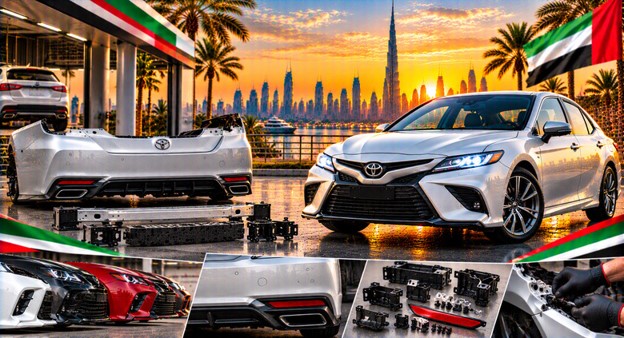
For an older Camry, the decision is often about proportionality. Spending heavily on a brand-new genuine cover may make sense if the car is in excellent condition and the owner intends to keep it for years. On a well-used vehicle with existing cosmetic wear, a sound used original may be the more sensible purchase.
There is no automatic winner.
A used bumper in the right colour can reduce paintwork costs, but only if the shade matches reasonably well and the cover has not been poorly repaired. A new aftermarket cover may offer a cleaner starting point, although it still needs a proper fitment check. A reconditioned cover can work well when the repairs are documented and the mounting points are sound.
Compare the complete fitted totals and the condition you can verify. If the price difference is small, a new part with clearer provenance and warranty terms may be worth the extra money. If the car is older and a used cover is genuinely sound, paying a premium simply for the word “new” may not be necessary.
Will a Replacement Bumper Affect Resale Value?
A properly fitted bumper replacement does not automatically make a Toyota Camry difficult to sell. Bumpers are exposed to everyday knocks, and cosmetic repairs are common. Buyers are more likely to worry about poor paintwork, uneven panel gaps, warning lights or evidence that a substantial collision was not repaired correctly.
A genuine replacement may reassure some buyers who value original specification, but an aftermarket part that fits well and has been professionally painted can also produce a tidy result. The invoice and repair history matter.
If the bumper was replaced after an accident, be straightforward about it. Keep the invoice, any insurer documentation and photographs showing the damage before repair. Do not describe a car as accident-free if that would be misleading.
The aim is not to pretend the car has never needed work. It is to show that the work was handled properly.
Insurance, Documentation and Approval Before Repairs
If the bumper damage resulted from a collision, check the relevant insurance process before authorising repairs. The steps can differ depending on the policy, the circumstances of the incident and whether an insurer has appointed or approved a repairer.
Ask whether the insurer needs to inspect the vehicle or approve the estimate before work begins. Keep the claim reference, photographs, quotation, approval and final invoice together. If you are paying privately, get the agreed scope and price in writing instead.
Do not assume that the cheapest replacement offered by a supplier will satisfy every insurance or repair requirement. The chosen part and repair method may need to meet the terms applicable to the vehicle and claim.
For imported or modified Camrys, clarify the replacement specification as well. If the bumper design differs from the vehicle's approved configuration, check the implications before fitting it rather than leaving the question until inspection or sale.
Workshop Red Flags When Buying or Fitting a Bumper
Be wary if a supplier cannot explain which Camry years and trims the part fits. The same goes for a seller who calls every cover “OEM” but cannot provide a manufacturer reference, or a workshop that refuses to check the mounting points before painting.
Other warning signs include:
- A quote that does not say whether the price covers the cover alone or a complete assembly.
- A used bumper offered without clear photographs of its reverse side.
- Pressure to pay before fitment and return conditions are explained.
- A promise that every Camry bumper fits every Camry of the same year.
- A garage that ignores sensor faults or refuses to discuss relevant post-repair checks.
- Extra charges appearing without an explanation of what changed.
One red flag does not always prove dishonesty, but several together should make you pause. Ask direct questions. A reliable supplier should be able to answer them without turning a straightforward purchase into a guessing game.
How to Check a Replacement Bumper Before Paying
Use this checklist whether you are buying from a parts supplier, a breaker or a body shop.
- Confirm the Camry's model year, generation, trim and market specification.
- Match the part number where available, preferably against the VIN.
- Confirm front or rear position and the exact cover or trim section.
- Check sensor holes, camera provisions and grille openings.
- Inspect all tabs, brackets, edges and fixing points.
- Look for cracks, warping, paint overspray and previous repairs.
- Confirm whether grilles, mouldings, clips and other fittings are included.
- Establish whether the part needs primer, paint or additional preparation.
- Get the delivery, return and warranty terms in writing.
- Ask for a complete fitted quote before authorising the job.
For a used bumper, add one more step: inspect it in person or request detailed photographs before payment. If the supplier will not let you verify the condition, factor that uncertainty into your decision.
The Final Inspection After Installation
Do not collect the car in a rush just because the workshop says the job is complete.
Walk around it and look for uneven gaps, loose corners, paint differences, damaged trim and missing clips. Check that the number plate is secure and the grille and reflectors sit properly. If the bumper was removed to repair collision damage, ask whether any hidden damage was found and whether it was addressed.
Test parking sensors and other equipment affected by the work. If a warning appears on the dashboard, or a sensor behaves differently from before, report it before accepting the repair as finished.
Keep the invoice showing the part supplied, the work carried out and any warranty terms. If the bumper develops a loose edge or a paint defect shortly afterwards, that paperwork will make a follow-up much easier.
A neat-looking front end is only part of the result. The cover must also be securely fitted, the relevant equipment must work, and the repair must be documented.
Finding the Right Toyota Camry Bumper in UAE
The most useful parts enquiry includes the car's model year, trim, VIN where appropriate, the damaged bumper's position and photographs of the existing part. If the original part number can be identified, include it. These details help suppliers distinguish a genuine match from a similar-looking cover intended for another market or trim.
When comparing offers through PartFinder UAE, or any parts-matching service, treat the listing as the beginning of the fitment check rather than proof that the part will fit. Ask the supplier to confirm the reference, condition, included fittings and whether the part is physically in stock.
For buyers in Dubai, Abu Dhabi, Sharjah, Ajman, Ras Al Khaimah, Fujairah and Umm Al Quwain, the location of the stock can affect delivery and the time the car spends off the road. A part advertised at a low price but shipped from overseas may not be the quickest or cheapest option once transport and preparation are included.
Get the confirmation in writing before paying. It is a small step that can save a great deal of back-and-forth later.
UAE Price Reference Update: 20 October 2026
The available price evidence reviewed for this article provides specific US-market catalogue prices, but it does not establish a comparable set of current UAE retail quotations for new genuine, aftermarket, used and reconditioned Toyota Camry bumpers. These figures should therefore be treated as overseas reference points, not as UAE prices.
| Model year and part | Listed US price | What the listing establishes |
| 2021–2024 Camry, part 52119-0X953 | US$131.52 sale price on one catalogue | Front cover for specified LE/XLE applications without parking-alert equipment |
| 2021–2024 Camry, part 52119-0X956 | US$142.67 sale price on one catalogue | Front cover for specified LE/XLE applications with parking-alert equipment |
| 2021–2024 Camry, part 52119-0X955 | US$277.76 listed MSRP on one catalogue | Front cover for specified SE/XSE/Nightshade applications with parking-alert equipment; other listings show different prices |
| 2025 Camry, part 52119-AQ903 | US$176.61 catalogue sale price | Front lower cover for specified SE/XSE/Nightshade applications without front parking aid |
| 2025 Camry, part 52159-AQ900 | US$181.69 catalogue sale price | Rear cover for a specified application without parking assistance |
These are listed US-dollar amounts for particular parts and configurations. They are not converted into AED, and they exclude any UAE import costs, local delivery, paint preparation, installation and applicable local taxes. Catalogue prices can change and may not represent the price ultimately charged to a buyer.
What remains unverified: a like-for-like set of dated UAE quotations for the same Camry model year and trim across genuine new, aftermarket new, used original and reconditioned covers. No reliable UAE fitted-price range should be invented to fill that gap.
For a current purchase, request a written local quotation that identifies the exact part number, condition, included trim, paintwork, labour, delivery, VAT and warranty. Compare the final fitted total, not just the advertised cover price.
Frequently Asked Questions About Toyota Camry Bumpers in UAE
Categories
- Audi
- BMW
- Car Accessories
- Car Tips
- Ford
- Land Rover
- Mazda
- Range Rover
- Top 10
- UAE Car Parts
- Used Car Parts
- Toyota
- Replacement Engines
- Nissan
- Hyundai
- Mitsubishi
- Volkswagen
- Honda
- Kia
- Chevrolet
- Dodge
- Jeep
- Subaru
- Renault
- Lexus
- Mercedes
- Suzuki
- Hummer
- Porsche
- Infiniti
- Peugeot
- GMC
- Mini
- Volvo
- Replacement Gearboxes
- MG
- Jaguar
- Skoda
- Cadillac
- Daihatsu
- Fiat
- German Car Parts
- Japanese Car Parts
- Aftermarket Car Parts
- Genuine Car Parts
- New Car Parts
- Reconditioned Car Parts
- European Car Parts
- American Car Parts
- Korean Car Parts
- British Car Parts
- Chinese Car Parts
- Sports/Exotic Car Parts
- Luxury Car Parts
- Performance Car Parts
- SUV/4x4 Spare Parts
- Truck Spare Parts
- EV Car Parts
- Hybrid Car Parts
- Auto Spare Parts in UAE
- Tesla
- Isuzu
- Ram
- Ferrari
- Bentley
- Lamborghini
- Genesis
- Maserati
- Lincoln
- Chrysler
- Opel
- Citroen
- SsangYong
- Seat
- McLaren
- Aston Martin
- Rolls Royce
- Maybach
- Alfa Romeo
- Bugatti
- Scion
- Abu Dhabi Car Parts
- Ajman Car Parts
- Al Khan Car Parts
- Al Sajaa Car Parts
- Deira Car Parts
- Dubai Car Parts
- Fujairah Car Parts
- Industrial Area 6 Car Parts
- Mussafah Car Parts
- Ras Al Khaimah Car Parts
- Sharjah Car Parts
- Umm Al Quwain Car Parts
- Acura
- BYD
- Chery
- Dacia
- DS
- Geely Emgrand
- EXEED
- GAC
- GAC Gonow
- Geely
- Gonow
- Great Wall
- Haima
- Haval
- Holden
- Iveco
- JAC
- Jaecoo
- Jetour
- Lotus
- Omoda
- Proton
- Renault Samsung
- Roewe
- Lucid
- Replacement Headlight
- Replacement Bumper