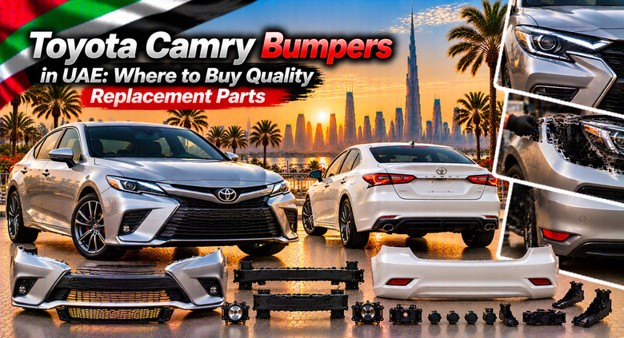
Toyota Camry Bumpers in UAE: Where to Buy Quality Replacement Parts
October 28, 2026
The Toyota Camry bumpers in UAE is easy to underestimate until the paint cracks, a parking knock pulls one corner away from the wing, or the front parking sensors start behaving oddly after a replacement. Then the apparently simple job gets more involved. The bumper cover might be damaged, but the mounting brackets, absorber, reinforcement bar or sensor holders behind it may need attention too.
For Camry owners in Dubai, Abu Dhabi, Sharjah and the other UAE emirates, the sensible purchase is not automatically the cheapest cover on offer. It is the one that matches the car’s generation, regional specification and equipment, arrives in a condition worth fitting, and does not turn a modest repair into a second bill for paintwork and missing fittings.
This guide looks at where to source a suitable replacement, how to compare genuine, aftermarket and used options, and what to check before paying. The central rule is straightforward: confirm fitment before comparing prices. A bumper that looks right in a photograph can still be wrong for your Camry.
Which Toyota Camry Bumper Do You Actually Need?
Start with the damaged end of the car, not the seller’s catalogue. A front bumper cover, a rear bumper cover and the structural parts tucked behind either one are different purchases, even when an advert groups them together under a vague label such as “Camry bumper assembly”.
Before requesting a quotation, establish:
- The Camry’s model year and generation.
- Whether it is a GCC-specification car or an imported version.
- The exact body style and trim level.
- Whether you need the front or rear bumper.
- Whether the car has parking sensors, a camera, radar equipment or special bumper trim.
The last point matters. Two Camrys registered in the same year may not use identical bumper covers, brackets or lower grilles. A photograph can help narrow the search, but it cannot confirm compatibility on its own.
Where to Buy Toyota Camry Bumpers in the UAE
There are four practical routes, and each has its own trade-off.
| Where to buy | Best suited to | What to check |
| Authorised Toyota parts department | Genuine replacement parts and traceable part numbers | Price, lead time, exact specification and warranty |
| Independent automotive parts supplier | Genuine, OEM-equivalent or aftermarket options | Manufacturer, packaging, returns and fitment confirmation |
| Used-parts dealer or vehicle recycler | Budget-conscious repairs and discontinued trim | Cracks, previous repairs, missing tabs and part identity |
| Body repair workshop sourcing on your behalf | Owners who want supply, paint and installation coordinated | Written parts breakdown, labour, paint and warranty terms |
For drivers in Dubai and Sharjah, independent suppliers and used-parts traders may offer several alternatives to compare. Abu Dhabi owners can approach local parts suppliers or workshops, while buyers in Ajman, Ras Al Khaimah, Fujairah and Umm Al Quwain may find it more practical to confirm stock by telephone before travelling.
Do not assume that a supplier has a bumper simply because the business advertises Toyota parts. Ask for a current photograph of the actual item, its part number if available, and written confirmation that it fits your particular Camry.
Genuine Toyota, OEM-Equivalent or Aftermarket?
These labels are often used rather loosely in online listings. Ask what the seller means before treating them as interchangeable.
A genuine Toyota part is supplied as a Toyota-branded replacement part. An aftermarket bumper is manufactured outside Toyota’s genuine-parts supply chain. “OEM” is frequently used in advertising, but it does not automatically prove that the bumper was made by the original factory supplier or that it matches the genuine part in every respect.
| Type | Potential advantage | Main concern |
| Genuine Toyota | Clearer identification through Toyota part references and parts channels | May cost more; availability can vary |
| Reputable aftermarket | More choice at different price points | Fit, surface finish and material quality vary by manufacturer |
| Used genuine | May offer original fit and finish at a lower purchase price | Condition, prior repairs and missing fittings |
| Repaired original bumper | Can preserve the existing cover if damage is suitable for repair | Repair quality and remaining material strength |
A sensible buyer compares the actual part, not just the label on the box. If a seller claims that an aftermarket bumper is “exactly like original”, ask for the manufacturer and written fitment details.
Why the Camry’s Model Year Matters
The Camry has passed through multiple generations, facelifts and trim revisions. Bumper styling changes can include a different grille opening, lower spoiler, fog-lamp surround, sensor position or mounting point.
That makes “Toyota Camry bumper, 2018 onwards” a weak fitment description unless the seller can establish which versions are covered. A listing may show a facelift model while the stock item is intended for an earlier front end.
Give the supplier the full model year and, where possible, the VIN or Toyota part number from the existing bumper. If the car has already had a previous repair, verify the fitted part rather than assuming it is original to the vehicle.
GCC-Specification and Imported Camrys
A Camry brought into the UAE from another market may have different equipment or trim, even when its body shape looks familiar. Differences can arise from the production year, market specification, trim level and optional systems.
Do not treat “GCC” as a guarantee that every part is identical across all UAE cars, either. It is a useful starting point, not a complete fitment check.
Ask the supplier to confirm compatibility against the VIN or a verified part number. If that is not possible, compare the mounting tabs, grille apertures, sensor holes and bumper contours with the existing cover before the painter begins work.
Front Bumper Replacement: What to Inspect
A front-end impact may damage more than the visible plastic. The bumper cover can split at a corner, the upper mounting tabs can tear, or the lower grille and side retainers can break when the cover is pushed backwards.
Inspect the following before ordering:
- Upper and lower grille openings.
- Fog-lamp or decorative-light apertures, where fitted.
- Parking-sensor holes and holders.
- Side guides and retaining clips.
- Lower spoiler or lip.
- The bumper absorber and reinforcement behind the cover.
If the impact was substantial, ask a qualified body repairer to inspect the underlying structure. A new cover will not correct a bent reinforcement bar or a damaged mounting point.
Rear Bumper Replacement: The Details That Get Missed
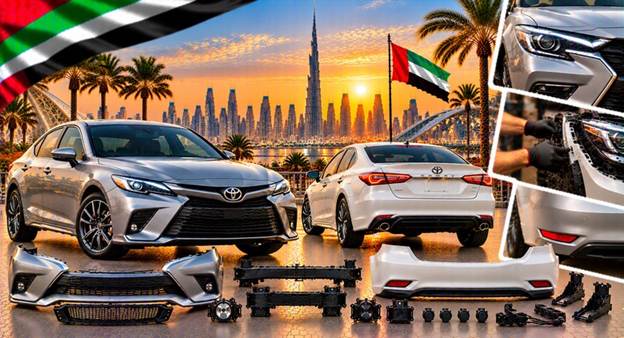
Rear bumper covers can include parking-sensor apertures, reflector openings, lower valances and trim pieces that vary between Camry versions. A used cover may arrive without these items, even when its main shell is intact.
Look closely at the lower edge and both corners. Scrapes from kerbs, torn tabs and stress cracks around sensor holes are common reasons a cheap used part turns into a disappointing purchase.
If the car has rear parking sensors or a reversing camera, confirm that the replacement design accommodates the existing equipment. Do not assume a sensor-ready bumper includes the sensors, wiring, brackets or other fittings.
How Much Does a Toyota Camry Bumper Cost in the UAE?
There is no single defensible price for every Camry bumper. The final amount depends on the model year, front or rear position, part type, availability and whether the quote includes paint and fitting.
A useful comparison separates the costs rather than accepting one unexplained total.
| Cost item | What the quotation should clarify |
| Bumper cover | Genuine, aftermarket or used; front or rear |
| Supporting fittings | Clips, side retainers, brackets and trim |
| Paint materials and labour | Whether colour matching and preparation are included |
| Removal and installation | Labour for removing the old cover and fitting the replacement |
| Sensor or camera work | Transfer, testing and any required calibration |
| Delivery | Included, charged separately or collection only |
| VAT | Whether applicable VAT is included in the quoted total |
A seller’s advertised price is not the same as a confirmed, fitted price. No current, comparable Toyota Camry-specific UAE quotation has been established here, so a numerical local price range would risk giving you a false starting point. Request quotes for the same specification and compare the complete totals.
Indicative UAE Prices: How to Read the Market
Although a model-specific Camry quotation is still needed, published UAE body-repair guides give a broad sense of the sums involved. One Dubai guide lists aftermarket bumper shells for common vehicles, including the Camry, at approximately AED 300–700; this is an advertised estimate, not a verified quote for every Camry generation or trim. Another Dubai guide places complete bumper replacement across a much wider range, reflecting differences in parts, paint and fitting.
Use those figures as a starting point for questions, not as a promise of what your repair will cost.
| Quoted item | What you need to establish |
| Aftermarket bumper shell | Is it actually for your Camry generation and trim? |
| Used original bumper | Is the cover straight, uncracked and complete? |
| Genuine new bumper | Is the part number confirmed and the item in stock? |
| Painted bumper | Does the price include the cover, paint and fitting, or paintwork alone? |
| Complete replacement | Are clips, grilles, trim, sensors and VAT included? |
A price that looks unusually low may cover the bare plastic shell only. That is not necessarily a bad deal; it is simply not the whole job.
Is a Used Toyota Camry Bumper Worth Buying?
It can be. A used genuine bumper may preserve the original shape and finish, and it may cost less than buying a new genuine cover. The catch is condition: used parts have histories, and the seller may not know all of them.
Ask for clear photographs of the front, rear and both sides of the bumper, plus close-ups of the mounting tabs and any repaired areas. If the bumper is already painted, check whether the colour is a close match and whether the finish is hiding cracks or filler.
A used bumper is most attractive when it is structurally sound, correctly identified and supplied with clear return terms. If it has broken mounting points or a badly repaired corner, the saving can disappear quickly.
Buying a New Aftermarket Bumper
Aftermarket covers are worth considering when the genuine part is expensive, unavailable or disproportionate to the value of an older Camry. Quality varies, though. Some fit neatly with little adjustment; others need extra preparation or leave awkward gaps around the headlamps and wings.
Before ordering, request the manufacturer’s name, the applicable model years, and confirmation of the precise trim and sensor layout. Ask whether the supplier accepts returns if the cover proves incompatible before painting or modification.
Never let a workshop paint an unverified bumper first. Paint is money spent on a part that might still be wrong.
Genuine Toyota Bumpers: When the Extra Cost Makes Sense
A genuine bumper is worth pricing when you want a clearly traceable part, when the car is relatively new, or when its trim and equipment make fitment especially fussy. A Toyota parts department or supplier able to verify the part number is the logical starting point.
The word genuine does not mean every other item needed for the repair is included. The cover may be sold separately from grilles, lower trim, brackets, clips and sensor holders. Ask for an itemised quotation and confirm the expected arrival date before arranging a workshop booking.
For an older daily driver, a suitable aftermarket or used genuine cover may be more proportionate. For a newer Camry with distinctive styling and equipment, paying more for traceability and fitment confidence can be reasonable.
How to Confirm the Correct Part Number
A part number is more useful than a vague advert title because it gives the supplier a specific reference to verify. However, a number copied from a different Camry is not proof that the part will fit yours.
The safest route is to have the Toyota parts department or a knowledgeable supplier check the VIN against the relevant parts catalogue. If the old bumper’s label or marking is available, provide that too, while recognising that a previous owner may have fitted a replacement.
Get confirmation in writing. If the supplier cannot verify the part number, ask what alternative checks they will perform and what happens if the item does not fit.
Parking Sensors, Cameras and Radar Equipment
A bumper cover is not merely a painted shell when driver-assistance equipment is involved. Sensor holes may differ in size or position, and a mounting bracket that looks similar may not hold the sensor at the correct angle.
Check whether your Camry has front or rear parking sensors, a reversing camera, or radar equipment associated with its safety systems. Then establish whether the replacement bumper accommodates the existing arrangement and whether any brackets or holders are supplied.
After installation, test the relevant systems. If a warning appears, do not assume it is a harmless side effect of bodywork. The sensor, its wiring, its mounting position or another part of the system may need diagnosis.
Paint Matching in the UAE Climate
A bumper can fit perfectly and still look wrong. Sun exposure, ageing paint and previous resprays can leave the existing body colour slightly different from the original factory shade, especially on a car that has spent years outdoors.
Give the paint shop the vehicle’s paint code, but do not expect the code alone to guarantee a seamless match. A good refinisher will assess the existing finish and discuss how the colour should be matched. Metallic and pearl finishes can be particularly unforgiving when the shade or application differs.
Ask whether the quotation includes surface preparation, primer where required, colour coat, clear coat and final inspection. Also ask how long the workshop needs before the car can be safely returned to everyday use.
Can the Existing Bumper Be Repaired Instead?
Replacing the cover is not always the sensible option. A surface scuff, paint transfer or limited crack may be repairable, provided the material, location and extent of damage make repair appropriate.
A repairer should inspect the mounting tabs, the surrounding plastic and any damage behind the cover before recommending a repair. A cracked corner near a fixing point may be less suitable than a shallow scratch in an undistorted area.
| Damage found | Likely next step |
| Paint transfer or light scuff | Clean and assess; polishing may be enough |
| Scratches through the paint | Refinish if the cover remains sound |
| Small crack in a suitable area | Assess for plastic repair |
| Multiple broken tabs or distorted cover | Compare repair costs with replacement |
| Evidence of impact damage behind the cover | Inspect supporting parts before deciding |
A cheap repair that fails a few weeks later is not a bargain. But replacing an otherwise sound cover for a superficial mark can be wasteful, too.
Hidden Parts That May Add to the Bill
The visible bumper cover is only one piece of the assembly. A low-speed impact can snap plastic retainers or dislodge a grille, while a harder collision may affect the absorber or reinforcement behind it.
Ask the workshop to list any additional parts it finds damaged, rather than rolling everything into an unexplained “bumper job”. If the cover has to come off for inspection, request photographs of significant hidden damage before authorising extra work.
Typical additional items include side guides, mounting brackets, clips, grilles, reflectors, lower trim, absorbers and reinforcement parts. Not every repair needs them. The point is to distinguish what has actually been found from what is merely being allowed for.
What a Complete Fitted Quote Should Include
Two quotes are only comparable if they describe roughly the same work. One garage may price the bumper shell alone; another may include preparation, paint, fitting and replacement clips.
Ask each supplier or workshop to itemise:
- The bumper type, part number or verified fitment description.
- Any grille, trim, bracket or clip supplied with it.
- Paint preparation, colour matching and refinishing.
- Removal and installation labour.
- Sensor transfer, system checks or calibration, where required.
- Delivery, applicable VAT and warranty terms.
Request the final payable total in writing. If extra damage is discovered during dismantling, agree that the workshop will contact you before proceeding with additional paid work.
How Long Does Camry Bumper Replacement Take?
The physical fitting may be relatively quick, but the full job often depends on parts availability and paintwork. A bumper that is in stock and ready to fit presents a different timetable from a cover that must be ordered, prepared, painted and checked.
Ask the workshop to separate the expected time for obtaining the part from the time needed to complete the repair. If the bumper requires painting, allow for preparation, curing and quality checks rather than planning around the installation alone.
For a car used for commuting or family duties, that distinction matters. A confirmed appointment is useful; a promised collection time without confirmed parts is less so.
Common Buying Mistakes to Avoid
Most costly mistakes are not especially complicated. They happen when a buyer assumes that a similar-looking part will fit, or treats an advertised price as the final bill.
Watch out for these warning signs:
- The seller will not confirm the applicable model year or trim.
- The part is advertised as “OEM” without a named manufacturer or clear identification.
- Photographs show a different bumper from the item being supplied.
- The price excludes fittings but the listing makes that unclear.
- A used bumper has no close-up photographs of its mounting points.
- The seller refuses to explain return conditions before payment.
- The workshop wants to paint the cover before confirming fitment.
A reputable supplier should be able to explain what is included and what remains uncertain. If the answers are evasive, keep looking.
How to Inspect a Used Bumper Before Paying
If you can inspect the bumper in person, turn it over. The painted surface may look tidy while the underside tells a different story.
Check the fixing tabs along the top and sides, the lower edge, the corners and the areas around sensor holes. Look for hairline cracks, stress whitening in the plastic, uneven repairs, excess filler and signs that mounting points have been glued back together. None of these automatically makes a part unusable, but they affect what it is worth and how confidently it can be fitted.
If you are buying remotely, request dated photographs of the actual item rather than generic catalogue pictures. Ask the seller to confirm whether the bumper has been repaired, repainted or modified, and agree on a return process before sending payment.
Warranty, Returns and Delivery: Get the Terms First
A bumper may arrive with damage that was not visible in the listing, or prove incompatible when the workshop checks the mounting points. That is why return conditions matter almost as much as the purchase price.
Before paying, establish whether the seller accepts returns for incorrect fitment, transit damage or a mismatch between the advertised and supplied item. Ask who pays return delivery and whether painted, drilled or modified parts become non-returnable.
For delivery within the UAE, confirm how the bumper will be packaged and whether the driver or recipient should inspect it before signing. A long plastic cover can be damaged in transit if it is poorly supported. Keep the order confirmation, photographs and messages until the part has been fitted and accepted.
Choosing a Reliable Parts Supplier
A dependable supplier does more than quote a low price. They identify the part, explain its condition, confirm what is included and make the buying terms clear.
When comparing options through PartFinder UAE or another parts-sourcing route, use the same checklist for every quotation. Ask for the model year and trim compatibility, the part’s condition, photographs, availability, delivery arrangements and return policy. If a supplier says a bumper is genuine, request the evidence behind that description.
Be wary of pressure to pay immediately before the details are confirmed. Stock can change, of course, but a seller should still be able to tell you whether the item is physically available, whether the photograph shows that exact item, and when it can be dispatched.
Buying in Dubai, Sharjah, Abu Dhabi and Other Emirates
Location can affect how quickly you receive the bumper and how practical it is to inspect it before purchase.
Dubai and Sharjah are useful starting points for comparing independent parts suppliers, used-parts traders and body repairers. Buyers in Abu Dhabi may prefer to coordinate sourcing and fitting locally, while owners in Ajman, Ras Al Khaimah, Fujairah and Umm Al Quwain can reduce wasted journeys by confirming stock and delivery before setting off.
Do not judge a supplier solely by its address. A nearby business with uncertain stock or vague return terms may be a worse choice than a supplier elsewhere that provides clear photographs, confirmed fitment and dependable delivery. Compare the total cost of obtaining the part, not just the distance to the shop.
What to Tell a Supplier When Requesting a Quote
A short, precise enquiry will usually get you a more useful answer than “How much for a Camry bumper?”
Send the vehicle’s model year, generation if known, trim level, GCC or imported specification, and whether you need the front or rear cover. Include the VIN privately when a supplier needs it to verify compatibility; avoid posting it publicly in an advert or open forum.
Attach clear photographs of the existing bumper and its damage. Mention parking sensors, cameras, unusual trim or any previous bodywork. Then ask for separate prices for genuine, aftermarket and used options if all three are available.
The goal is to receive comparable offers, not a string of figures for parts that may not fit your car.
A Simple Decision Matrix for Camry Owners
There is no universal winner between genuine, aftermarket and used. The right choice depends on the car’s age, the extent of the damage, your budget and how long you intend to keep the vehicle.
| Your situation | Option worth investigating first | Why |
| Newer Camry, precise trim or sensor requirements | Genuine replacement | Easier part-number traceability |
| Older daily driver with a limited repair budget | Reputable aftermarket | May reduce the initial parts cost |
| Older Camry where original fit and finish matter | Used genuine | Can combine original design with a lower purchase price |
| Small crack or cosmetic scuff | Repair the existing cover | May avoid replacement and repainting costs |
| Significant impact with possible hidden damage | Full inspection before buying | Prevents ordering the wrong repair solution |
Treat the matrix as a starting point, not a verdict. A badly repaired used bumper may be worse value than a decent aftermarket cover, while a repairable original may be the cheapest sensible option of all.
How the Replacement Affects Resale Value
A correctly fitted, well-finished bumper helps maintain the car’s appearance, but the badge on the replacement part is only one consideration. Poor panel gaps, mismatched paint, loose trim or faulty parking sensors can make a repair look careless and raise questions when the car is sold.
Keep the invoice and any warranty documentation. If the work followed an insurance claim, retain the relevant repair records too. A future buyer may appreciate knowing what was replaced and whether the surrounding damage was inspected.
For a high-mileage Camry that is otherwise sound, an appropriate aftermarket bumper may be a proportionate repair. For a newer car in excellent condition, the extra traceability of a genuine part may be worth considering. Neither choice automatically guarantees a higher resale price.
Final Pre-Purchase Checklist
Before committing to a bumper, run through these checks. They take a few minutes and can save the expense of a wrong part, a second paint job or an avoidable delay.
Confirm the Camry model year, generation, trim and market specification.
Identify whether the front or rear bumper cover is required.
Verify the part number or obtain written fitment confirmation.
Confirm whether the part is genuine, aftermarket or used.
Inspect photographs of the actual bumper, including mounting tabs and underside.
Check sensor holes, camera arrangements, grille openings and lower trim.
Confirm what is included and what must be purchased separately.
Get a written price for paint, labour, delivery and applicable VAT.
Agree on return terms, warranty coverage and transit-damage procedure.
Ask the workshop to inspect hidden damage before authorising extra work.
0 of 10 checked
Reset checklist
If any essential detail remains unclear, pause the purchase. A little extra checking is cheaper than discovering the mismatch after the bumper has been painted.
UAE Price Reference Update: 24 October 2026
Current public UAE body-repair guides provide broad planning estimates, but they do not establish a confirmed, model-specific fitted price for every Toyota Camry generation and trim. One Dubai repair guide advertises aftermarket bumper shells for common models, including the Camry, at around AED 300–700; a separate guide gives a much broader replacement estimate of AED 1,200–8,000 or more across different vehicles and repair scopes. These are indicative published figures, not quotations for your particular car.
For a meaningful Camry quotation, ask suppliers to price the exact bumper cover and state whether it is new genuine, new aftermarket or used genuine. Then obtain the paint, fitting and supporting-parts costs separately.
No confirmed current Camry-specific parts quotation, comparable stock offer or complete fitted price has been established for this article. Treat any offer as provisional until the supplier confirms fitment, availability and the final payable amount in writing.
Frequently Asked Questions
Categories
- Audi
- BMW
- Car Accessories
- Car Tips
- Ford
- Land Rover
- Mazda
- Range Rover
- Top 10
- UAE Car Parts
- Used Car Parts
- Toyota
- Replacement Engines
- Nissan
- Hyundai
- Mitsubishi
- Volkswagen
- Honda
- Kia
- Chevrolet
- Dodge
- Jeep
- Subaru
- Renault
- Lexus
- Mercedes
- Suzuki
- Hummer
- Porsche
- Infiniti
- Peugeot
- GMC
- Mini
- Volvo
- Replacement Gearboxes
- MG
- Jaguar
- Skoda
- Cadillac
- Daihatsu
- Fiat
- German Car Parts
- Japanese Car Parts
- Aftermarket Car Parts
- Genuine Car Parts
- New Car Parts
- Reconditioned Car Parts
- European Car Parts
- American Car Parts
- Korean Car Parts
- British Car Parts
- Chinese Car Parts
- Sports/Exotic Car Parts
- Luxury Car Parts
- Performance Car Parts
- SUV/4x4 Spare Parts
- Truck Spare Parts
- EV Car Parts
- Hybrid Car Parts
- Auto Spare Parts in UAE
- Tesla
- Isuzu
- Ram
- Ferrari
- Bentley
- Lamborghini
- Genesis
- Maserati
- Lincoln
- Chrysler
- Opel
- Citroen
- SsangYong
- Seat
- McLaren
- Aston Martin
- Rolls Royce
- Maybach
- Alfa Romeo
- Bugatti
- Scion
- Abu Dhabi Car Parts
- Ajman Car Parts
- Al Khan Car Parts
- Al Sajaa Car Parts
- Deira Car Parts
- Dubai Car Parts
- Fujairah Car Parts
- Industrial Area 6 Car Parts
- Mussafah Car Parts
- Ras Al Khaimah Car Parts
- Sharjah Car Parts
- Umm Al Quwain Car Parts
- Acura
- BYD
- Chery
- Dacia
- DS
- Geely Emgrand
- EXEED
- GAC
- GAC Gonow
- Geely
- Gonow
- Great Wall
- Haima
- Haval
- Holden
- Iveco
- JAC
- Jaecoo
- Jetour
- Lotus
- Omoda
- Proton
- Renault Samsung
- Roewe
- Lucid
- Replacement Headlight
- Replacement Bumper