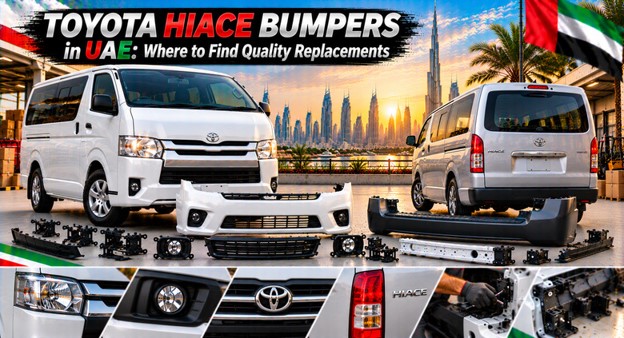
Toyota Hiace Bumpers in UAE: Where to Find Quality Replacements
October 21, 2026
The Toyota Hiace Bumper Is a Working Part, Not Just a Bit of Plastic
A Toyota Hiace spends much of its life doing things that are hard on bodywork. It noses into tight loading bays in Dubai, squeezes through crowded streets in Sharjah, carries workers across Abu Dhabi before sunrise, and reverses towards warehouse doors where a few centimetres can make the difference between a clean job and a cracked bumper.
It is a commercial vehicle, often with a timetable to keep. That changes the replacement decision.
A family car owner might put up with a damaged bumper for a few weeks. A delivery operator or passenger-transport business has different calculations to make: the damage might affect parking sensors, leave sharp edges exposed, loosen the front grille or make the vehicle look poorly maintained in front of customers. Even when the van still drives perfectly well, a damaged bumper can create a nuisance that gets worse with every working day.
The sensible choice is not automatically the cheapest bumper, nor is it always a brand-new genuine Toyota part. It is the replacement that fits the exact Hiace, accepts the equipment already fitted to it, stands up to the vehicle's working conditions and costs a reasonable amount once painting and installation are included.
That last part matters. The Toyota Hiace bumpers in UAE advertised at a tempting price can become a rather different purchase after the brackets, clips, paint and workshop labour have been added.
Which Toyota Hiace Generation Do You Own?
Start with the vehicle, not the price tag.
The Hiace has been sold in several generations and body configurations, with different front-end designs, engine options, market specifications and equipment levels. A bumper listed simply as suitable for a Toyota Hiace may be intended for an older van, a later model, a particular body style or a different regional specification.
Broadly, UAE owners will encounter older H100-series vehicles, the H200 generation introduced in the mid-2000s, and newer H300-series models introduced in the late 2010s. Registration year alone is not always enough to establish which bumper fits.
| Vehicle identification | Why it matters when buying a bumper |
| Older H100-series Hiace | The bumper shape, mounting points and available trim differ from later models |
| H200-series Hiace, broadly 2005–2019 | There are production updates and variations in bumper design, fittings and market specification |
| H300-series Hiace, introduced from around 2019 | The front-end design is substantially different from the preceding generation |
| Passenger van | Seating configuration, exterior trim and factory equipment may affect the required parts |
| Panel van or commercial cargo model | The body style and specification should be checked against the replacement |
| Modified or previously repaired vehicle | Existing brackets and fittings may no longer match the original factory arrangement |
These date ranges are useful starting points, not a substitute for identification. Model changes can overlap with registration dates, and a vehicle imported into the UAE may not follow the specification an overseas catalogue assumes.
If you are unsure, find the vehicle identification number (VIN) and ask the supplier to confirm the bumper against the vehicle record or original part number. A photograph helps, but it does not settle the matter by itself.
Front or Rear? Identify the Damaged Area Before Ordering
It sounds obvious. Yet ordering the wrong bumper is an expensive way to discover that a supplier's listing was less specific than it looked.
The front bumper usually works alongside the grille, headlamps, fog lamps where fitted, lower trim and mounting brackets. Depending on the Hiace version, it may also need to accommodate parking sensors or other equipment. Damage around the front corners can affect more than the visible cover.
The rear bumper has its own complications. Rear step arrangements, parking sensors, reflectors, number-plate details and the shape of the rear bodywork can vary. A bumper for a passenger version should not be assumed to fit a commercial van simply because both vehicles carry the Hiace badge.
Before you buy, establish four things:
- Is the damaged part the front or rear bumper?
- Is the bumper cover cracked, or have the supports and mounting points also broken?
- Does the replacement need openings for sensors, lamps or other factory equipment?
- Are you buying the outer cover alone or a more complete assembly with fittings?
That final distinction can easily be missed in online listings. A bumper cover is not necessarily a complete bumper assembly. If the quotation is unclear, ask the seller to spell out exactly what comes in the box.
How to Confirm the Correct Hiace Bumper Fitment
The most reliable starting point is the VIN, supported by the vehicle's model or frame code and the original bumper part number where available.
Toyota parts catalogues may identify the Hiace through codes such as KDH, TRH, LH or GDH, depending on the generation, engine family and specification. These codes are useful clues, but they should not be treated as interchangeable labels. Two vehicles with similar-looking codes can have different parts requirements.
Ask the supplier to confirm the following before payment.
| Check | What you need to establish |
| VIN or chassis/frame number | The vehicle being matched is the correct one |
| Model and production year | The bumper corresponds to the correct generation and production range |
| Original part number | The replacement cross-references to the required part |
| Market specification | GCC, Japanese-import or other regional differences have been considered |
| Equipment openings | Sensors, lamps, grilles and trim can be fitted correctly |
| Mounting arrangement | The bumper lines up with the actual brackets and attachment points |
| Return policy | You can resolve a verified fitment mismatch under the seller's stated terms |
A clear photograph of the old bumper can help a parts specialist narrow down the options. So can photographs of the damaged corners and mounting tabs.
But don't rely on appearance alone. Two bumper covers may look almost identical in a catalogue image while having different openings, mounting details or trim requirements.
Where to Look for Toyota Hiace Bumpers in the UAE
The best buying route depends on how quickly the van needs to return to work, whether you want a genuine Toyota part, and how much risk you are prepared to take on a used or aftermarket replacement.
For most buyers, there are three sensible starting points.
Authorised Toyota parts channels are worth approaching when you want a genuine replacement and a clear route to checking the part number. Ask for a quotation against the VIN, including any separate fittings that need replacement. Genuine parts can cost more, but the price should be compared with an equivalent complete repair, not just a cheaper cover advertised elsewhere.
Independent spare-parts suppliers may offer genuine, OEM-equivalent and aftermarket options. This route can be useful for older Hiace vans and commercial fleets, particularly when the vehicle is outside its warranty period. The important question is what the seller can verify about the actual part, not how confidently it is described.
Used-parts suppliers and dismantlers may have original bumper covers removed from donor vehicles. These can make financial sense, provided the part is structurally sound and the mounting points have not been damaged in a previous collision.
In Dubai and Sharjah, where vehicle-parts trading and repair services are readily accessible, buyers may have several quotations to compare. Abu Dhabi operators may prefer a supplier who can coordinate delivery and installation without keeping a working vehicle off the road for too long. For businesses operating in Ajman, Ras Al Khaimah, Fujairah or Umm Al Quwain, delivery timing and return arrangements deserve equal attention.
Don't buy solely because a seller says the bumper is available today. Ask whether it is physically in stock, whether the quoted part matches your exact Hiace and when it can realistically be fitted.
Genuine, OEM, Aftermarket or Used: What Are You Actually Buying?
The word quality gets thrown around rather freely in spare-parts sales. It is more useful to ask who made the part, what evidence supports the description and whether it fits the intended vehicle.
| Replacement type | Main advantage | Main concern | Best suited to |
| Genuine Toyota | Supplied as a Toyota-branded replacement part | Often costs more than alternatives | Owners prioritising genuine specification and traceability |
| OEM | May refer to a part made by an original-equipment manufacturer, but the exact meaning should be clarified | The label alone does not prove that the item is identical to the Toyota-supplied part | Buyers who can verify the manufacturer and part reference |
| Aftermarket | Offers a wider choice of prices and suppliers | Fit, finish, material and mounting accuracy vary by product | Older or working vehicles where value matters |
| Used genuine | Can retain original fit and finish at a lower purchase price | Hidden cracks, repairs, fading and damaged tabs | Budget-conscious owners who can inspect the part |
| Reconditioned or repaired | May restore a damaged original bumper without replacing the entire cover | Repair quality and durability depend on the damage and workmanship | Bumpers with repairable cosmetic damage and sound mounting points |
A terminology warning is worth making here. Some sellers use OEM loosely to mean an alternative to a genuine Toyota part. Others use it to describe a specific manufacturer or production relationship. Ask for the maker's name, part reference and any available packaging or documentation rather than assuming that three letters settle the question.
Nor does genuine automatically mean that every used genuine bumper is a better buy than every aftermarket one. A genuine cover with cracked mounting tabs and a poor repair history may be less useful than a correctly manufactured replacement from a reputable supplier.
Judge the actual part.
What Should a Quality Replacement Bumper Look Like?
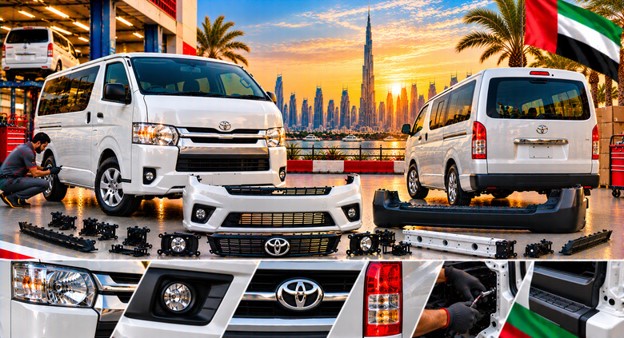
A photograph can reveal a great deal, although it cannot confirm everything.
Look at the bumper's corners, mounting tabs, edges and any moulded openings. These are areas where poor storage, rough handling or an earlier collision may leave damage that is easy to overlook in a front-facing product image.
If possible, ask for photographs of the exact item rather than a generic catalogue picture.
For a new bumper, check for:
- Cracks, distortion or obvious surface defects.
- Cleanly formed mounting points and edges.
- Correct openings for the required lamps, sensors and trim.
- A part number or product reference that matches the quotation.
- Packaging suitable for transporting a large, awkward body part.
For a used bumper, add a closer inspection of repaired areas, scratches, paint differences and any signs that the plastic has been heat-repaired or reshaped. Small cosmetic marks may be acceptable, especially if the bumper will be repainted, but cracked tabs and distorted edges can create trouble during installation.
Ask the workshop to dry-fit the replacement before painting wherever practical. It is far better to discover a mismatch while the bumper is still unpainted than after the paint has been mixed and applied.
UAE Summer Heat, Sunlight and Dust: Why the Material Matters
A Hiace working through a UAE summer faces long periods of high temperatures, strong sunlight and repeated heat cycles. Add road dust, motorway speeds, crowded parking areas and frequent loading, and its exterior parts have plenty to contend with.
Plastic bumpers can become brittle with age and UV exposure, although the rate of deterioration depends on the material, manufacturing quality, maintenance and how the vehicle is used. A van that spends most of the day parked outside a warehouse may experience a different pattern of wear from one kept under cover overnight.
The practical lesson is not that aftermarket bumpers are unsuitable for Gulf conditions. It is that a very cheap part with unknown material quality and questionable fitment deserves closer scrutiny.
Look for consistent moulding, sound attachment points and a finish that can be prepared and painted properly. If the supplier provides product information or a warranty, read what it actually covers. A warranty that excludes fitment problems, paintwork or damage during installation may offer less protection than its headline suggests.
Dust is another reason to inspect the bumper's surrounding parts. Grit can work into damaged edges and exposed fittings, while a loose bumper may rub against adjacent panels during ordinary driving. Fixing the alignment early can prevent a minor repair from becoming a larger cosmetic job.
Can You Repair the Existing Bumper Instead of Replacing It?
Sometimes, yes. And if the damage is limited, replacing the whole bumper may be unnecessary.
A shallow scrape, scuffed paint or a small crack in an otherwise sound bumper can sometimes be repaired. The decision depends on the location and extent of the damage, the plastic material, the condition of the mounting points and whether the repair can restore an acceptable finish.
Replacement becomes more attractive when the bumper is badly split, heavily distorted, missing sections or damaged around several attachment points. If it no longer holds its position properly, a cosmetic repair to the visible surface will not solve the underlying problem.
| Damage | Repair may be sensible when… | Replacement is more likely when… |
| Paint scuff | The plastic underneath remains sound | The damage has exposed or cracked the plastic extensively |
| Small crack | The area can be repaired securely and the mounting points remain intact | The crack runs through a critical mounting area or keeps reopening |
| Broken mounting tab | A suitable repair can restore secure attachment | Several tabs have broken or the bumper no longer aligns properly |
| Deformation | The original shape can be restored without compromising fit | The cover remains warped or will not sit correctly |
| Missing sections | The damage is minor and does not affect required equipment | The bumper has lost substantial material or no longer protects its intended areas |
Ask for a repair quotation and a replacement quotation if the damage sits somewhere between minor and severe. Compare the expected durability, appearance, downtime and warranty rather than looking at the initial price alone.
A repair is not automatically a compromise. A poor repair, however, can become an expensive delay before the eventual replacement.
Toyota Hiace Bumper Prices in the UAE: What Can You Reliably Budget For?
There is no single dependable UAE price for a Toyota Hiace bumper. The vehicle generation, front or rear position, genuine or aftermarket specification, paint requirements and included fittings all affect the total.
Publicly visible catalogue information can help identify individual Toyota bumper-related parts. For example, a Toyota parts catalogue lists a front bumper side support for certain Hiace applications, while other catalogue records distinguish bumper assemblies and fittings by vehicle code. Such listings are useful for identification, but they are not a confirmed UAE retail quotation for a complete bumper cover.
As of 20 October 2026, I cannot establish a sufficiently verified, model-specific UAE retail price for a complete Hiace bumper cover from the evidence available here. It would be misleading to turn an overseas catalogue price or the price of a small bracket into a supposed UAE bumper price.
For a practical budget, obtain separate figures for the cover, any required brackets or clips, paint, installation and delivery. Then compare the complete amount.
| Cost item | What to ask the supplier or workshop |
| Bumper cover | Is it front or rear, and does the part number match my Hiace? |
| Supporting fittings | Are brackets, retainers, clips and fasteners included? |
| Paint and preparation | Is the bumper supplied primed, unpainted or ready to fit? |
| Installation labour | Does the price include removal of the old bumper and fitting the replacement? |
| Sensor or lamp transfer | Is transferring and testing existing equipment included? |
| Delivery | Is delivery to my emirate included, and how is damage in transit handled? |
| VAT and other charges | Is the quotation inclusive of applicable taxes and fees? |
An advertised price is a starting point, not proof of the amount you will pay. Request a written quotation for the exact part and vehicle, and keep the line items so you can compare like with like.
Why the Cheapest Online Bumper Can Cost More in the End
Suppose two suppliers quote for what appears to be the same Hiace bumper. One is noticeably cheaper. It is tempting to stop there, especially when a commercial van has already spent a day off the road.
But what if the cheaper bumper needs extra preparation, does not line up with the original brackets, or arrives without the clips and trim the installer expected? The workshop may have to source additional parts, spend longer adjusting the cover or send it back for an exchange. If paint has already been applied, a simple fitment problem can become a much more expensive one.
The comparison should include the whole job.
| Potential extra cost | Why it appears |
| Replacement clips and retainers | Small fittings were not included or existing ones were broken |
| Additional brackets | Collision damage affected the supports as well as the bumper cover |
| Extra preparation | The replacement surface needs more work before painting |
| Paint correction | Colour, texture or finish does not meet the expected standard |
| Reinstallation | The first fitment was incorrect or the part needed to be exchanged |
| Extra vehicle downtime | The replacement was not ready when the workshop expected it |
None of these costs is inevitable. A reasonably priced aftermarket bumper may fit well, and a genuine part may still need extra fittings after a collision. The point is to identify the risks before ordering, not to assume that one category is always cheaper or better.
For a fleet manager, an extra day of downtime may outweigh a modest saving on the bumper itself. For a privately owned Hiace used occasionally, the calculation may be different.
Bumper Covers, Brackets, Clips and Grilles: Don't Miss the Supporting Parts
A bumper cover rarely works alone.
Depending on the Hiace version, the assembly may rely on side supports, retainers, brackets, fasteners, grille sections, lower trim, reflectors or other fittings. A collision can damage these parts without making the damage obvious from outside.
That is why a replacement quotation should separate the cover from the supporting hardware. If a bumper has been pulled out of position after an impact, simply pushing it back into place may hide broken tabs or bent supports that will cause trouble later.
Ask the workshop to inspect the mounting areas once the old bumper has been removed. If a bracket is damaged, photograph it and ask whether it needs replacement. This gives you a clearer explanation of the bill and helps prevent unnecessary parts from being added without justification.
Small fittings may cost less than the bumper, but they can determine whether the replacement sits neatly against the bodywork or leaves a visible gap at the corners.
Used Toyota Hiace Bumpers: A Sensible Option or a False Economy?
A used genuine bumper can be a good purchase, particularly for an older commercial Hiace where appearance matters but a brand-new cover is difficult to justify financially.
The attraction is straightforward. You may find an original part with the right shape and mounting arrangement at a lower purchase price than a new genuine replacement. If it has come from a compatible donor vehicle and remains in sound condition, it may need little more than cleaning and repainting.
Still, inspect it carefully. A bumper can look fine from the front while hiding cracks along its underside, damaged mounting tabs or repairs that have not held up. Faded paint and scratches may be manageable; a distorted cover or compromised attachment points are more serious.
Before buying, ask:
- Can the supplier provide photographs of the actual bumper?
- Are all mounting tabs intact?
- Has the part been repaired, welded, reshaped or repainted?
- Is the part number or fitment reference available?
- Can it be inspected before payment, or returned if a documented fitment mismatch is confirmed?
Also check how the bumper will be transported. Large plastic parts can be awkward to deliver, and damage during handling may not be obvious until the package is opened.
A used bumper is only a bargain when its condition, fitment and total preparation cost make sense.
Aftermarket Bumpers: How to Judge the Quality Without Guesswork
Aftermarket parts vary, so broad claims about all of them are not particularly helpful.
One replacement may be accurately moulded and straightforward to install. Another may require adjustment around the corners, have rough edges or need extra preparation before paint. The price alone does not tell you which one you are buying.
Ask the supplier who manufactures the bumper, whether the part is designed for the exact Hiace application and what warranty applies. If the supplier cannot identify the product beyond saying it is a universal fit or a standard replacement, proceed carefully.
A workshop familiar with Hiace bodywork can also help assess whether a proposed aftermarket part is likely to fit the vehicle's original mounting points. That is especially useful when buying for a working van, because excessive adjustment can add labour and delay the return to service.
Do not mistake a perfect catalogue image for proof of a perfect part. Request the product reference, confirm what is included and agree on what happens if the bumper does not fit as described.
Genuine Toyota Bumpers: When Paying More Makes Sense
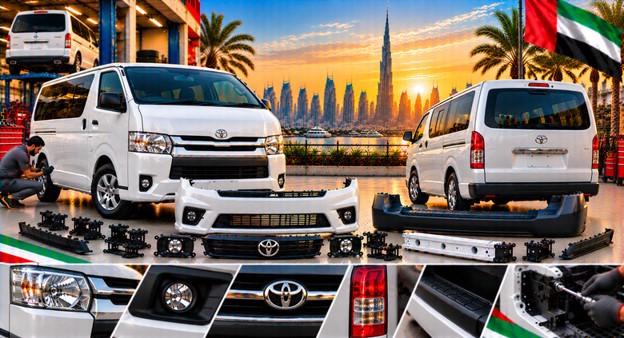
A genuine Toyota bumper is worth considering when you want the replacement to follow the original specification and can verify the part reference through an appropriate parts channel.
It may be particularly attractive for a newer Hiace, a vehicle that needs a documented repair history, or an owner who intends to retain the van for several years. Genuine parts can also simplify identification where the correct bumper has multiple trim or equipment variations.
But paying more should buy something meaningful. Confirm that the quoted part is genuinely Toyota-branded, that the part number matches your vehicle and that the price includes the cover you actually need rather than a small related fitting.
If the van is older, has high mileage or is used in demanding commercial work, an aftermarket replacement may still be the more sensible financial choice. The right answer depends on the condition of the vehicle, the expected length of ownership and the difference between the full fitted quotations.
There is no virtue in paying for a premium part that does not materially improve the outcome you need. Equally, saving a small amount now may not be worthwhile if the cheaper option creates a fitment or finish problem later.
Paint Matching: Why the Correct Colour Code Matters
A replacement bumper can fit perfectly and still look wrong if the paint does not match.
The problem is not always a careless painter. Original paint changes with age, sunlight, washing and exposure to the elements. A new bumper sprayed to a generic colour reference may look different from the surrounding panels, particularly under bright UAE daylight.
Give the workshop the vehicle's paint code where available, but ask it to assess the existing finish as well. A paint code is a starting point; it does not guarantee that an older body panel and a freshly painted bumper will look identical.
The quotation should clarify whether the bumper is supplied unpainted, primed or already finished. It should also state whether surface preparation, colour matching and final polishing are included.
For a working fleet, a consistent finish may matter for branding and customer presentation. For a privately owned older van, a small shade difference may be acceptable if the cost of a perfect match is disproportionate. Decide that before the work starts, rather than arguing about it after the bumper has been fitted.
Parking Sensors, Lamps and Other Equipment Must Be Checked
A bumper replacement should not leave the vehicle with equipment that looks installed but no longer works properly.
Some Hiace configurations have parking sensors or other fittings in or around the bumper. The exact arrangement depends on the vehicle specification, so the workshop should inspect the existing equipment rather than assume every Hiace has the same setup.
If sensors are fitted, confirm that the replacement bumper has the correct openings and mounting provisions. Incorrect positioning can affect sensor operation. Where lamps, reflectors or other fittings are involved, make sure the replacement accommodates them properly and that they are tested after installation.
Ask the workshop to record which items were transferred from the old bumper and whether any were damaged in the collision. A sensor fault caused by an earlier impact should not automatically be blamed on the replacement bumper, but it should be identified before the job is signed off.
A useful final check includes the alignment of the bumper, the operation of any transferred equipment and a warning-light check where relevant. If the van has a driver-assistance feature fitted, the workshop should follow the vehicle-specific service requirements rather than assume that replacing a plastic cover can never affect it.
What Should a Workshop Inspect Before Fitting the New Bumper?
The bumper itself is only part of the repair. The workshop also needs to examine the structure and fittings that support it.
After a front or rear impact, the visible damage may be less extensive than the damage underneath. A cracked bumper could have broken retainers; a bumper that has popped out at one corner may be sitting against a bent bracket. If the impact was substantial, the repair may need a broader assessment than a cover replacement.
Before authorising the work, ask the workshop to check:
- The condition of the mounting brackets and side supports.
- The integrity of the bumper's attachment points.
- Any damaged grille, trim, lamps or reflectors.
- Parking sensors and their wiring, where fitted.
- Nearby body panels for deformation or misalignment.
- Any signs of damage that could affect safe attachment or equipment operation.
You do not need to turn every bumper job into a major repair. The inspection should be proportionate to the impact and the condition of the vehicle.
A workshop that explains what it has found, shows you the damaged fittings and separates necessary work from optional cosmetic improvements is giving you something more useful than a vague promise that the van will be ready by evening.
How Long Does a Toyota Hiace Bumper Replacement Take?
The fitting itself may be relatively straightforward when the correct bumper and all required fittings are available. The full job, however, can take longer because of paint preparation, drying time, delivery delays or hidden damage discovered after removal.
| Job type | What affects the turnaround |
| Direct replacement with an unpainted bumper | Part availability, removal, fitting and alignment |
| Replacement requiring paint | Surface preparation, colour matching, application and curing |
| Used bumper needing refurbishment | Inspection, repair, preparation and paintwork |
| Bumper replacement with damaged brackets | Additional parts sourcing and repair work |
| Collision repair involving sensors or other equipment | Diagnosis, transfer, testing and any required calibration or service procedure |
Do not rely on a universal promise such as “one hour” or “same day” without knowing what the job includes. A workshop may be able to fit an unpainted part quickly but need considerably longer to produce an acceptable painted finish.
For commercial operators, ask the workshop to distinguish between the time needed to fit the bumper and the total time the vehicle will be unavailable. That makes it easier to organise a replacement van, reschedule deliveries or plan passenger services without guesswork.
What Warranty Should You Expect?
Warranty terms vary by supplier, part type and workshop. Read the actual terms rather than relying on the word warranty in an advertisement.
A new bumper may carry a product warranty, while the workshop may separately warrant its labour or paintwork. A used bumper may be sold with limited protection or no warranty on cosmetic condition. These are different arrangements, and the quotation should make the distinction clear.
Before ordering, ask what happens if the bumper is found to be incompatible, arrives damaged or has a manufacturing defect. Check whether the supplier requires the part to remain unpainted before a fitment claim can be made. This is particularly important because painting a replacement before confirming its fit can complicate an exchange.
Also clarify whether the warranty covers the part only or includes the cost of removing and reinstalling it. A replacement cover might be supplied without charge, but the labour required to fit it again could still fall to the buyer.
Keep the invoice, part reference, written quotation and any relevant photographs. They provide a useful record if a dispute arises later.
How to Avoid Buying the Wrong Bumper Online
Online listings can be helpful for comparing options, but a title such as “Toyota Hiace bumper 2005–2020” should make you ask more questions, not fewer.
That range may cover several production changes and vehicle specifications. A listing might use one photograph for several variations, omit the mounting fittings or describe a bumper cover as a complete assembly. None of these details necessarily means the seller is acting dishonestly, but they leave the buyer with work to do.
Use the vehicle's VIN, model code and original part number to narrow the options. Then ask the seller to confirm the match in writing.
If you're comparing listings through PartFinder UAE, treat the search result as the beginning of the fitment check, not the end of it. Confirm the actual supplier, part condition, included fittings, stock status, delivery terms and return policy before paying.
For a large bumper, returns can be inconvenient and costly. It is worth spending a few extra minutes checking the details while the part is still at the supplier's end rather than discovering the mismatch at the workshop.
Dubai, Abu Dhabi and the Northern Emirates: Does Location Change the Buying Decision?
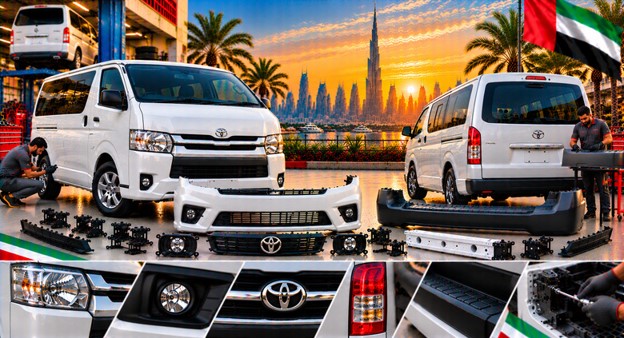
The correct bumper does not change because the van is registered in a different emirate, but delivery, installation and vehicle downtime certainly can.
In Dubai, an owner may be able to compare several parts suppliers and workshops within a relatively short journey. That does not guarantee stock or a better price, so call ahead and ask for confirmation against the exact vehicle details.
An Abu Dhabi business operating a group of Hiace vans may value a supplier who can provide consistent parts, clear invoices and predictable delivery more than a marginal saving on one cover. If a vehicle is needed for daily operations, coordination between the parts supplier and repair workshop becomes part of the cost calculation.
For buyers in Sharjah, Ajman, Ras Al Khaimah, Fujairah and Umm Al Quwain, establish whether the supplier delivers to the workshop or only to a collection point. Ask how a damaged or incorrect bumper would be returned and who pays the transport cost.
Al Ain operators should make the same checks, particularly if the replacement is being sourced from another emirate. A low advertised price can lose its appeal when transport, repeat journeys and lost working time are added.
The useful comparison is the delivered, fitted result, not the emirate printed on the seller's address.
Commercial Fleets: The Cost of Keeping a Hiace Off the Road
For a business, a damaged bumper can create a small operational headache that grows with each delay.
A delivery van may be unable to complete its normal route while waiting for the part. A passenger vehicle may need to be reassigned, leaving another driver short of transport. A tradesperson may lose time moving tools and materials between vehicles. The bumper itself may not be expensive compared with the value of a day's work, but the delay can still cost money.
A fleet manager should compare the repair cost with the likely cost of downtime. That does not mean accepting an inferior part simply to get the vehicle moving. It means checking stock, fitment and workshop availability before the order is placed.
For example, if a supplier has the correct bumper ready but the workshop cannot fit it for several days, another supplier offering a slightly higher delivered price and a confirmed installation slot may be the more economical option.
Fleet buyers should also keep records of part numbers and successful fitments for vehicles with matching specifications. Those records can speed up future orders, although each vehicle should still be checked for relevant differences before a replacement is purchased.
Repair or Replace: A Practical Decision Matrix
Not every damaged Hiace bumper deserves the same response. The right choice depends on the extent of the damage, the vehicle's working life and the cost of restoring it properly.
| Situation | Sensible starting point | What to confirm |
| Light paint scuffs | Repair and repaint | The plastic is intact and the finish can be restored |
| Small, repairable crack | Obtain a repair quotation | The crack can be repaired securely and is not compromising attachment |
| Several broken mounting tabs | Compare repair and replacement | The bumper will remain securely fitted after the proposed work |
| Major deformation or missing plastic | Replacement | The new cover matches the exact vehicle |
| Older van with cosmetic damage | Compare used and aftermarket options | Condition, paint cost and fitment are acceptable |
| Newer van where original specification matters | Obtain a genuine-parts quotation | The part number, equipment openings and warranty are correct |
| Fleet vehicle needed urgently | Compare complete fitted options | Stock and installation timing are confirmed, not merely estimated |
If two quotations are close, look beyond the price. Ask which option offers the better fit, how long the work will take and what protection applies if something goes wrong.
And if the existing bumper is structurally sound and the damage is only cosmetic, don't replace it just because a new one is available. A repair may be perfectly adequate.
The Documents and Records Worth Keeping
For a straightforward bumper replacement, the paperwork need not become a project of its own. Still, a few records can save time if a warranty issue, insurance claim or future resale question comes up.
Keep the parts invoice and the workshop invoice separately if they are issued by different businesses. The first should identify the supplied part as clearly as possible; the second should show the work carried out and any additional fittings or repairs.
If the damage followed a collision, retain the relevant accident and insurance documentation and follow the insurer's instructions before authorising work that may form part of a claim. Requirements can vary with the circumstances and the policy, so don't assume that every repair can be carried out first and claimed afterwards.
Photographs of the damage before repair can also be useful. If the workshop finds broken brackets or other hidden damage after removing the bumper, ask for photographs and an explanation of the additional work.
For business-owned vehicles, record the repair against the vehicle's fleet file. This is particularly helpful when the van changes drivers, moves between branches or is later sold.
Will a Replacement Bumper Affect Resale Value?
A properly fitted bumper can help a Hiace look cared for, but the choice of replacement is only one part of the vehicle's overall condition.
Commercial buyers often look at the van as a working asset. They may care about maintenance records, mechanical condition, mileage, bodywork and evidence of previous accident damage. A neatly painted bumper will not erase a poorly repaired collision, and an aftermarket cover does not automatically make the vehicle less valuable.
If resale is a priority, keep the replacement invoice and choose a part that fits correctly. Avoid unnecessary changes to the original appearance, and make sure any equipment fitted around the bumper works as intended.
A used genuine bumper can be a reasonable choice when it is in good condition and the price makes sense. A quality aftermarket bumper can also be appropriate, especially on an older vehicle where the cost of a new genuine part would be disproportionate.
The key is to avoid a repair that looks rushed. Uneven gaps, mismatched paint and loose trim can raise questions about the quality of the work, even if the van is mechanically sound.
Common Workshop and Supplier Red Flags
A supplier does not have to answer every technical question instantly, but it should be willing to verify the details that matter.
Be cautious if a seller guarantees fitment without asking for the model, year, VIN or part number where those details are needed. The same applies to a workshop that wants to paint a bumper before checking whether it fits, or a quotation that bundles every cost into a single figure without saying what is included.
Other warning signs include:
- A claimed genuine part with no clear identification or traceable reference.
- A used bumper whose mounting points cannot be inspected.
- An aftermarket listing with no useful details about the exact application.
- A supplier who will not explain the return policy for an incorrect part.
- A workshop that cannot distinguish the bumper cover from the supporting brackets and fittings.
- Pressure to approve extra work without an explanation or evidence of the damage.
None of these signs proves misconduct on its own. A busy workshop may communicate poorly, and a supplier may need time to check a catalogue. What matters is whether the business eventually gives you a clear answer and a reasonable basis for the quotation.
If the details remain vague, obtain another quote.
A Buyer’s Checklist Before You Pay
Take a moment to work through the details. It is far less frustrating than having a bumper arrive at the workshop only to discover that one of the mounting points is wrong.
Vehicle identification
Confirm the Hiace generation, model or frame code, production year and VIN where required.
Correct bumper
Establish front or rear, the precise part reference and whether the listing is for a cover or complete assembly.
Condition and specification
Confirm genuine, OEM, aftermarket or used status, plus the condition of mounting tabs, edges and openings.
Complete cost
Get written figures for the bumper, supporting fittings, paint, labour, delivery and applicable taxes.
Availability and returns
Confirm the part is physically available, agree on delivery timing and understand the procedure for a fitment mismatch.
Installation and final inspection
Agree on painting and fitting arrangements, inspect the mounting points, and test any transferred equipment before accepting the vehicle.
A quotation that answers these questions is much easier to compare with another supplier's offer. If the seller cannot confirm a key detail, leave that item unresolved rather than assuming it will be fine.
UAE Price Reference Update: 20 October 2026
The available public evidence does not establish a verified, current UAE retail price for a complete Toyota Hiace front or rear bumper cover across the relevant generations. The figures below therefore distinguish what can be established from what still needs a supplier quotation; no complete-cover price is invented.
| Price evidence | What it tells the buyer | Limitation |
| Toyota parts-catalogue records for Hiace bumper supports and related fittings | Genuine part references can be checked against model and frame codes | A support or retainer is not a complete bumper cover, and a catalogue record is not a UAE fitted quotation |
| Overseas catalogue listings | May help identify part numbers and compare product descriptions | Currency, regional specification, shipping, taxes and availability may differ from the UAE |
| UAE supplier quotation matched to VIN | Can establish the actual price for the intended vehicle and part | Must state condition, included fittings, VAT, delivery and validity period |
| Workshop quotation | Can establish painting, installation and additional repair costs | Should specify whether the part itself is included and whether hidden damage is excluded |
For an accurate comparison, request three quotations for the same bumper specification: a genuine Toyota option, a reputable aftermarket alternative and a used genuine part if one is available. Ask each supplier to identify the exact part and state whether the amount includes VAT and delivery.
Then compare the complete fitted cost, not just the cover. If a supplier offers a particularly low price, ask whether the bumper is unpainted, whether brackets and clips are included and whether the stock is physically available.
That gives you a useful UAE buying decision without relying on a price that cannot be verified.
Frequently Asked Questions About Toyota Hiace Bumpers in the UAE
Categories
- Audi
- BMW
- Car Accessories
- Car Tips
- Ford
- Land Rover
- Mazda
- Range Rover
- Top 10
- UAE Car Parts
- Used Car Parts
- Toyota
- Replacement Engines
- Nissan
- Hyundai
- Mitsubishi
- Volkswagen
- Honda
- Kia
- Chevrolet
- Dodge
- Jeep
- Subaru
- Renault
- Lexus
- Mercedes
- Suzuki
- Hummer
- Porsche
- Infiniti
- Peugeot
- GMC
- Mini
- Volvo
- Replacement Gearboxes
- MG
- Jaguar
- Skoda
- Cadillac
- Daihatsu
- Fiat
- German Car Parts
- Japanese Car Parts
- Aftermarket Car Parts
- Genuine Car Parts
- New Car Parts
- Reconditioned Car Parts
- European Car Parts
- American Car Parts
- Korean Car Parts
- British Car Parts
- Chinese Car Parts
- Sports/Exotic Car Parts
- Luxury Car Parts
- Performance Car Parts
- SUV/4x4 Spare Parts
- Truck Spare Parts
- EV Car Parts
- Hybrid Car Parts
- Auto Spare Parts in UAE
- Tesla
- Isuzu
- Ram
- Ferrari
- Bentley
- Lamborghini
- Genesis
- Maserati
- Lincoln
- Chrysler
- Opel
- Citroen
- SsangYong
- Seat
- McLaren
- Aston Martin
- Rolls Royce
- Maybach
- Alfa Romeo
- Bugatti
- Scion
- Abu Dhabi Car Parts
- Ajman Car Parts
- Al Khan Car Parts
- Al Sajaa Car Parts
- Deira Car Parts
- Dubai Car Parts
- Fujairah Car Parts
- Industrial Area 6 Car Parts
- Mussafah Car Parts
- Ras Al Khaimah Car Parts
- Sharjah Car Parts
- Umm Al Quwain Car Parts
- Acura
- BYD
- Chery
- Dacia
- DS
- Geely Emgrand
- EXEED
- GAC
- GAC Gonow
- Geely
- Gonow
- Great Wall
- Haima
- Haval
- Holden
- Iveco
- JAC
- Jaecoo
- Jetour
- Lotus
- Omoda
- Proton
- Renault Samsung
- Roewe
- Lucid
- Replacement Headlight
- Replacement Bumper