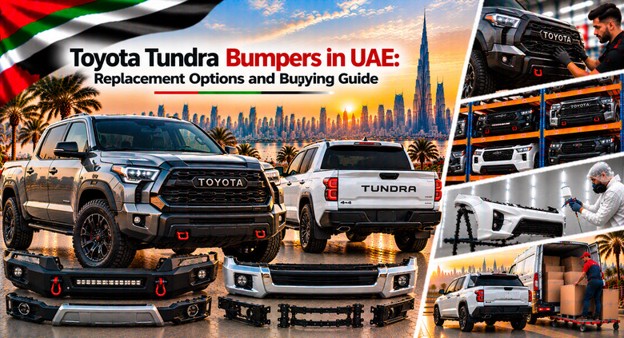
Toyota Tundra Bumpers in UAE: Replacement Options and Buying Guide
November 6, 2026
Toyota Tundra Bumper Replacement: Get the Right Part First
The Toyota Tundra is a full-size pick-up, and Toyota Tundra bumpers in UAE is part of a much larger front- or rear-end assembly. Buy the wrong one and the trouble can spread quickly: mismatched body lines, awkward mounting points, missing trim, sensor problems or a workshop bill that keeps growing after the original price looked attractive.
There is another wrinkle. The Tundra has several generations, trims and body configurations, and UAE buyers may encounter parts intended for North American-market trucks. A bumper that fits one Tundra does not automatically fit another simply because both carry the same badge.
Start with the model year, VIN or chassis details, cab and trim specification, and whether you need the front or rear bumper. Then compare the actual part, not just the advert headline.
Which Toyota Tundra Generation Do You Own?
The generation is one of the first things to establish. The second-generation Tundra ran from the 2007 model year through 2021, with styling and equipment changes during that period. The third generation arrived for the 2022 model year, bringing a substantially different exterior design.
That creates several distinct buying categories.
| Tundra version | What to check before ordering |
| 2007–2013 | Exact year, trim, front-end styling and bumper fittings |
| 2014–2021 | Facelift version, grille design, sensor provision and mounting points |
| 2022 onwards | Third-generation body shape, trim and equipment |
| Conversion-style build | Whether the bumper is part of a complete conversion kit or a standalone replacement |
These are broad shopping guides, not a substitute for a fitment check. Confirm the part number against the vehicle specification before paying.
Front Bumper or Rear Bumper: Know What Needs Replacing
Front-end damage often involves more than the outer bumper cover. Depending on the version, the assembly may include a grille, lower trim, brackets, reinforcement, fog-lamp surrounds and sensor holders. An impact can damage these hidden parts even when the outer cover looks repairable.
The rear bumper has its own details. Step surfaces, end caps, towing-related fittings, parking sensors and trim can vary by configuration, so make sure the seller knows whether you need a standard road-going bumper or a specialist off-road assembly.
A complete assembly may be convenient, but it can also include parts you do not need. Ask for a list of inclusions and compare it with the damaged vehicle.
New, Used, OEM and Aftermarket Options Explained
These labels are often thrown together in online listings. They should not be treated as interchangeable.
| Option | What you are buying | Main consideration |
| New genuine Toyota | A new part sold as genuine Toyota equipment | Confirm the part number and supply channel |
| New aftermarket | A new replacement made by another manufacturer | Fit, finish and material quality vary |
| Used genuine | An original part removed from another vehicle | Inspect damage, repairs and mounting tabs |
| Repaired or refinished | A previously damaged part that has been restored | Quality depends on the repair and its location |
| Off-road bumper | A purpose-built accessory, often steel or reinforced construction | Different weight, mounting and vehicle-use implications |
| Conversion kit | Several exterior parts designed to change the truck's appearance | Confirm everything needed is included |
One important distinction: “OEM-style” or “OEM quality” does not, by itself, prove that a part was manufactured by Toyota. Ask for the manufacturer's identity and part number, and get the answer in writing.
Toyota Tundra Bumper Prices in the UAE
There is no single sensible price for a Tundra bumper because a painted cover, a used steel accessory and a complete off-road assembly are very different purchases.
A UAE classified advert posted on 2 October 2026 listed a used ADD Offroad steel front bumper for the 2014–2020 Tundra at AED 1,500. The advert described it as being in good condition, but this is a seller's asking price—not an independently inspected part or proof that it remains available.
For comparison, a UAE off-road retailer lists a 2013–2021 Tundra front bumper at AED 3,747 and a rear bumper at AED 4,276. Both listings are marked out of stock, so the displayed prices are useful references only, not confirmed purchase options.
Do not compare those accessory prices directly with a standard factory-style bumper cover. First establish what the part is, what it includes and whether it is available.
Why Advertised Prices Can Be Misleading
A low headline price can mean a good deal. It can also mean the listing covers only one piece of a larger assembly.
Before comparing quotes, find out whether the price covers the bumper cover or a complete assembly, whether the part is new or used, whether paint is included, and whether brackets, trim and sensor holders are supplied. Then add delivery, VAT where applicable, workshop labour and any extra parts that the old bumper can no longer provide.
A useful quote is one you can compare line by line. “Toyota Tundra bumper — AED X” is not enough information to make a sound buying decision.
Standard Replacement vs Off-Road Bumper
The Tundra attracts off-road modifications, and UAE listings reflect that market. But a steel bumper with a winch mount or recovery points is not a like-for-like substitute for a standard road bumper.
A standard replacement is generally the more straightforward route when you are restoring a damaged truck to its previous appearance. An off-road bumper may suit a vehicle used on rough tracks, but it can add weight, alter the front-end layout and require additional fitting work.
Ask whether the design accommodates the truck's existing sensors, lights and other equipment. Also confirm any implications for road use, insurance and required approvals before changing the vehicle's configuration.
Front Bumper Fitment: Check the Details Behind the Grille
The front bumper has to line up with the grille, wings, headlights and lower trim. Even a small mismatch in the mounting points can leave uneven gaps or force the installer to improvise, and improvised fitting is a poor bargain on a large pick-up.
Check the bumper's shape and fixing points against the original part. If the truck has a non-standard grille, aftermarket lights or a previous conversion, tell the supplier before ordering.
Where possible, request photographs of the reverse side and the part label. A glossy front-facing picture will not tell you whether the brackets are present or the mounting tabs are intact.
Rear Bumper Fitment: Steps, Tow Equipment and Sensors
Rear bumper options can differ according to trim and intended use. A standard bumper, a heavy-duty steel unit and an off-road replacement may have different step arrangements, mounting requirements and provisions for towing equipment.
Do not assume that the tow hitch, wiring or parking sensors will transfer automatically. The workshop should check the existing setup and confirm that the replacement accommodates it.
If the damage came from a rear impact, inspect the underlying mounting structure as well. Replacing the visible bumper without checking what sits behind it can leave an expensive problem unresolved.
Used Toyota Tundra Bumpers: Inspect Before You Pay
Used parts can be good value, particularly for an older truck, but the condition of the fixings matters as much as the paintwork.
Ask for clear photographs of the front face, rear face, corners, lower edge, mounting tabs and any sensor apertures. Look for cracks, bent sections, signs of welding, overspray and damage around bolt holes. If the bumper is steel, check for corrosion, deformation and evidence of a hard impact.
Ask whether the part has been repaired or repainted and whether the seller accepts returns if it does not match the agreed specification. If its history is unknown, treat it as unknown—not as “original and undamaged” by default.
Can You Repair the Original Bumper Instead?
Sometimes a repair is the sensible choice. A scuffed cover or shallow cosmetic damage may be repairable without replacing the entire part, provided the underlying material and fixing points remain sound.
A split near a mounting tab is a different proposition. So is a bumper that has been pushed out of shape or a steel assembly that has taken a substantial hit. The workshop should assess the damage and explain whether a repair will restore secure mounting and the required function.
Ask for the repair scope and price in writing. If the estimate approaches the cost of a suitable replacement, compare both options before committing.
Repair vs Replacement: A Practical Decision Table
| Damage or requirement | Option to investigate | What matters most |
| Light scuffs and scratches | Repair and repaint | Surface condition and finish |
| Small crack away from fixings | Specialist repair | Material, crack location and repair method |
| Broken mounting tabs | Repair or replace after inspection | Secure attachment |
| Multiple cracks or missing sections | Replacement | Total repair cost and reliability |
| Bent steel bumper | Specialist assessment or replacement | Extent of deformation and mounting condition |
| Damage behind the bumper | Inspect reinforcement and mounting structure | The outer cover may not be the main problem |
| Planned off-road use | Purpose-built bumper | Compatibility, weight and intended use |
The decision should follow inspection, not a guess based on a photograph. A fresh coat of paint can hide a repair; it cannot make a damaged mounting point sound.
Genuine Toyota vs Aftermarket: Which Should You Choose?
Genuine Toyota parts are worth considering when the goal is to retain the original specification and factory appearance. They can also make sense where the truck has a particular trim or equipment arrangement that narrows the range of compatible replacements.
Aftermarket parts may reduce the initial cost, but the manufacturer's identity, design and fitment matter. Some are intended as direct replacements; others change the vehicle's appearance or are built for off-road use. Those are different jobs.
Compare the exact part number, finish, fixings, warranty and return conditions. Avoid paying a premium merely because an advert says “OEM style”, and avoid choosing the cheapest alternative without checking what has been left out.
Part Numbers and VIN Checks: The Safest Route to Compatibility
The VIN or chassis details give the supplier a much stronger starting point than the model name alone. A parts catalogue or qualified supplier can use them to identify the correct bumper specification and relevant part number.
One genuine Toyota front bumper bar listed for 2007–2014 Tundra applications carries part number 52111-0C901. That is an example of the level of detail to check, not a universal part number for every Tundra.
If a seller proposes a different number, ask why. It may be a valid supersession or compatible alternative, but that should be verified rather than assumed. Keep the confirmation with your invoice.
Sensors, Lights and Wiring: Avoid Compatibility Surprises
Some Tundra bumpers have openings or mounting provisions for equipment that other versions do not use. Depending on the vehicle and the replacement design, this may include parking sensors, auxiliary lighting, fog lamps or camera-related fittings.
Before ordering, compare the existing bumper with the replacement and make a list of everything that must be transferred. Check that the apertures are correctly positioned and that sensor holders or brackets are included where needed.
After fitting, test all affected equipment. If a warning appears or a sensor stops working, investigate the installation and wiring rather than assuming the system will sort itself out.
UAE Heat, Sun Exposure and Exterior Condition
Strong sunlight and high summer temperatures can take their toll on exterior plastics, paint and old trim. A used bumper that has spent years outdoors may have faded, become brittle or received a repair that is not obvious in a small online photograph.
Inspect the reverse side, clips and corners as well as the visible surface. On painted parts, compare the colour in daylight and ask whether the bumper has been refinished.
This is particularly relevant for vehicles used daily in Dubai, Abu Dhabi, Sharjah and other emirates, where outdoor parking and frequent driving can expose exterior parts to considerable heat. It is not a reason to reject every used bumper; it is a reason to inspect one properly.
Painting and Colour Matching: Budget for the Finish
A bumper can fit perfectly and still look wrong if the colour does not match the bodywork. Paint fades over time, and the difference can become obvious in direct sunlight even when the finish looks acceptable under workshop lights.
Ask whether the part is unpainted, primed or already painted. If it is painted, confirm the colour code and establish whether the workshop expects the finish to match without blending adjacent panels.
Include surface preparation, paint materials and finishing in the quote. If the bumper is used, ask about previous repairs before the painter starts work; otherwise, the workshop may discover defects only after it has invested time in preparation.
Labour and Hidden Costs: Calculate the Fitted Price
The bumper itself is only one part of the bill. A complete repair may require extra clips, brackets, grille trim, sensor holders, paintwork and removal and refitting labour.
| Cost item | What to confirm |
| Bumper | Cover only, complete assembly or accessory |
| Brackets and fixings | Included, reusable or required separately |
| Grille and trim | Supplied with the bumper or transferred |
| Paint and preparation | Included or charged separately |
| Installation labour | Removal, fitting and alignment |
| Sensor or light work | Transfer, connection and functional checks |
| Delivery | Cost and expected arrival date |
| VAT | Whether included in the quoted total |
| Additional damage | How the workshop will price hidden repairs |
Ask for the total fitted price before work begins, while accepting that genuinely hidden damage may change the estimate. If that happens, request approval before the workshop carries out additional work.
Installation Time: What Can Delay the Job?
A straightforward replacement may be completed much sooner than a repair involving painting, damaged reinforcement or a missing trim piece. The real schedule depends on the part's availability, the workshop's workload and the condition of the vehicle.
Off-road bumpers can need additional preparation or installation work, particularly if they use different mounting hardware or accommodate accessories such as winches and auxiliary lights. Do not assume that a bolt-on design means the whole job is simple.
Before booking the truck in, confirm that the bumper is physically available, that all required parts are included and that the workshop has allowed time for any finishing work.
What a Proper Installation Should Include
The job should begin with an inspection of the damaged area, not with the immediate removal of the old bumper. The workshop needs to identify damaged fixings, assess the supporting structure and compare the replacement with the original before final fitting.
Once installed, the bumper should sit evenly against adjoining panels, with secure mounting and correctly fitted trim. Sensors, lights and any transferred equipment should be checked before the vehicle is handed back.
Take a moment to inspect the result in daylight. Look along the panel gaps, check for loose edges and make sure the finish is consistent. If something looks wrong, raise it while the vehicle is still at the workshop.
Warranty and Returns: Read the Conditions First
A warranty might cover a manufacturing defect but exclude damage caused during installation, modifications or ordering the wrong part. Used components may have different conditions from new replacements.
Before paying, ask how long the warranty lasts, what it covers and whether the supplier accepts returns for a confirmed fitment mismatch. Check who pays return delivery, and whether painting, drilling or modifying the bumper affects your rights under the seller's policy.
Keep the quotation, invoice and any written fitment confirmation. Do not modify or paint the part until you have checked it against the vehicle and clarified the return conditions.
Insurance and Accident Documentation
If the bumper was damaged in a collision, check the appropriate reporting and insurance process before authorising repairs. Requirements depend on the circumstances and applicable UAE rules, so confirm them with your insurer or the relevant authority rather than relying on generic advice.
Keep photographs of the damage, the repair estimate, invoices and details of the parts installed. If the workshop finds damage behind the bumper, ask for that finding to be documented too.
Clear records can help with a later warranty claim or resale discussion. They also make it easier to distinguish cosmetic work from repairs to the supporting structure.
Where to Find Toyota Tundra Bumpers in UAE
Buyers can look at used-parts sellers, general spare-parts retailers and specialist 4x4 accessory shops. The right choice depends on whether you need a standard replacement, a used original part or an off-road upgrade.
Listings for Toyota Tundra bumpers in UAE cover several different product types, including used steel bumpers and specialist front and rear accessories. The displayed prices and availability can change, so contact the seller before travelling or arranging installation.
When asking for a quote, send the model year, VIN or chassis details, photographs of the existing bumper and a clear description of the intended use. That makes it easier for the seller to identify a suitable part and less likely that you will pay to transport the wrong one.
If you use PartFinder UAE or another parts-matching service to identify potential suppliers, confirm the final details directly with the seller. A search result can help you find an option; it cannot guarantee stock, condition or fitment.
Online Ordering vs Buying Locally
Online ordering can widen the selection, particularly for a less common trim or a specialist accessory. The downside is that a large bumper can be costly and awkward to return if it arrives damaged or turns out to be incompatible.
A local seller may offer the chance to inspect the part, check its fixings and arrange delivery to the workshop. That convenience has value, especially when the vehicle is already dismantled and waiting for a replacement.
For online purchases, get the fitment claim and return policy in writing. When the part arrives, photograph its condition before installation and report any damage promptly.
Conversion Kits: Do You Need More Than a Bumper?
Some Tundra owners want to change the appearance of an older truck to resemble a newer model. That is a different project from replacing a damaged bumper.
A UAE conversion-kit listing advertises a package covering 2007–2021 Tundras and a 2022-style facelift, with a stated price of AED 17,500 including 5% VAT. The advertised package includes the front bumper, grille, bonnet, fender flares and trim. Its compatibility, current stock and full installation cost still need to be confirmed for the individual vehicle.
Before buying a conversion kit, establish exactly which parts are supplied, whether any additional panels or fittings are needed, and whether the conversion affects lighting, sensors or other equipment. A kit price is not the same as a completed conversion price.
How a Replacement Bumper Affects Resale Value
A tidy, correctly fitted bumper can preserve the truck's appearance, but replacing a part does not automatically increase its market value. Buyers are likely to look at the overall condition, the quality of the work and whether the repair history is clear.
A bumper that sits unevenly or has a visibly different paint finish can invite questions about previous damage. Keep the invoice and identify whether the part was genuine, aftermarket, used or an off-road accessory.
For a well-kept Tundra, restoring the original appearance may be more attractive than fitting a dramatic accessory. For a truck built around off-road use, a suitable upgraded bumper may be the better match—but make the choice for the vehicle's actual purpose, not an assumed resale premium.
Workshop Red Flags to Watch For
Be cautious if a workshop promises a perfect fit without checking the model year, part number or existing equipment. Confidence is welcome; guesswork is not.
Other warning signs include vague descriptions of what the quote includes, refusal to show the used bumper's mounting points, claims that every Tundra bumper is interchangeable, or a promise of an exact paint match without checking the vehicle's finish.
Ask the workshop to explain what it will inspect, which parts it intends to reuse and how it will handle additional damage. A competent repairer should be able to answer those questions clearly.
Toyota Tundra Bumper Buying Checklist
Before paying a deposit or booking installation, work through this list:
- Confirm the model year, VIN or chassis details.
- Identify the front or rear bumper and the exact specification.
- Verify the part number or obtain documented fitment confirmation.
- Check whether the part is genuine, aftermarket, used or an off-road accessory.
- Inspect the corners, underside, brackets and mounting tabs.
- Confirm sensor, light, grille and trim compatibility.
- Ask what is included in the price.
- Get delivery, paint, labour and VAT costs itemised.
- Check warranty and return conditions before modifying the part.
- Inspect the supporting structure if the truck has suffered an impact.
- Test all affected equipment after installation.
- Keep the invoice and repair records.
The best purchase is the one that fits correctly and arrives with no nasty surprises—not necessarily the one with the smallest number on the advert.
UAE Price Reference Update: 28 October 2026
The prices below are advertised UAE-market references checked for this article. They are not confirmed sales, and the availability shown on a listing may change.
| Item advertised | Price (AED) | Important qualification |
| Used ADD Offroad steel front bumper, Tundra 2014–2020 | 1,500 | Classified asking price posted 2 October 2026; seller describes the part as being in good condition. Confirm it is still available and inspect it before buying. |
| Tundra 2013–2021 front off-road bumper | 3,747 | Specialist accessory listing; marked out of stock when checked. |
| Tundra 2013–2021 rear off-road bumper | 4,276 | Specialist accessory listing; marked out of stock when checked. |
| Tundra 2022+ premium single-hoop front bumper | 8,490 | Specialist accessory listing; marked out of stock when checked. |
| Tundra 2022+ premium triple-hoop front bumper | 7,819 | Specialist accessory listing; marked out of stock when checked. |
| Tundra conversion kit, 2007–2021 to 2022-style appearance | 17,500 | Advertised package includes several exterior parts, not just the bumper; listing states that 5% VAT is included. |
How to use these figures
The AED 1,500 classified advert is for a used steel off-road bumper, while the higher figures refer to specialist accessories or a multi-part conversion kit. They should not be treated as direct comparisons with a standard plastic bumper cover or a new genuine Toyota assembly.
A dependable, current UAE price range for standard new genuine and used factory-style Tundra bumper covers could not be established from comparable verified listings during this update. For that reason, no unsupported range has been invented.
For a useful quote, ask the supplier to confirm the exact part number, condition, availability, included brackets and trim, delivery, VAT, paint and labour. The total fitted cost is what matters.
Frequently Asked Questions
Categories
- Audi
- BMW
- Car Accessories
- Car Tips
- Ford
- Land Rover
- Mazda
- Range Rover
- Top 10
- UAE Car Parts
- Used Car Parts
- Toyota
- Replacement Engines
- Nissan
- Hyundai
- Mitsubishi
- Volkswagen
- Honda
- Kia
- Chevrolet
- Dodge
- Jeep
- Subaru
- Renault
- Lexus
- Mercedes
- Suzuki
- Hummer
- Porsche
- Infiniti
- Peugeot
- GMC
- Mini
- Volvo
- Replacement Gearboxes
- MG
- Jaguar
- Skoda
- Cadillac
- Daihatsu
- Fiat
- German Car Parts
- Japanese Car Parts
- Aftermarket Car Parts
- Genuine Car Parts
- New Car Parts
- Reconditioned Car Parts
- European Car Parts
- American Car Parts
- Korean Car Parts
- British Car Parts
- Chinese Car Parts
- Sports/Exotic Car Parts
- Luxury Car Parts
- Performance Car Parts
- SUV/4x4 Spare Parts
- Truck Spare Parts
- EV Car Parts
- Hybrid Car Parts
- Auto Spare Parts in UAE
- Tesla
- Isuzu
- Ram
- Ferrari
- Bentley
- Lamborghini
- Genesis
- Maserati
- Lincoln
- Chrysler
- Opel
- Citroen
- SsangYong
- Seat
- McLaren
- Aston Martin
- Rolls Royce
- Maybach
- Alfa Romeo
- Bugatti
- Scion
- Abu Dhabi Car Parts
- Ajman Car Parts
- Al Khan Car Parts
- Al Sajaa Car Parts
- Deira Car Parts
- Dubai Car Parts
- Fujairah Car Parts
- Industrial Area 6 Car Parts
- Mussafah Car Parts
- Ras Al Khaimah Car Parts
- Sharjah Car Parts
- Umm Al Quwain Car Parts
- Acura
- BYD
- Chery
- Dacia
- DS
- Geely Emgrand
- EXEED
- GAC
- GAC Gonow
- Geely
- Gonow
- Great Wall
- Haima
- Haval
- Holden
- Iveco
- JAC
- Jaecoo
- Jetour
- Lotus
- Omoda
- Proton
- Renault Samsung
- Roewe
- Lucid
- Replacement Headlight
- Replacement Bumper