Used SEAT Spare Parts in UAE: What Buyers Should Check Before Ordering
September 24, 2026
The used SEAT spare parts in UAE can be a very sensible purchase. It can also be a remarkably expensive mistake if the seller has identified the component by appearance rather than by vehicle specification.
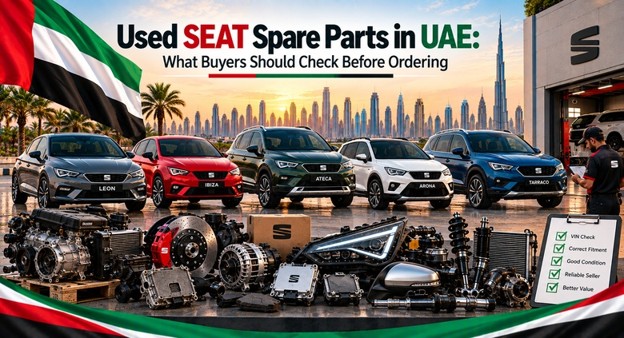
That distinction matters with the Leon, Ibiza, Arona, Ateca and Tarraco. A part can look almost identical to another version and still have a different connector, mounting point, software configuration, engine application, brake specification or transmission code. SEAT's own vehicle documentation identifies the VIN, engine code, gearbox code, paint code and PR/equipment numbers as useful identification data.
Used parts therefore need a different buying mindset. You are not simply buying a component. You are buying the remaining useful life of a component whose previous life you may know very little about.
Used SEAT parts can make sense — if the part is properly identified
For an older Leon, Ibiza, Ateca or Tarraco, a good used component may be preferable to paying for an unnecessarily expensive new assembly.
That can apply to:
- body panels
- lamps
- interior trim
- wheels
- suspension components
- engines
- gearboxes
- alternators
- starters
- air-conditioning components
- electronic modules
But the buying standard should change according to the part.
A used bonnet and a used ECU are not equivalent purchases.
Start with the VIN, not the photograph
The first question should be:
What is the VIN?
SEAT documentation identifies the vehicle identification number as part of the vehicle's core identification information, alongside model, engine and gearbox information.
For UAE buyers, this is particularly useful when a vehicle has been imported or when a seller has several apparently similar parts in stock.
Give the VIN before asking for a final fitment confirmation.
Find the original part number
If the old component is still available, photograph its identification label or stamped number.
Capture the whole number.
Do not crop off suffixes, letters or revision markings because they may be relevant to compatibility.
A photograph of the physical component tells you what it looks like.
The part number can tell you what it actually is.
Engine code matters more than engine size
“1.5 petrol” is not sufficiently precise for many SEAT parts enquiries.
The engine code can distinguish applications that share a nominal displacement but differ in equipment, control systems or component specification.
This becomes particularly important for:
- injectors
- turbochargers
- sensors
- ignition components
- engine mounts
- coolant components
- intake assemblies
- engine control modules
SEAT's vehicle data documentation specifically includes engine code and gearbox code.
Gearbox identification is equally important
A used gearbox should never be ordered simply because the advertisement says “SEAT automatic gearbox”.
The buyer should establish:
- gearbox type
- gearbox code
- vehicle model
- engine application
- production period
- drivetrain
- donor vehicle details where available
For automatic transmissions, also establish whether the quoted unit includes the required mechatronic or associated components.
“Gearbox included” can mean different things to different sellers.
Used Leon parts: generation comes first
The Leon has gone through several generations and powertrain configurations.
That makes generic used-Leon listings risky.
A Leon component should ideally be matched against:
- generation
- production year
- engine code
- gearbox
- body style
- trim/equipment
- VIN
- original part number
The Leon's official documentation itself shows how detailed the vehicle identification process can be, including engine, gearbox and PR numbers.
Used Ibiza parts need the same discipline
The Ibiza is smaller, but that does not make its parts catalogue simple.
Older and newer Ibiza versions can differ in engines, electrical systems, body panels, lamps and interior equipment.
For a used Ibiza part, provide the VIN and part number wherever possible rather than relying on a seller's statement that it is “for Ibiza”.
Used Arona parts can involve electronic compatibility
The Arona includes connected and electronically integrated equipment, and SEAT notes that connected-service availability can vary by model, production period, infotainment system and equipment.
That matters when buying used:
- infotainment units
- control modules
- cameras
- sensors
- electronic displays
- connectivity-related components
A physical fit does not necessarily mean an electronic fit.
Used Ateca parts remain relevant
The Ateca is listed by SEAT as discontinued in its current connected-services information, but existing vehicles obviously continue to need replacement parts.
For these vehicles, used sourcing can be particularly useful when a specific body, trim or electronic component is difficult to source new.
The key is to retain the original component until the replacement has been confirmed.
Used Tarraco parts need careful specification matching
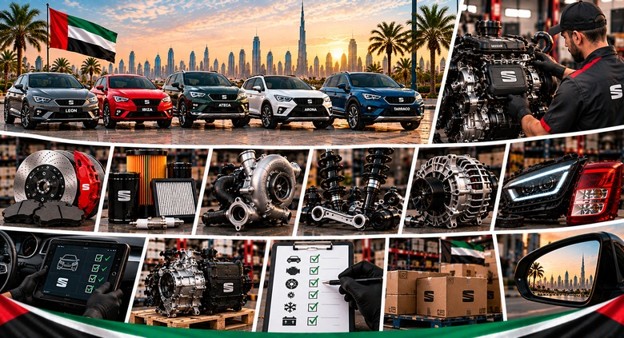
The Tarraco is a larger SUV with more complex equipment than the smaller SEAT models.
Used components such as:
- suspension assemblies
- lamps
- cooling parts
- AC components
- electronic modules
- drivetrain components
- body panels
should be checked against the exact vehicle configuration.
Do not assume that two Tarracos of the same year are identical.
Ask where the used part came from
This question is often skipped.
It should not be.
Ask for the donor vehicle information where the seller can provide it:
- model
- year
- engine
- gearbox
- mileage
- VIN or partial VIN where appropriate
- accident history if known
- reason for dismantling
A part removed from a lightly used vehicle can have a very different risk profile from one removed from a heavily damaged or neglected vehicle.
Donor mileage is useful — but not proof
Suppose a seller says an alternator came from a 70,000-kilometre vehicle.
That is useful information.
It is not proof that the alternator has another 70,000 kilometres left.
Previous operating conditions, heat exposure, charging load, maintenance and storage can all matter.
Treat mileage as evidence, not a guarantee.
Accident history matters for body parts
A used bumper, wing, bonnet or door can be perfectly serviceable after a minor accident.
A component from a heavily damaged vehicle deserves closer inspection.
Look for:
- distorted mounting points
- repaired brackets
- cracks
- hidden reinforcement damage
- stretched clips
- uneven panel gaps
- previous paintwork
- deformation around sensor mounts
A cheap body panel that needs extensive correction may not actually be cheap.
Used headlights require more than a visual check
Modern SEAT lighting assemblies can contain electronics, control units and sophisticated lighting functions.
Before buying a used lamp, confirm:
- left or right side
- exact lamp type
- LED/halogen configuration where applicable
- connector arrangement
- mounting points
- control-unit compatibility
- damage around the housing
- moisture inside the lamp
A tiny crack can become a major problem after repeated UAE heat cycles.
Check for moisture inside electrical components
This is one of the simplest inspections and one of the most useful.
Look closely at:
- headlamps
- tail lamps
- ECUs
- fuse boxes
- infotainment modules
- sensors
- connectors
Signs of water ingress can include corrosion, staining, residue or damaged seals.
A clean-looking casing does not automatically mean the electronics are healthy.
Used engines need a completely different buying standard
A used engine is not an ordinary spare part.
Before ordering one, ask for as much evidence as possible regarding:
- donor mileage
- engine code
- compression test
- leak-down test where available
- oil-pressure information where available
- cooling-system condition
- visible oil leaks
- coolant contamination
- turbo condition
- timing-system condition
- crankshaft rotation
- warranty
If the seller cannot provide meaningful condition information, the low purchase price should not be treated as a bargain.
Compression testing is useful — but interpret it properly
For a used engine, compression testing can reveal significant differences between cylinders.
The useful question is not simply:
“Does it have compression?”
Ask:
- Are the cylinder readings reasonably consistent?
- Were the tests performed correctly?
- Was the engine tested cold or warm?
- Was the battery sufficiently charged?
- Was the throttle position appropriate?
- Are there additional symptoms such as smoke, blow-by or coolant loss?
A compression figure without test conditions is incomplete evidence.
A used turbocharger needs its own inspection
Do not assume a turbo is healthy because the shaft spins.
Check for:
- excessive shaft play
- damaged compressor blades
- oil contamination
- housing cracks
- actuator condition
- wastegate operation where applicable
- evidence of foreign-object damage
If the original turbo failed catastrophically, investigate why before installing another used unit.
Otherwise the replacement can suffer the same fate.
Used gearboxes should be tested before installation
A used transmission should ideally come with some evidence of testing.
Ask about:
- donor mileage
- gearbox code
- fault history
- fluid condition
- leaks
- selector operation
- shaft/flange condition
- road-test evidence where available
- warranty
For electronically controlled transmissions, also ask whether adaptation or programming may be required.
A cheap gearbox can become an expensive gearbox
The advertised price is only the beginning.
The actual repair can include:
Used gearbox + transport + diagnosis + removal + installation + fluids + seals + programming/adaptation + post-installation testing
If the replacement unit fails shortly after installation, labour can become the largest part of the problem.
That is why the warranty and return arrangement should be understood before the gearbox is fitted.
Used suspension components need careful selection
Used suspension parts can be practical in certain applications, particularly where the component is expensive or body-specific.
But rubber and wear components deserve caution.
Inspect:
- bushes
- ball joints
- shock absorbers
- mounts
- springs
- control arms
- wheel bearings
A used control arm may look excellent while its bush is already near the end of its service life.
Used wheel bearings are usually a different proposition
A wheel bearing is a wear component.
If a new, correctly specified bearing is reasonably priced, the saving from buying used may be difficult to justify.
A used bearing's remaining life is hard to establish visually.
This is exactly where “cheaper” and “better value” can diverge.
Used brake components need extra caution
For safety-critical braking components, condition and specification matter more than the headline saving.
Used:
- brake calipers
- brackets
- carriers
may sometimes be viable after proper inspection.
Used friction material or heavily worn discs are a different proposition.
Check corrosion, piston movement, seals, sliding mechanisms, disc thickness and specification before fitting anything.
Used alternators and starters should be tested
An alternator can look almost new after cleaning.
That tells you very little.
Ask whether it has been bench-tested.
Useful checks can include:
- charging output
- bearing noise
- pulley operation
- regulator behaviour
- starter current draw
- solenoid operation
- abnormal electrical resistance
If the seller cannot explain how the unit was tested, treat it as an unverified component.
Used batteries are rarely attractive
A battery is already a consumable item with a finite service life.
A used battery may have unknown:
- age
- discharge history
- storage period
- state of health
- capacity
- charging history
In a UAE climate, where heat places substantial stress on batteries, buying an unverified used battery simply because it is cheaper may make little economic sense.
Used AC compressors need diagnosis first
A compressor should not be blamed merely because the air conditioning is warm.
Before buying a used compressor, check:
- refrigerant charge
- system pressures
- leaks
- condenser airflow
- cooling fans
- compressor command
- electrical supply
- compressor clutch/control where applicable
- evaporator performance
SEAT provides model-specific AC refrigerant information rather than one universal specification across its vehicles, reinforcing the need to identify the exact model and system before replacement.
Inspect used condensers and radiators for impact damage
A used cooling component can appear fine from the front.
Look behind it.
Check:
- bent fins
- crushed sections
- damaged mounting points
- leaking seams
- corrosion
- blocked airflow
- damaged hose connections
A radiator that has been sitting in storage may also need careful inspection around plastic tanks and seals.
UAE heat makes rubber and plastic inspection worthwhile
The UAE environment is relevant when buying used components because the replacement may have spent years exposed to high ambient temperatures.
Pay particular attention to:
- hoses
- bushes
- engine mounts
- plastic coolant tanks
- connector seals
- wiring insulation
- weather seals
- AC-related components
This does not mean every used part is unsuitable.
It means condition should be checked rather than assumed.
Used body panels can be excellent value
Body panels are among the easier used SEAT parts to assess.
For a door, wing, bonnet or bumper, inspect:
- straightness
- mounting points
- cracks
- previous repairs
- corrosion
- paint condition
- sensor holes
- camera provisions
- trim compatibility
Colour mismatch is a separate issue.
The panel can fit perfectly and still require repainting.
Paint code matters
If you are buying a painted used body panel, ask for the vehicle's paint code.
SEAT documentation includes the external paint code among the vehicle data information.
Even then, expect possible shade variation because paint ages.
A panel described as “same colour” is not necessarily a perfect visual match.
Used infotainment units are more complicated than they look
A second-hand infotainment screen may physically fit and still fail to function correctly in another vehicle.
Potential issues include:
- coding
- component protection
- software version
- vehicle configuration
- navigation data
- connectivity
- display compatibility
- associated control modules
SEAT states that CONNECT availability varies according to model, production period, infotainment system and equipment.
That is exactly why electronic compatibility needs to be checked before ordering.
Used ECUs and modules need identification before price comparison
For an ECU, don't compare listings simply by vehicle model.
Record:
- module name
- hardware number
- software number where available
- revision
- VIN/application
- engine code
- transmission
- coding requirements
Ask the seller whether the module is virgin, cloned, programmed, locked or ready for installation.
If the answer is unclear, get the workshop involved before purchasing.
Sensors should be treated according to their role
A used parking sensor and a used engine-management sensor do not carry the same risk.
For sensors, check:
- exact part number
- connector
- physical damage
- contamination
- corrosion
- test evidence
- fault history where available
For critical engine or safety systems, a known-quality new component may be more sensible if the price difference is modest.
Ask whether the part has actually been tested
“Working when removed” is not the same as “tested”.
For electrical and mechanical components, ask exactly what was checked.
A useful answer sounds like:
Bench-tested, output verified, no stored fault found, removed from a running vehicle.
A vague answer sounds like:
It should work.
Those two statements should not be priced the same.
Understand the seller's warranty
A used-part warranty should answer three questions:
How long? What does it cover? What voids it?
Also ask:
- Does it cover labour?
- Is return shipping covered?
- Must the part be installed by a workshop?
- Does overheating void engine coverage?
- Does programming void ECU coverage?
- Is the warranty replacement-only or refund-based?
- How quickly must a defect be reported?
Do not assume a “warranty” means a full refund of the repair bill.
Return policy matters almost as much as warranty
Fitment mistakes happen.
The seller may have supplied the wrong version, or the buyer may have provided incomplete vehicle information.
Before ordering, establish whether the part can be returned if:
- the number does not match
- the part does not fit
- the component arrives damaged
- the wrong side was supplied
- the vehicle requires a different specification
Get the policy in writing where possible.
Never install a high-value used part before checking it
This sounds obvious, but the sequence matters.
For an engine or gearbox:
verify → inspect → test → compare → install
Not:
install → discover mismatch → negotiate return
Once a component has been fitted, arguments about labour and condition can become considerably more complicated.
Keep the old part for comparison
Do not immediately dispose of the failed component.
Keep it beside the replacement during installation.
Compare:
- mounting points
- connectors
- brackets
- casting numbers
- sensors
- dimensions
- orientation
- part-number markings
For unusual SEAT applications, this simple step can prevent an incorrect installation.
Used parts for Leon, Ibiza, Arona, Ateca and Tarraco
| Model | Used parts worth investigating | Parts needing extra caution |
| Leon | Body panels, lamps, trim, selected mechanical assemblies | ECUs, DSG components, engine assemblies |
| Ibiza | Body parts, lamps, interior trim, selected suspension | Electronic modules, engine-management parts |
| Arona | Body panels, lamps, selected mechanical parts | Infotainment, sensors, coded electronics |
| Ateca | Body parts, lamps, suspension, mechanical assemblies | 4x4/drivetrain and electronic modules |
| Tarraco | Body parts, lamps, cooling, suspension | Drivetrain, electronics, high-value assemblies |
This is a buying framework, not a blanket statement that any particular used component will fit.
Genuine, OEM, aftermarket and used are different categories
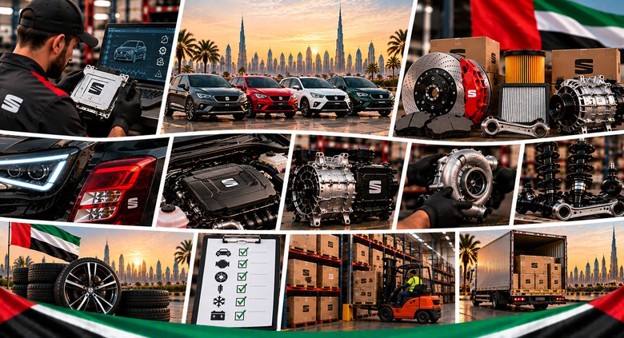
A seller should tell you exactly what is being offered.
Genuine SEAT: supplied as a genuine manufacturer part.
OEM: a term that needs clarification; ask who actually manufactured the component.
Aftermarket: made by a non-genuine manufacturer for the application.
Used genuine: an original component removed from another vehicle.
Reconditioned: a previously used component that has been inspected and/or rebuilt to a stated standard.
Do not let these labels blur together.
SEAT states that its Genuine Parts are designed specifically for its vehicles and currently advertises a two-year warranty on those genuine parts.
That manufacturer warranty should not be confused with the warranty attached to a used component from an independent seller.
Used genuine does not automatically mean good
A genuine SEAT component can still be worn.
That is especially true for:
- bearings
- alternators
- starters
- suspension bushes
- dampers
- compressors
- clutches
- engine accessories
The manufacturer's identity tells you what the part is.
It does not tell you how much useful life remains in that particular used example.
Price comparison should include the entire repair
For a used part in the UAE, compare:
Part price + delivery + diagnosis + installation + fluids/consumables + programming/coding + possible return costs
For an engine, also consider:
- oil
- coolant
- filters
- seals
- belts where required
- ancillary transfer
- diagnostic work
- post-installation checks
For a gearbox, include fluids, seals, adaptation and installation labour where applicable.
The part itself is only one line of the invoice.
UAE price references need a date
Used-part prices change with:
- donor availability
- model age
- mileage
- condition
- demand
- import costs
- local stock
- warranty
- seller location
So a responsible price article should identify its reference period.
For this guide, use September 2026 as the editorial reference date, but obtain an actual UAE quotation before treating any figure as a current purchase price.
There is no defensible universal price for a “used SEAT engine” or “used SEAT gearbox” without knowing the exact application.
Dubai and Sharjah sourcing requires proper comparison
A large used-parts market can give buyers more choice, but more choice creates another problem: inconsistent descriptions.
When comparing two sellers, compare the actual specification.
Ask both for:
- part number
- donor details
- mileage
- testing evidence
- warranty
- return terms
- delivery
- condition photographs
A cheaper unit with no testing evidence should not be treated as equivalent to a tested unit with a documented warranty.
Abu Dhabi and other Emirates
If a specific used SEAT component is sourced from another Emirate, include transportation in the calculation.
For an inexpensive trim component, delivery may be trivial.
For an engine or gearbox, transport, loading and packaging can materially affect the final cost.
The sensible comparison is always the landed cost, not just the seller's advertised part price.
Before You Click Buy
Stop before payment and check the following:
Vehicle
- VIN
- model
- generation
- year
- engine code
- gearbox code
- trim/equipment
Part
- original part number
- replacement part number
- left/right position
- front/rear position
- physical condition
- testing evidence
Seller
- donor vehicle
- mileage
- warranty
- return policy
- actual photographs
- stock confirmation
Installation
- coding
- programming
- adaptation
- calibration
- fluids
- seals
- additional parts
- labour
If several of these answers are missing, the part may not be ready to buy.
What should a workshop test before condemning the original part?
The answer depends on the component.
For an engine:
- fault codes
- compression
- leak-down where justified
- oil pressure where relevant
- cooling-system pressure
- smoke/blow-by
- live data
For a gearbox:
- diagnostic scan
- fluid condition
- road test
- engagement behaviour
- clutch/mechatronic data where applicable
- mechanical inspection
For AC:
- system pressures
- refrigerant charge
- temperature output
- compressor operation
- condenser airflow
- leaks
For electrical modules:
- power supply
- grounds
- communication
- wiring
- connectors
- diagnostic codes
The aim is simple: prove the failed component before buying its replacement.
Where PartFinder UAE fits into used-parts sourcing
PartFinder UAE can be useful when you are comparing available SEAT components, particularly if the enquiry includes the exact model, engine, part category and fitment information.
But the same buying discipline still applies.
Give the VIN.
Give the part number.
Ask about condition and warranty.
For a used engine, gearbox or electronic module, ask for testing evidence before making the decision.
What makes a used SEAT part a good buy?
There is no single magic indicator.
A stronger used-part purchase normally has several things working together:
- correct VIN fitment
- matching part number
- identifiable donor
- sensible mileage information
- visible condition
- meaningful testing
- clear warranty
- workable return policy
- reasonable total installed cost
If only the price looks attractive, there is not enough information yet.
The five-minute used-part inspection
Before paying, ask yourself:
Does it match?
Do I know where it came from?
Has it been tested?
What happens if it fails?
What will the complete repair cost?
If you cannot answer those questions, pause the purchase.
That five-minute delay is often worth far more than the discount.
FAQs
Categories
- Audi
- BMW
- Car Accessories
- Car Tips
- Ford
- Land Rover
- Mazda
- Range Rover
- Top 10
- UAE Car Parts
- Used Car Parts
- Toyota
- Replacement Engines
- Nissan
- Hyundai
- Mitsubishi
- Volkswagen
- Honda
- Kia
- Chevrolet
- Dodge
- Jeep
- Subaru
- Renault
- Lexus
- Mercedes
- Suzuki
- Hummer
- Porsche
- Infiniti
- Peugeot
- GMC
- Mini
- Volvo
- Replacement Gearboxes
- MG
- Jaguar
- Skoda
- Cadillac
- Daihatsu
- Fiat
- German Car Parts
- Japanese Car Parts
- Aftermarket Car Parts
- Genuine Car Parts
- New Car Parts
- Reconditioned Car Parts
- European Car Parts
- American Car Parts
- Korean Car Parts
- British Car Parts
- Chinese Car Parts
- Sports/Exotic Car Parts
- Luxury Car Parts
- Performance Car Parts
- SUV/4x4 Spare Parts
- Truck Spare Parts
- EV Car Parts
- Hybrid Car Parts
- Auto Spare Parts in UAE
- Tesla
- Isuzu
- Ram
- Ferrari
- Bentley
- Lamborghini
- Genesis
- Maserati
- Lincoln
- Chrysler
- Opel
- Citroen
- SsangYong
- Seat
- McLaren