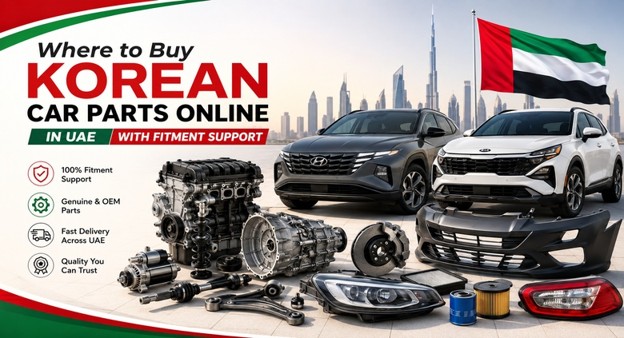
Where to Buy Korean Car Parts Online in UAE with Fitment Support
July 23, 2026
Understanding Korean Car Parts and Online Buying in the UAE
Buying Korean car parts has changed dramatically over the past few years.
Not long ago, many Hyundai and Kia owners spent hours driving from one parts shop to another, hoping to find the right replacement component.
Sometimes they succeeded.
Sometimes they didn't.
Even when the correct part was available, another question quickly followed.
"Will it actually fit my car?"
That uncertainty still worries many vehicle owners today.
The good news is that buying Korean car parts online in UAE has become much easier.
The challenge is no longer finding a supplier.
The challenge is finding the right part for the right vehicle the first time.
For Hyundai and Kia owners, that usually comes down to three important details.
Model year.
Engine size.
VIN.
Get those right, and buying online becomes straightforward.
Ignore them, and even a genuine replacement part may not fit correctly.
Let's begin by understanding why Korean vehicles dominate so many UAE roads and why online purchasing continues to grow every year.
Why Korean Car Parts Are Popular in the UAE
Korean manufacturers have built an outstanding reputation across the Emirates.
Hyundai and Kia vehicles are known for offering attractive styling, dependable reliability and excellent value for money.
They're equally popular with:
- Families.
- Daily commuters.
- Ride-hailing drivers.
- Fleet operators.
- Small businesses.
- First-time vehicle owners.
Because thousands of these vehicles are driven every day throughout Dubai, Abu Dhabi, Sharjah, Ajman, Ras Al Khaimah, Fujairah and Umm Al Quwain, demand for replacement parts remains consistently high.
Owners regularly search for:
- Replacement engines.
- Automatic gearboxes.
- Front bumpers.
- Headlights.
- Tail lights.
- Suspension components.
- Brake parts.
- Steering systems.
- Cooling parts.
- Electrical modules.
As demand has increased, online availability has expanded alongside it.
That's created far more buying opportunities than ever before.
Hyundai and Kia Models That Commonly Need Replacement Parts
Certain Hyundai and Kia models appear regularly in workshops across the UAE.
Popular Hyundai models include:
- Hyundai Tucson.
- Hyundai Elantra.
- Hyundai Santa Fe.
- Hyundai Accent.
- Hyundai Creta.
- Hyundai Sonata.
Frequently seen Kia models include:
- Kia Sportage.
- Kia Sorento.
- Kia Cerato.
- Kia Rio.
- Kia Carnival.
- Kia Seltos.
Each model has different engines, trim levels and production updates.
Although two vehicles may look identical from the outside, they can use completely different replacement parts underneath.
That's exactly why accurate fitment support is so important.
Why More UAE Drivers Buy Korean Car Parts Online
Convenience is only one reason.
Online shopping also gives buyers access to:
- Multiple suppliers.
- Better price comparisons.
- Wider stock availability.
- Faster quotations.
- Nationwide delivery.
- Easier warranty comparisons.
Instead of contacting individual suppliers one by one, buyers can compare several options in far less time.
That often leads to better purchasing decisions.
Especially for expensive components such as engines, gearboxes and suspension systems.
Genuine, OEM and Aftermarket Korean Car Parts
This is one of the first decisions every buyer faces.
Should you buy genuine parts?
OEM parts?
Or aftermarket alternatives?
Each has its place.
Genuine parts are supplied through the manufacturer's official distribution network.
OEM parts are produced by manufacturers that supply original equipment but are sold without Hyundai or Kia branding.
Aftermarket parts are manufactured by independent companies and are available in a wide range of quality levels.
Choosing the correct option depends on:
- Vehicle age.
- Budget.
- Repair type.
- Expected ownership period.
The most expensive option isn't always the most sensible.
Likewise, the cheapest option isn't always the best value.
Why Fitment Support Matters Before Ordering Online
Imagine ordering a replacement headlight.
It arrives on time.
The quality looks excellent.
Then the workshop discovers it doesn't fit your vehicle.
Perhaps the electrical connector is different.
Maybe the mounting points don't align.
Or the trim level requires another specification entirely.
Suddenly, a simple repair becomes frustrating.
Fitment support helps prevent these problems before they happen.
Professional suppliers usually verify:
- VIN.
- Model year.
- Engine size.
- Trim level.
- OEM part number.
Those checks significantly reduce compatibility issues.
Buying Online Doesn't Mean Buying Blind
Some buyers still believe online purchasing involves unnecessary risk.
In reality, modern online parts suppliers often provide more information than traditional walk-in stores.
Before ordering, buyers can usually review:
- Product photographs.
- Technical specifications.
- Compatibility information.
- Warranty details.
- Customer support.
- Delivery options.
Combined with proper fitment verification, online purchasing becomes both convenient and reliable.
A Workshop Story from Dubai
A Hyundai Tucson owner needed a replacement front headlight after a parking accident.
An online search produced dozens of options.
Prices varied considerably.
Instead of ordering the cheapest listing, the owner contacted a supplier offering fitment support.
The supplier requested the VIN and confirmed the exact model year, engine specification and trim level.
A different headlight assembly was recommended.
Although visually similar, it included the correct electrical connectors and factory mounting points.
Installation was completed without modification.
Everything worked perfectly from the first attempt.
The difference wasn't the price.
It was accurate compatibility checking.
Why Model Year and Engine Size Matter
Many Hyundai and Kia vehicles receive updates during their production life.
Changes may include:
- Lighting systems.
- Engine options.
- Gearboxes.
- Electronic modules.
- Cooling systems.
- Suspension designs.
A component suitable for one production year may not fit another.
Likewise, two engine sizes within the same model often require different replacement parts.
That's why experienced buyers never order based on appearance alone.
They confirm the specifications first.
Smart Online Buyers Prepare Before They Search
Before opening a website or requesting quotations, gather a few important details.
Have your VIN ready.
Know your model year.
Confirm the engine size.
Identify the part you actually need.
These simple steps make online ordering faster, easier and considerably more accurate.
They also reduce returns, delays and unnecessary expenses.
Key Takeaways
- Hyundai and Kia vehicles remain among the most popular cars in the UAE, creating strong demand for replacement parts.
- Buying Korean car parts online gives owners access to wider product selection, competitive pricing and convenient nationwide delivery.
- Genuine, OEM and aftermarket parts each have appropriate applications depending on the repair and ownership goals.
- Fitment support based on VIN, model year and engine size is essential for avoiding compatibility problems.
- Careful preparation before ordering online helps buyers save time, reduce costs and ensure the correct part arrives the first time.
Where to Buy Korean Car Parts Online in the UAE
Finding Korean car parts online has never been easier.
Finding the right supplier?
That's a different story.
Search online for a replacement Hyundai engine, a Kia gearbox or a new front bumper, and you'll be presented with hundreds of results within seconds.
Some suppliers promise the lowest prices.
Others advertise genuine parts.
Many claim fast delivery across the UAE.
So how do you decide which one deserves your trust?
Experienced buyers rarely focus on a single advertisement.
Instead, they compare suppliers, verify compatibility and make sure the part they're ordering is actually designed for their vehicle.
When you're buying online, confidence comes from preparation—not guesswork.
Let's look at the smartest ways to buy Korean car parts online while avoiding costly mistakes.
Choosing Trusted Online Korean Car Parts Suppliers
Not every online supplier offers the same level of service.
Some simply list products.
Others provide technical assistance before you buy.
That difference can save you a considerable amount of time and money.
A trusted supplier should be able to help with:
- VIN verification.
- Model year confirmation.
- Engine size matching.
- OEM part number checks.
- Product availability.
- Warranty information.
- Delivery times.
These services become especially valuable when purchasing expensive components such as engines, gearboxes and suspension assemblies.
Good suppliers don't just sell parts.
They help buyers choose the correct ones.
Online Marketplace vs Specialist Parts Platform
Many buyers begin their search on large online marketplaces.
They certainly offer plenty of choice.
However, specialist automotive parts platforms often provide something even more valuable.
Fitment support.
Rather than relying solely on photographs and descriptions, specialist platforms usually verify whether the part matches your Hyundai or Kia before the order is confirmed.
That dramatically reduces the risk of:
- Incorrect fitment.
- Delayed repairs.
- Costly returns.
- Installation problems.
Sometimes paying slightly more for expert guidance proves far less expensive than ordering the wrong component.
Buying Hyundai Parts Online with Confidence
Hyundai vehicles are produced in numerous specifications.
A Hyundai Tucson may have different engine options.
An Elantra may use different headlights depending on its trim level.
A Santa Fe may have updated suspension components after a mid-generation refresh.
Because of these differences, buyers should always provide:
- Vehicle Identification Number (VIN).
- Model year.
- Engine size.
- Transmission type.
- Trim level, if known.
Those details help suppliers identify the correct replacement component before dispatch.
That's exactly how online buying should work.
Buying Kia Parts Online with Confidence
Kia has become one of the UAE's most popular automotive brands.
Models such as the Sportage, Sorento, Cerato, Rio and Carnival are found throughout the Emirates.
Despite sharing engineering with some Hyundai vehicles, many Kia components remain model-specific.
For example:
- Body panels.
- Lighting assemblies.
- Interior trim.
- Suspension settings.
- Electronic modules.
Assuming compatibility simply because two vehicles appear similar often leads to unnecessary complications.
Accurate identification always produces better results.
Why Comparing Multiple Online Suppliers Makes Sense
Would you purchase the first quotation for a replacement engine without comparing alternatives?
Probably not.
The same principle applies to every online purchase.
Comparing suppliers allows buyers to evaluate:
- Product quality.
- Warranty coverage.
- Delivery speed.
- Technical support.
- Return policies.
- Overall value.
The cheapest quotation isn't always the most economical.
A supplier offering stronger support and verified compatibility may save significantly more over the lifetime of the repair.
Benefits of Ordering Korean Car Parts Online Across the UAE
Online purchasing continues to grow because it offers genuine advantages.
Owners throughout Dubai, Sharjah, Abu Dhabi, Ajman, Ras Al Khaimah, Fujairah and Umm Al Quwain can often access:
- Larger inventories.
- Faster quotations.
- Competitive pricing.
- Nationwide delivery.
- Better stock availability.
- Easier supplier comparisons.
For busy professionals and business owners, the convenience alone makes online ordering an attractive option.
When combined with proper fitment support, it becomes an even stronger solution.
A Workshop Story from Sharjah
A Kia Sportage owner needed a replacement front suspension arm after noticing excessive tyre wear and knocking noises.
An online search produced dozens of similar-looking components.
Rather than choosing solely on price, the owner contacted a supplier offering vehicle compatibility checks.
After reviewing the VIN, the supplier discovered the vehicle required a different suspension arm because of its production year and engine specification.
The visually similar component originally selected would not have fitted correctly.
The correct part arrived the following day.
Installation was completed without difficulty.
Wheel alignment was restored.
The knocking disappeared.
A simple compatibility check prevented a costly ordering mistake.
Don't Judge Online Suppliers by Price Alone
Price attracts attention.
Service earns trust.
Reliable suppliers provide:
- Accurate information.
- Responsive customer support.
- Technical expertise.
- Clear warranty terms.
- Honest delivery estimates.
Those qualities become particularly important when purchasing expensive parts that cannot easily be exchanged after installation.
Choosing the right supplier often proves just as valuable as choosing the right part.
Why Fitment Support Is Worth More Than a Discount
Imagine saving AED 300 on a replacement gearbox.
Then discovering it doesn't match your transmission code.
Now consider paying slightly more for a supplier who verifies compatibility before dispatch.
Which option truly saves money?
Fitment support reduces:
- Incorrect orders.
- Delivery delays.
- Workshop downtime.
- Return shipping.
- Installation problems.
That's real value.
Especially for buyers ordering online.
Buy Smarter, Not Faster
The internet has made buying Korean car parts remarkably convenient.
But convenience should never replace careful research.
Take a few extra minutes to verify:
- VIN.
- Model year.
- Engine size.
- Warranty.
- Supplier reputation.
Those simple checks dramatically improve the likelihood of receiving exactly the part your vehicle needs.
Key Takeaways
- Specialist online suppliers often provide better fitment support than general online marketplaces.
- VIN verification, model year and engine size checks are essential when ordering Hyundai and Kia parts online.
- Comparing multiple suppliers helps buyers evaluate quality, warranty, delivery and overall value.
- Online purchasing offers wider product availability and convenient nationwide delivery across the UAE.
- The best online buying experience combines competitive pricing with expert fitment support and trusted customer service.
VIN, Model Year and Engine Compatibility – The Smart Way to Buy Korean Car Parts Online
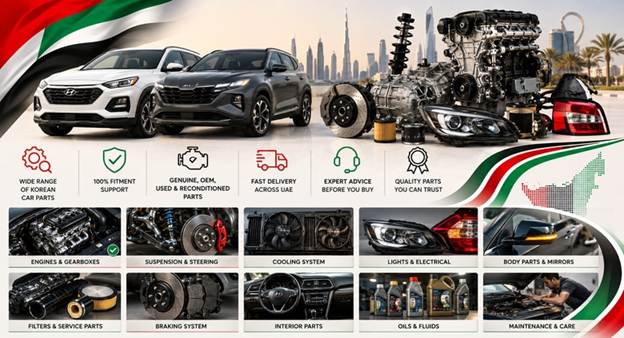
Most online parts buying mistakes happen before the order is even placed.
The wrong part isn't always purchased because the supplier made an error.
In many cases, the buyer unknowingly provides incomplete or incorrect vehicle information.
A Hyundai Tucson from one production year may use a different headlight assembly than the same model produced a year later.
A Kia Sportage fitted with a 2.0-litre engine may require different cooling components from the 1.6-litre turbo version.
Even two vehicles parked next to each other can look almost identical while using completely different replacement parts.
This is why experienced suppliers never rely on photographs alone.
They rely on vehicle data.
Three details matter more than anything else:
- VIN.
- Model year.
- Engine size.
Getting these right dramatically increases the chances of receiving the correct replacement part the first time.
Why VIN Matching Is Essential
Every vehicle leaves the factory with a unique Vehicle Identification Number (VIN).
Think of it as your vehicle's fingerprint.
It identifies the exact specification that was built, including production details that may not be obvious from the registration certificate or exterior appearance.
When a supplier checks the VIN, they can often verify:
- Factory-installed engine.
- Transmission type.
- Trim level.
- Body style.
- Market specification.
- Production date.
- Original equipment part numbers.
This process removes much of the uncertainty involved in ordering parts online.
Instead of guessing, both the buyer and supplier work with accurate manufacturer information.
Finding the Correct Part by Model Year
Many Hyundai and Kia models receive updates during their production cycle.
These changes may seem minor, but they can significantly affect replacement part compatibility.
Updates often include:
- Front bumpers.
- Headlights.
- Tail lights.
- Radiators.
- Suspension components.
- Electronic control modules.
- Interior switches.
For example, a facelift introduced halfway through a model's lifecycle may result in completely different lighting assemblies despite the vehicle carrying the same model name.
Ordering by model alone is rarely enough.
The production year should always be confirmed.
Matching Parts by Engine Size
Engine size plays a far greater role than many buyers realise.
A Hyundai Elantra fitted with a 1.6-litre engine may use different cooling hoses, engine mounts, sensors and intake components compared with the 2.0-litre version.
Likewise, Kia vehicles often share body panels across different variants while using completely different mechanical components.
When requesting quotations, always provide the exact engine specification.
This helps suppliers identify parts that genuinely fit your vehicle rather than offering components based solely on appearance.
Understanding Hyundai and Kia Trim Levels
Trim levels can change much more than interior equipment.
Depending on the specification, vehicles may include:
- Different headlights.
- LED lighting packages.
- Alternative bumpers.
- Parking sensors.
- Radar systems.
- Alloy wheel sizes.
- Suspension tuning.
- Electronic safety systems.
A replacement part designed for one trim level may not fit another without modification.
Professional fitment support considers these differences before recommending a component.
OEM Part Numbers Explained
Many buyers notice long numerical codes printed on original components.
These are OEM part numbers.
They help identify the exact replacement specified by the manufacturer.
Matching OEM numbers is one of the most reliable ways to avoid compatibility issues.
However, experienced suppliers usually verify more than just the number itself.
They also check whether:
- The part has been superseded.
- A newer version has replaced it.
- The component varies by engine.
- Regional specifications apply.
- Alternative compatible options exist.
This level of verification provides buyers with additional confidence before ordering.
Common Online Compatibility Mistakes
Even careful buyers occasionally make avoidable errors.
The most common include:
- Ordering by appearance alone.
- Ignoring the VIN.
- Guessing the engine size.
- Selecting the cheapest listing without verification.
- Assuming all production years use identical parts.
- Overlooking trim level differences.
- Not confirming OEM part numbers.
Most of these mistakes can be prevented with a few simple checks before payment.
A Workshop Story from Abu Dhabi
A Hyundai Santa Fe owner needed a replacement radiator after discovering a coolant leak during routine servicing.
After searching online, the owner selected a radiator that appeared identical to the original.
Fortunately, before dispatch, the supplier requested the VIN.
That single step revealed an important detail.
The vehicle was equipped with a different engine option introduced during a mid-production update.
Although the radiator looked almost the same, the hose connections and mounting brackets were different.
The supplier supplied the correct component instead.
Installation was completed smoothly, coolant circulation returned to normal and the owner avoided the inconvenience of returning an incompatible part.
The entire problem was prevented by verifying the vehicle details before shipping.
Why Accurate Vehicle Information Saves Time and Money
Incorrect parts rarely save money.
They often create additional expenses.
Buyers may face:
- Return shipping charges.
- Workshop delays.
- Extra labour costs.
- Missed appointments.
- Longer vehicle downtime.
- Repeat ordering.
By contrast, spending a few minutes confirming the VIN, model year and engine specification significantly reduces these risks.
It also gives workshops greater confidence that repairs can be completed without interruption.
Building Confidence Before You Order
Buying Korean car parts online should never feel uncertain.
When buyers provide accurate vehicle information and suppliers verify compatibility properly, ordering becomes a straightforward process.
Whether you're replacing an engine sensor, suspension arm, gearbox, headlight or complete engine assembly, careful fitment verification remains the smartest investment you can make.
Taking a little extra time before placing the order often saves hours—or even days—once the repair begins.
Key Takeaways
- VIN verification is the most reliable method for identifying the correct Hyundai and Kia replacement parts.
- Model year updates can introduce significant compatibility changes, even within the same vehicle model.
- Engine size and trim level should always be confirmed before ordering online.
- OEM part numbers help improve accuracy but should be verified alongside full vehicle specifications.
- Proper compatibility checks reduce returns, minimise workshop delays and increase the likelihood of receiving the correct part on the first delivery.
Buying Hyundai and Kia Engines and Gearboxes Online in the UAE
Replacing an engine or gearbox is one of the biggest repair decisions a vehicle owner can make.
Unlike buying brake pads or a headlight, these components represent a significant financial investment. They also determine how reliable your Hyundai or Kia will be for years to come.
Many UAE drivers immediately ask the same questions.
"Should I repair my existing engine?"
"Is a replacement gearbox a better option?"
"Should I buy used, reconditioned or rebuilt?"
"How do I know the engine will actually fit my vehicle?"
These are sensible questions because even a small compatibility mistake can lead to expensive delays, additional labour costs and unnecessary frustration.
Fortunately, buying engines and gearboxes online has become much safer than it once was. With proper fitment support and careful supplier verification, owners can confidently source major components without relying on guesswork.
Buying Hyundai Replacement Engines Online
Hyundai engines are designed to deliver long service life, but every engine eventually reaches a point where replacement becomes more practical than repair.
Common reasons include:
- Severe overheating.
- Internal engine damage.
- Timing failure.
- Excessive oil consumption.
- Cracked engine block.
- High mileage wear.
- Accident-related damage.
When searching online, buyers should never choose an engine based solely on photographs.
Instead, suppliers should verify:
- VIN.
- Engine code.
- Engine size.
- Production year.
- Fuel type.
- Vehicle specification.
Two engines may appear identical externally while having different sensors, wiring connections or mounting arrangements.
Verifying these details before purchase helps avoid expensive compatibility issues.
Buying Kia Replacement Engines Online
Kia owners across the UAE increasingly choose online suppliers because they offer wider availability and competitive pricing.
Popular replacement engines are regularly sourced for models such as:
- Kia Sportage.
- Kia Sorento.
- Kia Cerato.
- Kia Rio.
- Kia Carnival.
- Kia Seltos.
Before ordering, buyers should ask important questions:
- Has the engine been tested?
- Is compression within specification?
- Are major accessories included?
- What warranty is provided?
- Has the engine been inspected before dispatch?
Clear answers to these questions give buyers much greater confidence.
Choosing the Right Gearbox for Your Vehicle
Modern Hyundai and Kia vehicles are available with several transmission types.
These may include:
- Manual gearboxes.
- Conventional automatic transmissions.
- Dual-clutch transmissions (DCT).
- Continuously Variable Transmissions (CVT), depending on the model.
Selecting the wrong gearbox can create serious installation problems.
Professional suppliers therefore verify:
- Transmission code.
- VIN.
- Engine compatibility.
- Production year.
- Drive configuration.
- Electronic control compatibility.
These checks reduce the likelihood of costly installation delays.
Used vs Reconditioned Engines and Gearboxes
One of the most common buying decisions involves choosing between used and reconditioned components.
A used engine or gearbox is removed from another vehicle and inspected before sale. It is often the most affordable option and may be suitable for vehicles where budget is the primary consideration.
A reconditioned unit has typically undergone extensive rebuilding. Worn internal components are replaced, critical tolerances are restored and the assembly is tested before being offered for sale.
Neither option is universally better.
The right choice depends on:
- Vehicle age.
- Budget.
- Expected ownership period.
- Planned annual mileage.
- Repair objectives.
Understanding these factors helps buyers make informed decisions rather than simply choosing the lowest price.
Engine and Gearbox Inspection Checklist
Before committing to any major purchase, it is worth asking the supplier about the condition of the component.
Important inspection points include:
- Compression test results.
- Oil leaks.
- Cooling system condition.
- Timing components.
- Gear engagement.
- Transmission casing.
- Mounting points.
- Sensor locations.
- Wiring connections.
- Service history, where available.
A reputable supplier should be comfortable discussing these details.
The more information provided before purchase, the lower the risk after installation.
Warranty and Delivery Considerations
Warranty should never be treated as an afterthought.
It reflects the supplier's confidence in the product being supplied.
Before placing an order, buyers should understand:
- Warranty duration.
- Terms and conditions.
- Inspection requirements.
- Return procedures.
- Delivery timeframes.
- Packaging methods.
- Damage reporting process.
Clear communication helps avoid misunderstandings later.
Delivery also deserves attention.
Large components such as engines and gearboxes require secure packaging to prevent transport damage.
Professional logistics make a noticeable difference.
A Workshop Story from Dubai
A Kia Sorento owner experienced severe transmission slipping after more than 220,000 kilometres of driving.
The initial plan was to rebuild the existing gearbox.
However, after inspection, the workshop discovered extensive internal wear that made rebuilding uneconomical.
The owner began searching online for a replacement.
Several suppliers advertised similar gearboxes, but one supplier requested the VIN and transmission code before confirming availability.
That additional verification identified a specification difference that would have caused electronic compatibility problems if the first gearbox had been ordered.
The correct transmission arrived within days.
Installation proceeded without modification.
The gearbox adapted correctly during programming, and the vehicle returned to smooth operation.
The successful repair wasn't simply the result of buying a replacement gearbox.
It was the result of accurate compatibility checking before the purchase.
Why Professional Fitment Support Matters
Engines and gearboxes are among the most technically complex components fitted to any vehicle.
Even experienced mechanics appreciate accurate compatibility information before installation.
Professional fitment support helps verify:
- Engine code.
- Gearbox code.
- VIN.
- Production year.
- Engine size.
- Electronic compatibility.
- Mounting configuration.
These checks reduce uncertainty and help buyers avoid unnecessary costs.
Investing in the Right Component
Replacing an engine or gearbox is not simply about restoring mobility.
It is about protecting the long-term reliability of the vehicle.
A carefully selected replacement, backed by proper fitment verification and supplier expertise, can provide years of dependable service.
Taking time to compare options, review warranty terms and confirm compatibility often proves far more valuable than rushing into the first available listing.
Key Takeaways
- Buying replacement engines and gearboxes online requires careful verification of VIN, engine code, gearbox code and vehicle specification.
- Used and reconditioned components each offer advantages depending on budget, vehicle age and ownership plans.
- Inspection reports, compression testing and warranty coverage provide valuable reassurance before purchasing.
- Professional fitment support reduces compatibility risks and helps ensure successful installation.
- Careful supplier selection and thorough verification lead to a smoother repair process and greater long-term reliability.
Buying Hyundai and Kia Suspension, Brake and Steering Parts Online in the UAE
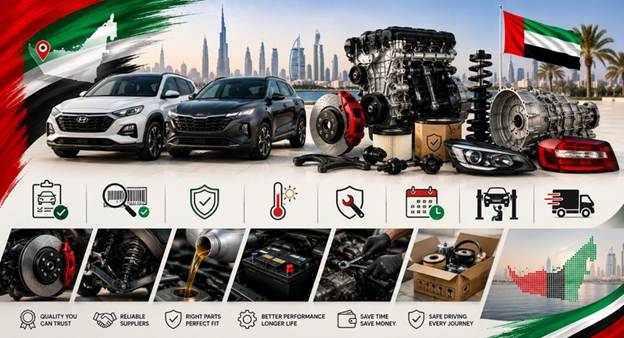
Not every vehicle problem begins with the engine.
Sometimes it starts with a small knocking sound while driving over a speed bump.
Sometimes the steering wheel vibrates slightly on the motorway.
Occasionally, the vehicle no longer feels as stable as it once did during a fast lane change.
These symptoms often point towards worn suspension, steering or braking components.
For Hyundai and Kia owners across the UAE, these are among the most frequently replaced parts after routine servicing items.
The encouraging news is that many of these components are readily available online.
The challenge, however, is ensuring they match your exact vehicle specification.
Suspension geometry, steering assemblies and brake systems can vary depending on the model year, engine size, trim level and even the market specification.
That makes accurate fitment just as important here as it is when buying an engine or gearbox.
Suspension Parts Buying Guide
The suspension system does much more than provide a comfortable ride.
It keeps the tyres in proper contact with the road, improves handling and helps maintain vehicle stability during braking and cornering.
As mileage increases, suspension components naturally wear.
The parts most commonly replaced include:
- Control arms.
- Ball joints.
- Bushes.
- Stabiliser links.
- Suspension arms.
- Mounting bushes.
When ordering online, always verify that the replacement component matches your vehicle's VIN and production year.
Two visually similar suspension arms may use different mounting points or bush sizes.
Shock Absorbers, Struts and Springs
Shock absorbers gradually lose their effectiveness over time.
Many owners don't notice the deterioration because it happens slowly.
Common warning signs include:
- Increased body roll.
- Longer braking distances.
- Uneven tyre wear.
- Excessive bouncing.
- Front-end diving during braking.
- Reduced cornering stability.
Replacement struts and springs should always be selected according to the exact vehicle specification.
Factors such as engine weight and suspension package can influence the correct component.
Professional fitment support helps eliminate uncertainty before ordering.
Steering Components Explained
Modern steering systems rely on numerous precision-engineered components working together.
Wear in just one part can affect vehicle control.
Frequently replaced steering parts include:
- Tie rod ends.
- Steering racks.
- Steering boots.
- Inner tie rods.
- Steering joints.
- Rack bushes.
Drivers experiencing steering vibration, looseness or unusual noises should arrange a professional inspection before ordering replacement parts.
Correct diagnosis prevents unnecessary spending.
Brake Parts and Safety Components
The braking system is one area where quality should never be compromised.
Although many aftermarket options exist, buyers should focus on products that meet recognised quality standards and suit their driving requirements.
Common replacement items include:
- Brake discs.
- Brake pads.
- Brake callipers.
- Brake hoses.
- ABS sensors.
- Brake master cylinders.
Different trim levels sometimes use different disc sizes or braking systems.
Ordering by appearance alone can result in expensive compatibility problems.
Wheel Bearings and Hub Assemblies
Wheel bearings often receive little attention until they begin making noise.
Typical symptoms include:
- Humming while driving.
- Grinding sounds.
- Vibration.
- Wheel play.
- ABS warning lights.
Some Hyundai and Kia models use complete hub assemblies rather than individual bearings.
Others require separate bearing replacement.
Checking the VIN allows suppliers to identify the correct solution before dispatch.
Common Suspension Problems in UAE Driving Conditions
The UAE presents unique driving conditions.
Long motorway journeys, high summer temperatures, speed humps, heavy traffic and occasional desert travel all place additional stress on suspension components.
Common workshop observations include:
- Worn suspension bushes.
- Leaking shock absorbers.
- Damaged stabiliser links.
- Premature tyre wear.
- Steering alignment issues.
- Ball joint wear.
Regular inspection helps identify these issues before they develop into larger repairs.
A Workshop Story from Sharjah
A Hyundai Elantra owner visited a workshop after noticing a persistent knocking sound from the front suspension whenever driving over uneven roads.
The owner had already purchased replacement stabiliser links online because they appeared identical to the originals.
During installation, the technician quickly discovered that the mounting dimensions were different.
The parts had been selected using only the vehicle model rather than the exact production year.
The supplier was contacted again and requested the VIN.
Within minutes, the correct stabiliser links were identified and dispatched.
Installation was completed the following day, the suspension noise disappeared and wheel alignment was restored.
A simple compatibility check could have prevented the initial ordering mistake altogether.
Why Suspension and Brake Parts Should Never Be Guessed
Unlike cosmetic body panels, suspension and braking components directly affect vehicle safety.
Incorrect parts may lead to:
- Poor handling.
- Premature tyre wear.
- Increased stopping distances.
- Installation delays.
- Additional labour costs.
- Repeat repairs.
Taking a few extra minutes to verify compatibility is a worthwhile investment.
Professional suppliers understand these systems and use VIN information, model year and engine specification to confirm the correct replacement before shipping.
Building a Reliable Hyundai or Kia
A well-maintained suspension and braking system transforms the driving experience.
The vehicle feels more stable.
Steering becomes more precise.
Tyres wear evenly.
Passenger comfort improves.
Most importantly, overall safety is enhanced.
Online purchasing makes accessing quality replacement parts easier than ever, but successful repairs still depend on selecting components that genuinely match the vehicle.
Accuracy always matters more than speed.
Key Takeaways
- Suspension, steering and braking components vary between Hyundai and Kia models, production years and trim levels.
- VIN verification and fitment support help ensure the correct parts are ordered the first time.
- Common replacement components include control arms, shock absorbers, steering parts, brake discs, pads and wheel bearings.
- UAE driving conditions can accelerate suspension wear, making regular inspection especially important.
- Choosing the correct replacement parts improves handling, braking performance, tyre life and long-term vehicle reliability.
Buying Hyundai and Kia Body Parts, Lights and Exterior Components Online in the UAE
Mechanical components are not the only parts Hyundai and Kia owners replace.
Every day across the UAE, workshops repair vehicles that have been involved in minor parking accidents, motorway stone damage, shopping centre scrapes and low-speed collisions.
In many cases, the engine and transmission remain in perfect condition.
The damage is entirely cosmetic.
A cracked bumper.
A broken headlight.
A damaged wing mirror.
A dented bonnet.
Although these repairs may appear straightforward, ordering the correct exterior part is often more complicated than expected.
Body panels, lighting systems and trim components frequently change between production years, facelift models and trim levels.
Two Hyundai Tucsons parked side by side may look almost identical.
Yet their front bumper design, grille shape or headlight connectors could be completely different.
That is why professional fitment support remains just as important when buying exterior parts as it does when purchasing engines or gearboxes.
Front and Rear Bumpers
Bumpers are among the most commonly replaced body components.
Minor collisions and parking incidents often damage them before any structural parts are affected.
When buying replacement bumpers online, buyers should confirm:
- Model year.
- VIN.
- Trim level.
- Parking sensor compatibility.
- Camera mounting provisions.
- Fog light openings.
- Grille configuration.
A bumper that appears identical in photographs may require different brackets or sensor locations depending on the vehicle specification.
Confirming compatibility before purchase prevents unnecessary workshop delays.
Headlights, Tail Lights and Fog Lamps
Lighting technology has evolved significantly over recent years.
Hyundai and Kia vehicles may use:
- Halogen headlights.
- LED headlights.
- Projector lamps.
- Adaptive lighting systems.
- LED daytime running lights.
- Sequential indicators.
Each system requires different components.
Electrical connectors, control modules and mounting points can vary even within the same vehicle generation.
Ordering purely by appearance often leads to disappointment.
Professional suppliers verify compatibility before dispatch to ensure the replacement integrates correctly with the vehicle's electrical system.
Doors, Bonnets and Tailgates
Replacing large body panels requires precision.
Even small differences in production specifications can affect:
- Hinge positions.
- Lock mechanisms.
- Wiring harnesses.
- Glass compatibility.
- Interior trim.
- Weather sealing.
Before purchasing replacement doors, bonnets or tailgates, suppliers should verify the exact vehicle specification using the VIN.
This helps reduce the likelihood of costly fitting adjustments.
Mirrors, Grilles and Exterior Trim
Smaller exterior components are frequently overlooked during ordering.
However, they can differ considerably between trim levels.
Examples include:
- Heated mirrors.
- Power-folding mirrors.
- Camera-equipped mirrors.
- Chrome grilles.
- Black sport grilles.
- Decorative trim panels.
Choosing the wrong specification may affect both appearance and functionality.
A few additional compatibility checks before ordering can prevent unnecessary returns.
Cooling Components and Radiators
Cooling system components occupy an important position between cosmetic and mechanical repairs.
Following a front-end collision, workshops often replace:
- Radiators.
- Condensers.
- Cooling fans.
- Expansion tanks.
- Intercoolers.
- Fan shrouds.
These parts must match not only the body structure but also the engine specification.
Different engine sizes frequently use different cooling assemblies.
Providing accurate vehicle information allows suppliers to recommend the correct replacement from the outset.
Paint Matching and Body Panel Compatibility
Many buyers assume paint matching is straightforward.
In reality, manufacturers often produce several paint variations that appear nearly identical.
Even within the same colour name, production batches may differ slightly.
Professional body shops usually verify:
- Paint code.
- Production year.
- Factory colour specification.
- Vehicle trim.
- Panel compatibility.
Accurate identification helps achieve a more consistent repair finish.
A Workshop Story from Dubai
A Kia Cerato owner visited a body repair workshop after reversing into a concrete pillar in an underground car park.
The rear bumper required replacement.
The owner had already found what appeared to be an identical bumper online.
Before confirming the order, the supplier requested the VIN.
That simple step revealed the vehicle was equipped with factory parking sensors and a higher trim package.
The bumper originally selected lacked the correct sensor mounting positions.
A compatible replacement was sourced instead.
Installation required no modification, the parking sensors functioned perfectly and the repaired vehicle retained its original appearance.
The additional compatibility check saved both time and unnecessary labour.
Why Exterior Parts Should Never Be Ordered by Appearance Alone
Modern Hyundai and Kia vehicles share many design similarities.
However, subtle engineering differences often exist beneath the surface.
Exterior components may vary because of:
- Production updates.
- Safety equipment.
- Lighting technology.
- Sensor systems.
- Engine cooling requirements.
- Regional specifications.
Relying solely on photographs increases the likelihood of ordering the wrong component.
VIN verification provides a much more reliable solution.
Protecting Your Vehicle's Appearance and Value
Quality body repairs do more than improve appearance.
Correctly fitted panels help preserve:
- Structural integrity.
- Aerodynamics.
- Weather sealing.
- Safety system operation.
- Vehicle resale value.
Selecting the correct replacement component from the beginning contributes to a smoother repair process and a better long-term ownership experience.
When buying online, careful compatibility checks remain one of the smartest decisions any vehicle owner can make.
Key Takeaways
- Hyundai and Kia body panels, lighting systems and exterior trim often vary between production years and trim levels.
- VIN verification helps identify the correct bumper, headlight, mirror or body panel before ordering.
- Cooling components should always be matched to the exact engine specification.
- Paint codes and factory specifications improve colour consistency during body repairs.
- Professional fitment support reduces compatibility issues, shortens repair times and helps maintain the vehicle's appearance and resale value.
Hyundai and Kia Model-Specific Buying Advice for Online Parts Buyers in the UAE
No two vehicles should ever be treated exactly the same.
That might sound obvious.
Yet it is one of the biggest reasons buyers order incorrect replacement parts online.
A Hyundai Tucson and a Hyundai Santa Fe may both be SUVs, but they use different engines, suspension layouts, lighting systems and electronic components.
Likewise, a Kia Sportage and a Kia Sorento share many engineering principles, yet they have their own model-specific parts, production updates and trim-level variations.
Even within the same model, manufacturers introduce changes during production.
A facelift may include:
- New bumpers.
- Different headlights.
- Updated cooling systems.
- Revised suspension.
- New electronic modules.
This is why experienced suppliers ask more than just, "Which model do you own?"
They also request the VIN, model year, engine size and production details.
Those extra checks help ensure the replacement part genuinely fits the vehicle.
Hyundai Tucson Parts Buying Guide
The Hyundai Tucson remains one of the UAE's most popular family SUVs.
Its popularity means replacement parts are generally easy to source online.
Frequently purchased components include:
- Front bumpers.
- LED headlights.
- Suspension arms.
- Brake discs.
- Radiators.
- Automatic gearboxes.
- Replacement engines.
However, buyers should remember that Tucson models have undergone several design revisions over the years.
Engine options, lighting technology and front-end styling vary considerably between generations.
Ordering by appearance alone is rarely enough.
Hyundai Elantra Parts Buying Guide
The Hyundai Elantra has earned a reputation for dependable daily commuting.
High annual mileage means many owners eventually replace:
- Shock absorbers.
- Brake components.
- Steering parts.
- Wheel bearings.
- Cooling system parts.
- Exterior mirrors.
Production updates can introduce subtle compatibility differences.
Checking the VIN before ordering helps suppliers recommend the correct replacement without unnecessary guesswork.
Hyundai Santa Fe Parts Buying Guide
The Santa Fe combines family practicality with long-distance comfort.
As these vehicles accumulate mileage, workshops commonly replace:
- Suspension components.
- Radiators.
- Cooling fans.
- Engine mounts.
- Gearboxes.
- Lighting assemblies.
Different engine sizes and trim levels often require different replacement parts.
Professional compatibility checks help prevent expensive ordering mistakes.
Kia Sportage Parts Buying Guide
The Kia Sportage continues to be one of the strongest-selling Korean SUVs in the UAE.
Because it is available in several specifications, buyers should verify:
- Production year.
- Engine size.
- Trim level.
- Transmission type.
- Lighting package.
Popular replacement items include suspension arms, headlights, bumpers, cooling components and steering parts.
The more vehicle information supplied before ordering, the more accurate the recommendation becomes.
Kia Sorento Parts Buying Guide
As a larger SUV frequently used by families, the Sorento often covers significant annual mileage.
Replacement demand commonly includes:
- Automatic transmissions.
- Suspension systems.
- Brake assemblies.
- Tail lights.
- Air conditioning components.
- Cooling systems.
Certain model years include updated electronics and revised body panels.
VIN verification remains the most reliable way to confirm compatibility.
Kia Cerato and Kia Rio Parts Buying Tips
Compact Kia models are extremely popular among commuters, small businesses and ride-hailing drivers.
Their high usage naturally increases demand for replacement parts.
Common purchases include:
- Brake discs.
- Suspension bushes.
- Headlights.
- Wing mirrors.
- Steering racks.
- Radiators.
Although these models appear straightforward, production changes still occur.
Even small differences in engine specification may influence the correct replacement component.
Why One Hyundai or Kia Isn't Always the Same as Another
Many buyers believe that owning the same model guarantees identical replacement parts.
Unfortunately, that isn't always true.
Differences may include:
- Engine options.
- Gearbox types.
- Lighting systems.
- Suspension packages.
- Safety technology.
- Electronic modules.
- Market specification.
These variations explain why reputable suppliers always request detailed vehicle information before confirming an order.
A Workshop Story from Abu Dhabi
A Hyundai Tucson owner required a replacement front bumper after a low-speed motorway incident.
The owner located a bumper online that appeared identical to the damaged original.
Before dispatch, the supplier requested the VIN.
The compatibility check revealed that the vehicle belonged to a facelift generation equipped with revised parking sensors and a different lower grille design.
The originally selected bumper would not have accommodated the existing sensor system.
The correct replacement was supplied instead.
Installation was completed without modification, the sensors operated normally and the repair matched the factory appearance.
A few minutes spent verifying vehicle details prevented several days of unnecessary delays.
Why Model-Specific Advice Helps Buyers Save Money
Searching online can produce hundreds of similar-looking replacement parts.
Without technical guidance, distinguishing between them becomes difficult.
Model-specific buying advice allows suppliers to narrow the selection using:
- VIN.
- Production year.
- Engine size.
- Trim level.
- OEM part numbers.
This approach reduces incorrect orders and gives buyers greater confidence before making a purchase.
Buy for Your Vehicle, Not Just the Model Name
Successful online purchasing depends on accuracy rather than speed.
The model name is only the starting point.
Every Hyundai and Kia has its own specification.
Taking the time to verify those details helps ensure that every replacement part—from a simple mirror to a complete engine—fits correctly the first time.
That is exactly what smart online buying should achieve.
Key Takeaways
- Hyundai and Kia models often receive production updates that affect replacement part compatibility.
- VIN verification, engine size and model year remain essential when ordering parts online.
- Popular models such as the Tucson, Elantra, Santa Fe, Sportage, Sorento, Cerato and Rio all have specification differences that buyers should understand.
- Model-specific guidance helps reduce ordering mistakes and improves repair efficiency.
- Accurate fitment support provides greater confidence, saves time and helps buyers receive the correct replacement parts on the first delivery.
Common Online Buying Mistakes Hyundai and Kia Owners Should Avoid
Buying Korean car parts online offers convenience, competitive prices and access to thousands of replacement components across the UAE.
Yet many expensive repairs begin with a surprisingly small mistake.
The wrong VIN.
An incorrect production year.
Choosing the cheapest listing without checking compatibility.
Ignoring the warranty.
Most online ordering problems are entirely preventable.
Experienced workshops see the same issues repeatedly.
A customer arrives with a replacement part that looks correct but doesn't fit.
A sensor connector is different.
The mounting holes don't align.
The electronic control unit refuses to recognise the new component.
The workshop then spends valuable time sourcing another replacement while the vehicle remains off the road.
Fortunately, avoiding these situations is much easier than correcting them.
Understanding the most common buying mistakes helps every Hyundai and Kia owner make smarter purchasing decisions.
Ordering Without VIN Verification
This is by far the most common mistake.
Many buyers simply search for:
"Hyundai Tucson headlight."
Or:
"Kia Sportage bumper."
Although these searches produce hundreds of results, they don't guarantee compatibility.
The VIN confirms the vehicle's exact factory specification.
It allows suppliers to identify:
- Production year.
- Engine size.
- Trim level.
- Factory options.
- OEM part numbers.
- Regional specification.
Skipping this simple step increases the likelihood of receiving an incompatible part.
Choosing Parts Only by Price
Everyone appreciates saving money.
However, selecting the cheapest listing without considering quality or compatibility often creates additional costs later.
An inexpensive component may lead to:
- Poor fitment.
- Premature failure.
- Repeat labour charges.
- Vehicle downtime.
- Return shipping costs.
True value comes from balancing price with quality, warranty and supplier support.
Ignoring Warranty Terms
Warranty provides reassurance, but only if buyers understand the conditions.
Before placing an order, check:
- Warranty duration.
- Installation requirements.
- Inspection procedures.
- Return deadlines.
- Claim process.
- Exclusions.
Reading these details before purchasing prevents unnecessary disputes later.
Reliable suppliers present warranty information clearly and transparently.
Buying Counterfeit Korean Car Parts
Counterfeit automotive parts remain a concern in every major market.
Although they often resemble genuine products, manufacturing quality may vary significantly.
Common counterfeit items include:
- Brake pads.
- Filters.
- Lighting components.
- Suspension bushes.
- Sensors.
- Exterior trim.
Poor-quality components may reduce reliability and, in some cases, compromise vehicle safety.
Buying from reputable suppliers with proven fitment support helps minimise this risk.
Skipping Return and Exchange Policies
Even after careful compatibility checks, occasional ordering mistakes can still occur.
That's why every buyer should understand:
- Return eligibility.
- Exchange procedures.
- Packaging requirements.
- Delivery responsibilities.
- Inspection periods.
Knowing the process before ordering creates greater confidence throughout the purchase.
Good suppliers make these policies easy to understand.
Not Checking Supplier Reputation
A supplier's reputation often tells you far more than a single product listing.
Look for businesses that consistently demonstrate:
- Technical knowledge.
- Responsive customer service.
- Accurate compatibility advice.
- Transparent warranty terms.
- Reliable delivery.
- Positive customer experiences.
Professional support before the sale often reflects the level of support available afterwards.
A Workshop Story from Ras Al Khaimah
A Kia Rio owner required a replacement alternator after repeated charging problems.
Searching online, the owner selected the least expensive unit available.
The photographs appeared identical.
However, once the vehicle reached the workshop, the technician discovered that the electrical connector configuration differed from the original alternator.
The installation could not proceed.
The supplier was contacted and requested the VIN.
Within minutes, the correct alternator was identified.
Although it cost slightly more, it matched perfectly.
The repair was completed the following day without further complications.
The original saving disappeared entirely because the first purchase had been based solely on price rather than compatibility.
Why Careful Buying Saves More Than Money
Ordering the correct part first time delivers benefits beyond financial savings.
It also reduces:
- Workshop downtime.
- Repair delays.
- Vehicle inconvenience.
- Repeat labour.
- Shipping costs.
- Installation frustration.
Every successful repair begins long before the mechanic picks up a spanner.
It starts with accurate information.
Build Good Buying Habits
Before confirming any online order, take a few moments to review the essentials.
Confirm the VIN.
Verify the model year.
Check the engine size.
Review the warranty.
Understand the return policy.
Choose a supplier that offers genuine technical support.
These simple habits dramatically improve the likelihood of a successful purchase.
Key Takeaways
- VIN verification remains the most effective way to prevent compatibility problems.
- Choosing replacement parts solely because they are the cheapest can lead to greater long-term costs.
- Warranty conditions and return policies should always be reviewed before ordering online.
- Buying from reputable suppliers helps reduce the risk of counterfeit or incompatible components.
- Careful preparation before purchasing saves time, reduces workshop delays and improves overall repair success.
Expert Advice Before Buying Korean Car Parts Online in the UAE
Buying the correct replacement part isn't simply about clicking the "Buy Now" button.
The most successful purchases usually begin with a conversation.
Professional workshops, experienced suppliers and long-term Hyundai and Kia owners all understand one important principle.
The more information exchanged before the purchase, the smoother the repair becomes afterwards.
Whether you're replacing a suspension arm, an automatic gearbox, a radiator or a complete engine, asking the right questions before ordering can save both time and money.
It also reduces uncertainty.
Instead of hoping a component will fit, you know it has been carefully matched to your vehicle.
That confidence is exactly what every online buyer should expect.
Questions to Ask Before Ordering
Before confirming any purchase, gather as much information as possible.
Useful questions include:
- Has the part been matched using my VIN?
- Is it suitable for my model year?
- Does it match my engine size?
- Is the OEM part number verified?
- What warranty is included?
- Has the component been inspected?
- When will it be delivered?
- What happens if compatibility issues arise?
These questions help establish whether the supplier understands the vehicle rather than simply selling a product.
How Professional Fitment Support Saves Money
Some buyers hesitate when suppliers ask for additional vehicle information.
In reality, those extra questions are often a positive sign.
Professional fitment support helps confirm:
- VIN.
- Production year.
- Engine specification.
- Trim level.
- Transmission type.
- Factory options.
Verifying these details before dispatch greatly reduces the likelihood of ordering incorrect parts.
A few extra minutes spent checking compatibility can prevent days of unnecessary delays.
Workshop Advice for Hyundai and Kia Owners
Experienced technicians often recommend replacing related components at the same time.
For example:
When replacing a radiator, inspect the cooling hoses.
When replacing suspension arms, check nearby bushes and ball joints.
When installing a replacement gearbox, inspect transmission mounts and service the transmission fluid if recommended.
This approach helps avoid repeat labour and improves long-term reliability.
A comprehensive repair often proves more economical than fixing one small issue at a time.
Common Installation Mistakes
Even the correct replacement part can create problems if installed incorrectly.
Some of the most common workshop mistakes include:
- Reusing worn mounting hardware.
- Ignoring torque specifications.
- Failing to update electronic control modules.
- Skipping wheel alignment.
- Forgetting calibration procedures.
- Overlooking fluid replacement.
Professional installation remains an important part of any successful repair.
Quality parts and skilled workmanship should always go together.
Preventive Maintenance Tips
Many expensive repairs can be delayed—or avoided altogether—through routine maintenance.
Hyundai and Kia owners should regularly inspect:
- Suspension components.
- Brake systems.
- Cooling system.
- Steering joints.
- Engine belts.
- Fluid levels.
- Exterior lighting.
- Battery condition.
Early detection often prevents more serious mechanical failures.
Routine servicing is almost always less expensive than emergency repairs.
Building Long-Term Reliability
Vehicle reliability isn't determined by one replacement part.
It develops through consistent maintenance and informed buying decisions.
Owners who purchase correctly matched components, follow service schedules and work with experienced workshops generally enjoy:
- Fewer breakdowns.
- Better fuel efficiency.
- Lower maintenance costs.
- Improved driving comfort.
- Higher resale value.
- Greater long-term confidence.
Every successful repair contributes to the vehicle's future reliability.
A Workshop Story from Dubai
A Hyundai Creta owner experienced repeated steering vibration after replacing the front suspension with parts purchased online.
Although the components appeared correct, the vibration remained.
During a detailed inspection, the workshop discovered that the replacement control arms matched the model but not the specific engine variant.
The supplier was contacted with the VIN and OEM part numbers.
Correct replacements were supplied immediately.
After installation and wheel alignment, the steering returned to normal and tyre wear stabilised.
The initial problem wasn't poor workmanship.
It was incomplete compatibility verification before ordering.
That single oversight resulted in additional labour, unnecessary delays and extra expense.
Why Good Advice Matters More Than Fast Ordering
Online shopping encourages quick decisions.
Automotive repairs often reward careful ones.
Experienced suppliers and technicians understand the importance of verifying every critical detail before recommending a replacement component.
Their advice helps buyers avoid:
- Incorrect orders.
- Repeat workshop visits.
- Installation delays.
- Additional labour costs.
- Compatibility problems.
Taking advantage of professional guidance usually leads to a much smoother ownership experience.
Think Beyond Today's Repair
Every replacement part influences the vehicle's future performance.
Choosing quality components, confirming compatibility and following professional installation practices all contribute to long-term reliability.
Rather than focusing only on solving today's problem, smart buyers think about how each repair affects tomorrow's driving experience.
That approach consistently delivers better value over the life of the vehicle.
Key Takeaways
- Asking detailed questions before ordering helps buyers choose the correct Hyundai and Kia replacement parts.
- Professional fitment support verifies VIN, engine size, production year and trim level before dispatch.
- Routine maintenance and careful installation improve long-term vehicle reliability.
- Experienced workshops often recommend replacing related components during major repairs.
- Well-informed buying decisions reduce downtime, improve repair quality and help protect future ownership costs.
Comparing Online Buying Options for Hyundai and Kia Parts in the UAE
Every Hyundai and Kia owner wants the same outcome.
The correct part.
A fair price.
Fast delivery.
A repair that lasts.
Reaching that outcome, however, depends on making the right buying decisions before placing an order.
The UAE market offers more options than ever before.
Official dealerships.
Independent parts specialists.
Online suppliers.
Used parts sellers.
Reconditioned component providers.
With so many choices available, buyers often ask one important question.
"Which option gives me the best overall value?"
The answer depends on far more than the advertised price.
Warranty, compatibility, technical support and long-term reliability all deserve equal consideration.
Let's compare the most common buying options available to Hyundai and Kia owners across the Emirates.
Dealer vs Online Parts Supplier
Official dealerships provide genuine manufacturer parts and factory-backed support.
For newer vehicles or warranty-related repairs, this can be the preferred solution.
However, dealership pricing is often higher, and availability for older models may sometimes require additional waiting time.
Online parts suppliers offer several advantages:
- Wider stock availability.
- Multiple supplier comparisons.
- Competitive pricing.
- Convenient nationwide delivery.
- Fitment support.
- Access to used and reconditioned options.
For many owners, particularly those with vehicles outside the manufacturer's warranty period, online purchasing offers greater flexibility.
The best choice depends on the vehicle, the repair and the owner's priorities.
Genuine vs OEM vs Used Comparison
Selecting the right type of replacement part is just as important as selecting the supplier.
Each option has its own strengths.
Genuine Parts
These are supplied through Hyundai or Kia's official distribution network and match the factory specification.
Suitable for:
- Newer vehicles.
- Warranty repairs.
- Owners prioritising original equipment.
OEM Parts
Manufactured by companies that often supply original factory components but sold under their own branding.
Suitable for:
- Owners seeking factory-quality performance.
- Long-term reliability.
- Competitive pricing compared with genuine parts.
Used Parts
Removed from donor vehicles and inspected before resale.
Suitable for:
- Older vehicles.
- Budget-conscious repairs.
- Hard-to-find components.
Choosing the right option depends on the repair, ownership plans and available budget rather than a single universal recommendation.
Price vs Value Comparison
The lowest quotation isn't always the best investment.
When comparing suppliers, consider:
- Product quality.
- Warranty.
- Fitment verification.
- Technical support.
- Delivery speed.
- Return policy.
A slightly higher purchase price may include valuable services that prevent incorrect orders and unnecessary workshop costs.
Long-term value almost always outweighs short-term savings.
Fast Delivery Across the UAE
One reason online purchasing has become increasingly popular is the speed of delivery.
Many suppliers now serve customers throughout:
- Dubai.
- Abu Dhabi.
- Sharjah.
- Ajman.
- Ras Al Khaimah.
- Fujairah.
- Umm Al Quwain.
Efficient logistics reduce vehicle downtime and allow workshops to schedule repairs more effectively.
Before ordering, buyers should confirm:
- Estimated delivery time.
- Packaging standards.
- Tracking availability.
- Delivery charges.
- Inspection procedures upon arrival.
Knowing these details helps avoid unnecessary surprises.
Online Korean Car Parts Buying Checklist
Before completing any purchase, take a moment to review the essentials.
Confirm:
- VIN.
- Model year.
- Engine size.
- Transmission type.
- OEM part number.
- Warranty coverage.
- Supplier reputation.
- Return policy.
- Delivery schedule.
This simple checklist dramatically improves purchasing confidence.
It also reduces the likelihood of delays after the vehicle reaches the workshop.
When buying Korean car parts online, comparing multiple suppliers and verifying the VIN, model year and engine size before placing an order can significantly reduce compatibility issues. Platforms such as PartFinder UAE allow buyers to compare supplier options and request fitment support, making it easier to source the correct Hyundai or Kia replacement part with confidence.
How to Save Money While Buying Online
Saving money doesn't always mean buying the cheapest part.
Smart buyers often reduce ownership costs by:
- Comparing multiple suppliers.
- Requesting fitment verification.
- Reviewing warranty terms.
- Purchasing quality components.
- Avoiding repeat labour.
- Preventing incorrect orders.
Every successful purchase is built on careful preparation rather than rushed decision-making.
A Workshop Story from Fujairah
A Kia Sportage owner needed a replacement air conditioning condenser after road debris caused damage during motorway driving.
The owner received quotations from an official dealership, two independent suppliers and an online parts specialist.
Although the dealership offered a genuine component, delivery would take over a week.
The online supplier verified the VIN, confirmed compatibility and supplied an OEM-quality condenser with warranty support at a competitive price.
The part arrived within two days.
Installation proceeded without modification, the air conditioning system was recharged successfully and the vehicle returned to normal operation.
The owner didn't simply choose the lowest price.
The decision balanced quality, compatibility, delivery speed and overall value.
Why Comparing Options Leads to Better Decisions
Automotive repairs rarely benefit from rushed choices.
Comparing suppliers allows buyers to evaluate more than price.
It also provides insight into:
- Product quality.
- Technical expertise.
- Customer support.
- Warranty confidence.
- Delivery performance.
Well-informed buyers consistently achieve better long-term results because they consider the complete ownership experience rather than the initial purchase cost alone.
Buy with Confidence, Not Assumptions
Online purchasing has transformed the way Hyundai and Kia owners source replacement parts throughout the UAE.
Today's buyers have access to more products, more suppliers and better technical support than ever before.
Success depends on using those advantages wisely.
Verify the vehicle.
Compare suppliers.
Review warranties.
Confirm compatibility.
When those simple steps become part of every purchase, online buying becomes both convenient and dependable.
Key Takeaways
- Comparing dealerships, specialist online suppliers and different replacement part types helps buyers make better-informed decisions.
- Genuine, OEM and used parts each suit different repair requirements and ownership goals.
- Delivery speed, warranty support and fitment verification are just as important as purchase price.
- A structured buying checklist reduces compatibility problems and improves repair efficiency.
- Smart online purchasing focuses on long-term value rather than the lowest advertised price.
The Future of Buying Korean Car Parts Online in the UAE
The way people buy car parts has changed forever.
Only a few years ago, many Hyundai and Kia owners spent their weekends visiting multiple spare parts markets, comparing prices and hoping the right component would eventually appear.
Today, the buying journey looks completely different.
A vehicle owner can compare suppliers, verify compatibility, request quotations and arrange delivery without leaving home or the workshop.
That convenience has transformed the UAE automotive aftermarket.
Yet one thing has not changed.
Buying the correct replacement part still matters far more than buying the quickest one.
Whether you're replacing a headlight, suspension arm, radiator, engine or automatic gearbox, accurate fitment remains the foundation of every successful repair.
Technology has made finding parts easier.
Knowledge still makes buying them smarter.
Future of Online Korean Car Parts Shopping in the UAE
Demand for Korean vehicles continues to increase throughout Dubai, Abu Dhabi, Sharjah, Ajman, Ras Al Khaimah, Fujairah and Umm Al Quwain.
Hyundai and Kia have earned strong reputations for reliability, value and everyday practicality.
As these vehicles continue to age, the need for replacement parts will naturally grow alongside them.
At the same time, online purchasing is becoming the preferred option for many drivers because it offers:
- Faster quotations.
- Wider supplier choice.
- Competitive pricing.
- Convenient nationwide delivery.
- Easier warranty comparisons.
- Better stock availability.
Instead of relying on one supplier, buyers can now evaluate multiple options before making a decision.
That flexibility helps improve both value and confidence.
Why Online Fitment Support Is Becoming Essential
Modern vehicles are becoming increasingly sophisticated.
Even relatively simple replacement parts may differ because of:
- Production year.
- Engine size.
- Trim level.
- Safety equipment.
- Electronic systems.
- Regional specifications.
These differences mean buyers need more than a product photograph.
They need confidence that the component will fit correctly.
Professional fitment support allows suppliers to verify:
- VIN.
- OEM part numbers.
- Engine specification.
- Transmission type.
- Production updates.
- Vehicle configuration.
This process dramatically reduces incorrect orders and unnecessary workshop delays.
As vehicles become more advanced, fitment verification will become even more important.
Final Smart Buyer's Checklist
Before ordering any Hyundai or Kia replacement part online, make sure you can answer the following questions.
Have you confirmed:
- The VIN?
- The model year?
- The engine size?
- The transmission type?
- The OEM part number?
- Warranty coverage?
- Delivery time?
- Return policy?
- Supplier reputation?
If the answer is yes, you are already reducing the likelihood of compatibility problems.
Good preparation almost always leads to better buying decisions.
Key Takeaways for Hyundai and Kia Owners
Before making your next purchase, remember these important points.
- Always verify the VIN before ordering.
- Confirm the model year and engine size.
- Compare multiple suppliers instead of accepting the first quotation.
- Read warranty and return policies carefully.
- Choose quality and compatibility over the lowest advertised price.
- Work with suppliers who understand Hyundai and Kia fitment requirements.
- Think about long-term reliability rather than today's repair alone.
Following these simple principles helps reduce unnecessary costs while improving the overall ownership experience.
Final Thoughts
Buying Korean car parts online has never offered more opportunities for Hyundai and Kia owners across the UAE.
The market is larger.
Choice is greater.
Delivery is faster.
Technical support has improved considerably.
However, successful online purchasing still depends on careful preparation.
The smartest buyers do not simply search for the lowest price.
They compare suppliers.
They verify compatibility.
They review warranties.
They ask questions.
Most importantly, they ensure every replacement part matches the exact specification of their vehicle before placing an order.
That approach saves time.
It reduces unnecessary labour.
It prevents costly compatibility problems.
And it helps every repair deliver the reliability and performance that Hyundai and Kia owners expect.
As online automotive purchasing continues to evolve, one principle will remain unchanged.
The best replacement part is not simply the one that arrives first.
It is the one that fits perfectly, performs reliably and keeps your vehicle on UAE roads with complete confidence.
Final Key Takeaways
- Online purchasing gives Hyundai and Kia owners access to a wider selection of replacement parts and trusted suppliers across the UAE.
- VIN verification, model year confirmation and engine size matching remain the most important steps before placing any order.
- Genuine, OEM, used and reconditioned parts all have appropriate applications depending on the vehicle and repair.
- Choosing suppliers that provide professional fitment support significantly reduces compatibility issues and unnecessary workshop delays.
Careful research before buying leads to better value, safer repairs and greater long-term vehicle reliability.
Frequently Asked Questions
Categories
- Audi
- BMW
- Car Accessories
- Car Tips
- Ford
- Land Rover
- Mazda
- Range Rover
- Top 10
- UAE Car Parts
- Used Car Parts
- Toyota
- Replacement Engines
- Nissan
- Hyundai
- Mitsubishi
- Volkswagen
- Honda
- Kia
- Chevrolet
- Dodge
- Jeep
- Subaru
- Renault
- Lexus
- Mercedes
- Suzuki
- Hummer
- Porsche
- Infiniti
- Peugeot
- GMC
- Mini
- Volvo
- Replacement Gearboxes
- MG
- Jaguar
- Skoda
- Cadillac
- Daihatsu
- Fiat
- German Car Parts
- Japanese Car Parts
- Aftermarket Car Parts
- Genuine Car Parts
- New Car Parts
- Reconditioned Car Parts
- European Car Parts
- American Car Parts
- Korean Car Parts
- British Car Parts
- Chinese Car Parts
- Sports/Exotic Car Parts
- Luxury Car Parts
- Performance Car Parts
- SUV/4x4 Spare Parts
- Truck Spare Parts
- EV Car Parts
- Hybrid Car Parts
- Auto Spare Parts in UAE
- Tesla
- Isuzu
- Ram
- Ferrari
- Bentley
- Lamborghini
- Genesis
- Maserati
- Lincoln
- Chrysler
- Opel
- Citroen
- SsangYong
- Seat
- McLaren
- Aston Martin
- Rolls Royce
- Maybach
- Alfa Romeo
- Bugatti
- Scion
- Abu Dhabi Car Parts
- Ajman Car Parts
- Al Khan Car Parts
- Al Sajaa Car Parts
- Deira Car Parts
- Dubai Car Parts
- Fujairah Car Parts
- Industrial Area 6 Car Parts
- Mussafah Car Parts
- Ras Al Khaimah Car Parts
- Sharjah Car Parts
- Umm Al Quwain Car Parts
- Acura
- BYD
- Chery
- Dacia
- DS
- Geely Emgrand
- EXEED
- GAC
- GAC Gonow
- Geely
- Gonow
- Great Wall
- Haima
- Haval
- Holden
- Iveco
- JAC
- Jaecoo
- Jetour