Where to Buy Truck Spare Parts in Dubai, Sharjah and Across the UAE
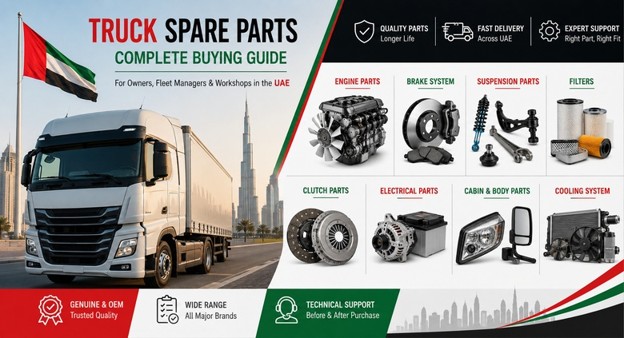
July 24, 2026
Understanding the UAE Truck Spare Parts Market
Trucks don't just move cargo.
They keep businesses moving.
Every delivery completed on time, every construction project supplied with materials and every refrigerated shipment reaching its destination depends on one thing.
Reliability.
When a commercial truck breaks down, the cost isn't limited to the repair itself. Deliveries are delayed. Drivers sit idle. Customers become frustrated. Contracts can even be affected if downtime stretches longer than expected.
That's why buying the right truck spare parts isn't simply another maintenance decision.
It's a business decision.
Across Dubai, Sharjah, Abu Dhabi and the rest of the UAE, thousands of transport companies, fleet operators, workshop owners and independent truck drivers search for replacement parts every day. Some need an emergency radiator. Others are looking for brake components, turbochargers, differentials or clutch kits before a scheduled service.
Different trucks.
Different industries.
One common goal.
Get the vehicle back on the road as quickly as possible.
Let's begin by understanding why choosing the right supplier matters just as much as choosing the right part.
Why Reliable Truck Spare Parts Matter for UAE Businesses
A passenger car breaking down is inconvenient.
A truck breaking down can stop an entire operation.
Imagine a logistics company with several vehicles delivering goods across the Emirates. If one truck develops a gearbox problem halfway through its route, it isn't only that vehicle which suffers.
Delivery schedules change.
Drivers need reallocating.
Fuel costs increase.
Customers wait longer.
That's why experienced fleet managers rarely focus only on price.
They look for:
- Consistent part quality.
- Fast availability.
- Accurate part matching.
- Reliable warranty support.
- Quick delivery across the UAE.
Those factors often save far more money than choosing the cheapest quotation.
Keeping trucks operational is almost always less expensive than dealing with unexpected downtime.
Why Dubai and Sharjah Are Major Truck Spare Parts Hubs
Ask almost any commercial vehicle workshop where most truck spare parts in UAE are sourced.
Dubai and Sharjah will usually feature near the top of the list.
There's a good reason for that.
Both emirates have developed extensive automotive trading networks, supplying everything from light commercial vehicle components to heavy-duty truck assemblies.
Whether you're searching for parts for a Mercedes-Benz Actros, Volvo FH, Scania, MAN, Isuzu, Hino, Mitsubishi Fuso or UD Trucks model, suppliers in these regions often maintain substantial inventories covering both fast-moving and specialist components.
That benefits buyers in several ways.
Greater stock availability.
More supplier options.
Faster dispatch.
Competitive pricing.
Businesses located in Abu Dhabi, Ajman, Ras Al Khaimah, Fujairah or Umm Al Quwain also frequently source parts through these distribution centres because nationwide delivery has become faster and more efficient than ever.
The Most Common Truck Spare Parts Fleet Owners Buy
Not every truck requires major mechanical repairs.
Most replacement parts fall into predictable categories.
Fleet operators regularly purchase:
- Brake pads and brake shoes.
- Clutch assemblies.
- Radiators.
- Cooling fans.
- Turbochargers.
- Air filters.
- Oil filters.
- Fuel injectors.
- Shock absorbers.
- Leaf springs.
- Wheel bearings.
- Air brake components.
- Alternators.
- Starter motors.
- Batteries.
Some of these wear gradually through everyday use.
Others fail unexpectedly after years of heavy workloads.
Either way, replacing them quickly helps reduce vehicle downtime.
That's exactly what commercial operators aim for.
Genuine vs OEM vs Aftermarket Truck Spare Parts
Every buyer eventually asks the same question.
"Which type of truck part should I buy?"
The answer depends on the repair, the vehicle and the operating budget.
Genuine Parts
These come through the truck manufacturer's authorised network.
They match factory specifications and usually provide excellent compatibility.
Naturally, they often command the highest price.
OEM Parts
Original Equipment Manufacturer components are produced by companies that frequently manufacture parts for vehicle brands.
Many offer factory-level quality while costing less than genuine alternatives.
For numerous fleet operators, OEM parts strike an excellent balance between performance and value.
Aftermarket Parts
The aftermarket covers an enormous range of manufacturers.
Some produce outstanding components.
Others don't.
Choosing reputable brands becomes especially important when purchasing critical mechanical or safety-related parts.
Buying solely because something costs less can prove expensive later.
Why VIN and Chassis Number Matching Is Essential
Here's one mistake that still catches buyers out.
Ordering by truck model alone.
Sounds straightforward.
Unfortunately, it often isn't.
Commercial trucks may have multiple engine outputs, gearbox configurations, axle ratios, braking systems and production updates within the same model range.
Two seemingly identical trucks can require completely different components.
That's why professional suppliers nearly always request:
- VIN.
- Chassis number.
- Engine code.
- Model year.
- Transmission specification.
Those details eliminate guesswork.
They reduce incorrect deliveries.
Most importantly, they help ensure the replacement component fits properly the first time.
That matters when every hour of downtime affects business operations.
How to Choose the Right Truck Spare Parts Supplier
Finding a supplier isn't difficult.
Finding a dependable supplier is another matter entirely.
Before placing an order, ask a few practical questions.
Does the supplier:
- Verify compatibility before dispatch?
- Offer warranty protection?
- Provide delivery across the UAE?
- Stock genuine, OEM and aftermarket options?
- Respond quickly to technical questions?
- Help source difficult-to-find components?
Those questions reveal far more than a simple price list.
A supplier who understands commercial vehicles becomes a valuable business partner rather than just another seller.
A Workshop Story from Sharjah
A transport company brought one of its delivery trucks into a Sharjah workshop after repeated overheating during long highway journeys.
The fleet manager was convinced the radiator had failed.
Replacing it seemed like the obvious solution.
The technician wasn't satisfied with assumptions.
Instead, he pressure-tested the entire cooling system.
The real problem turned out to be a failing water pump whose impeller had gradually lost efficiency.
The radiator was still performing exactly as it should.
Replacing the water pump restored normal operating temperatures and saved the company from purchasing an expensive part it didn't actually need.
That's the value of accurate diagnosis.
Not every symptom points towards the component you first suspect.
What Smart Fleet Operators Do Differently
Successful fleet managers rarely wait for failures.
They plan ahead.
They monitor vehicle history.
They replace known wear items before breakdowns occur.
They compare suppliers instead of accepting the first quotation.
And they maintain relationships with workshops that understand commercial vehicles inside and out.
Those habits reduce unexpected downtime.
They also make budgeting far easier over the long term.
Key Takeaways
- Truck spare parts directly affect vehicle reliability, delivery schedules and business profitability.
- Dubai and Sharjah remain major sourcing centres for commercial vehicle components across the UAE.
- Fleet operators regularly replace braking, cooling, suspension, drivetrain and electrical parts as part of routine maintenance.
- Genuine, OEM and aftermarket parts each have advantages depending on budget and operational priorities.
- VIN and chassis number verification remain essential for accurate part matching.
- Choosing a knowledgeable supplier often saves more money than simply choosing the lowest quotation.
Engine Spare Parts
If the engine stops working, everything else stops too.
It doesn't matter how good the gearbox is.
How strong the suspension feels.
Or how new the tyres look.
Without a healthy engine, a truck isn't earning money.
That's why engine spare parts are among the most frequently purchased commercial vehicle components across the UAE. Delivery trucks, construction vehicles, long-haul transport fleets and municipal service vehicles all spend countless hours under heavy load. Unlike passenger cars, truck engines often operate for extended periods without much rest, pulling significant weight through high temperatures that place constant stress on every internal component.
The good news?
Most engine failures don't happen overnight.
Small clues usually appear first.
A coolant leak.
Higher fuel consumption.
A slight loss of power.
An unusual noise during acceleration.
Spot those warning signs early and repairs often remain manageable.
Leave them for weeks—or months—and the repair bill can become a very different story.
Let's begin with the parts that work hardest.
Engine Blocks and Cylinder Heads
The engine block forms the foundation of the entire engine.
Everything depends on it.
Pistons move inside the cylinders.
The crankshaft rotates beneath.
Coolant circulates through internal passages while oil lubricates dozens of moving components.
Then there's the cylinder head.
It seals the combustion chambers, houses the valves and allows fuel and air to enter while exhaust gases escape.
These components are incredibly durable.
Even so, years of heavy operation can eventually lead to problems.
Fleet workshops commonly investigate:
- Cracked cylinder heads.
- Warped mating surfaces.
- Coolant contamination.
- Oil mixing with coolant.
- Loss of compression.
- Excessive overheating damage.
Not every issue requires complete replacement.
Some cylinder heads can be professionally pressure-tested and resurfaced.
Others have reached the point where replacement becomes the only sensible option.
Accurate inspection comes first.
Always.
Turbochargers and Intercoolers
Modern commercial trucks rely heavily on turbochargers.
They improve power.
Increase efficiency.
Help heavy vehicles pull demanding loads without needing massive engine capacity.
That's impressive engineering.
It also means the turbocharger operates under extraordinary conditions.
High temperatures.
Rapid rotation.
Constant boost pressure.
Eventually, wear begins to show.
Typical symptoms include:
- Reduced pulling power.
- Black exhaust smoke.
- Excessive oil consumption.
- High-pitched whistling.
- Poor acceleration.
- Engine warning lights.
The intercooler deserves attention too.
Its job is to cool compressed air before it enters the engine.
A cracked intercooler or leaking boost pipe may produce symptoms almost identical to a failing turbo.
That's why experienced technicians inspect the complete intake system before recommending replacement.
Guessing gets expensive.
Diagnosis saves money.
Fuel Injectors and Fuel Pumps
Every combustion cycle depends on precise fuel delivery.
Too much fuel.
Performance suffers.
Too little.
Power drops.
Modern diesel injectors operate with remarkable accuracy, delivering fuel at extremely high pressures.
Fuel pumps maintain that pressure throughout every journey.
When these components begin wearing out, drivers often notice:
- Hard starting.
- Rough idling.
- Reduced fuel economy.
- Hesitation under load.
- Increased exhaust smoke.
- Uneven engine performance.
Contaminated fuel accelerates wear dramatically.
So do neglected fuel filters.
Routine servicing protects far more than just the filter itself.
It protects the entire fuel system.
Pistons, Rings and Bearings
Deep inside the engine, hidden from view, some of the hardest-working components quietly carry out millions of movements every day.
Pistons rise and fall.
Piston rings maintain compression.
Bearings support the crankshaft while reducing friction.
These parts rarely fail without reason.
High mileage.
Poor lubrication.
Overheating.
Contaminated oil.
Eventually, wear catches up.
Warning signs include:
- Increased oil consumption.
- Blue exhaust smoke.
- Knocking noises.
- Loss of engine power.
- Low compression.
- Metallic particles in engine oil.
Internal engine repairs require careful planning.
Replacing only one worn component while ignoring the surrounding wear rarely produces lasting results.
A complete inspection always provides the clearest picture.
Engine Gaskets, Oil Seals and Timing Components
Engines rely on pressure.
They also rely on keeping oil and coolant exactly where they belong.
That's the job of gaskets and seals.
Years of heat gradually harden sealing materials.
Small leaks begin.
Then larger ones.
Drivers often notice:
- Oil beneath the truck.
- Coolant loss.
- Burning oil smells.
- Dirty engine bays.
- Low fluid levels.
Timing components deserve equal attention.
Whether the engine uses gears, chains or belts, correct valve timing remains essential.
A worn timing system can lead to:
- Poor performance.
- Difficult starting.
- Engine rattles.
- Reduced fuel efficiency.
Ignoring timing-related noises is rarely a wise decision.
Cooling System Components for Heavy-Duty Trucks
Few systems work harder in the UAE than the cooling system.
Heavy loads.
Long distances.
Steep gradients.
Summer temperatures.
Every one of those factors increases engine heat.
Key cooling components include:
- Radiators.
- Cooling fans.
- Water pumps.
- Thermostats.
- Expansion tanks.
- Radiator hoses.
Even a relatively small coolant leak deserves immediate attention.
A truck that overheats while carrying a full load may require considerably more than a replacement hose.
Protecting the cooling system protects the engine itself.
Why Heavy Loads Accelerate Engine Wear
Think about two identical trucks.
One carries light deliveries around the city.
The other spends every day transporting heavy construction materials across the Emirates.
Which engine works harder?
The answer is obvious.
Heavy loads increase combustion pressures.
Cooling demands rise.
Turbochargers remain under boost for longer.
Transmission loads increase too.
That doesn't mean trucks shouldn't carry heavy cargo.
It simply means maintenance intervals become even more important.
Hard-working trucks deserve equally hard-working maintenance schedules.
Workshop Story: The Turbocharger That Was Innocent
A logistics company brought in a Volvo FH after drivers complained about sluggish acceleration.
Everyone blamed the turbocharger.
A replacement unit had already been priced.
Before ordering anything, the technician checked the charge-air system.
One boost hose hidden beneath the engine had split along its underside.
Compressed air escaped every time the turbo built pressure.
Replacing the hose restored full performance.
The turbocharger never needed replacing.
One inexpensive component saved the business thousands.
That's why proper diagnosis always comes before purchasing parts.
Engine Buying Checklist
Before ordering any engine component, confirm the following:
- VIN and chassis number.
- Engine model.
- Engine code.
- Production year.
- Emission standard.
- Part number compatibility.
- Warranty terms.
Those checks reduce delays, prevent incorrect orders and keep downtime to a minimum.
Exactly what every commercial operator wants.
Keeping Trucks Working, Not Waiting
Engines rarely ask for attention politely.
They usually leave clues.
Listen to them.
Investigate unusual noises.
Check fluid levels.
Respond quickly to warning lights.
Replace worn components before they fail completely.
A truck in the workshop isn't generating revenue.
A truck back on the road is.
That's a difference every fleet manager understands.
Transmission and Drivetrain Parts
A truck engine can produce enormous power.
That power still has somewhere to go.
From the moment a driver pulls away with a fully loaded trailer, every bit of torque travels through the transmission and drivetrain before finally reaching the wheels. It's a relentless process. Heavy cargo, steep gradients, long motorway journeys, construction sites and countless gear changes all place tremendous strain on these components.
Unlike many passenger vehicles, commercial trucks don't get an easy life.
They're expected to work.
Day after day.
Week after week.
That's exactly why transmission and drivetrain parts rank among the most commonly sourced truck spare parts across the UAE.
The encouraging part?
Major failures are often preventable.
Most components leave warning signs long before they stop working altogether.
Let's explore the ones that deserve your attention.
Manual and Automatic Gearbox Components
Commercial trucks use both manual and automatic transmissions, depending on their application.
Long-haul vehicles increasingly rely on automated manual gearboxes for smoother driving and improved fuel efficiency.
Many medium-duty trucks still operate with traditional manual gearboxes that have proved dependable for decades.
Regardless of the design, gearbox components gradually wear under continuous heavy loads.
Fleet workshops frequently replace:
- Synchroniser rings.
- Gear selectors.
- Bearings.
- Oil seals.
- Shift forks.
- Internal gear assemblies.
Drivers usually notice problems through:
- Difficult gear selection.
- Grinding noises.
- Delayed shifting.
- Gear slipping.
- Oil leaks.
- Excessive vibration.
Changing gearbox oil at the recommended interval may seem like a routine job.
In reality, it can significantly extend transmission life.
Fresh lubricant protects gears, bearings and synchronisers from unnecessary wear.
Clutch Kits and Flywheels
Every manual truck depends on its clutch.
Without it, smooth gear changes become almost impossible.
The clutch transfers engine power while allowing drivers to change gears under varying loads.
Eventually, friction material wears away.
Pressure plates weaken.
Release bearings become noisy.
Sometimes the flywheel develops excessive wear too.
Typical symptoms include:
- Clutch slipping under load.
- High clutch biting point.
- Burning smell.
- Gear selection difficulties.
- Pedal vibration.
- Judder when moving away.
Many workshops recommend replacing the clutch kit and inspecting the flywheel at the same time.
Doing both together often saves labour costs later.
Prop Shafts and Driveshafts
Commercial trucks rely on robust prop shafts and driveshafts to transfer power from the gearbox to the driven axles.
These components appear simple.
They're anything but.
Operating continuously under heavy torque, they must cope with suspension movement, uneven road surfaces and frequent load changes.
Over time, wear develops in:
- Universal joints.
- Centre support bearings.
- Slip joints.
- Shaft balancing weights.
Drivers often report:
- Vibration while accelerating.
- Metallic clunks.
- Shuddering at higher speeds.
- Knocking underneath the truck.
- Driveline noise.
Many vibration complaints originate here rather than inside the gearbox itself.
That's why technicians inspect the complete driveline before recommending major transmission repairs.
Differentials and Crown Wheel Assemblies
The differential quietly performs one of the toughest jobs on the vehicle.
It allows the drive wheels to rotate at different speeds while cornering without losing traction.
Simple in theory.
Highly engineered in practice.
Heavy loads, poor lubrication and extended service intervals gradually affect internal gears and bearings.
Fleet operators commonly encounter:
- Whining noises.
- Oil leaks.
- Excessive backlash.
- Overheating.
- Bearing wear.
- Crown wheel damage.
Fresh differential oil costs relatively little.
Replacing a complete differential assembly is another matter entirely.
Preventive maintenance almost always proves the wiser investment.
Axles and Wheel Hub Components
Axles support enormous weight every single day.
Every pallet.
Every container.
Every delivery.
That constant workload naturally affects surrounding components.
Frequently replaced axle-related parts include:
- Wheel hub bearings.
- Axle shafts.
- Oil seals.
- Hub assemblies.
- Stub axles.
- Locking hardware.
Watch for warning signs such as:
- Oil leaks around hubs.
- Humming noises.
- Excessive wheel movement.
- Uneven tyre wear.
- Vibration during driving.
Early inspection often prevents far more extensive repairs later.
It's much easier to replace a worn bearing than an entire damaged hub assembly.
Universal Joints and Driveline Bearings
Universal joints don't attract much attention.
Until they fail.
They allow the driveshaft to transmit power while operating at constantly changing angles.
Every start.
Every stop.
Every bump.
Every gear change.
Eventually, the needle bearings inside begin wearing.
Common symptoms include:
- Clicking noises.
- Metallic knocks.
- Vibration under acceleration.
- Squeaking at low speeds.
- Excessive free play.
Replacing worn universal joints before complete failure protects neighbouring drivetrain components from unnecessary damage.
That's money well spent.
Why Heavy Haulage Accelerates Transmission Wear
Picture two identical trucks.
One transports lightweight parcels around the city.
The other spends every day carrying construction machinery.
Their engines might be identical.
Their transmissions won't experience identical wear.
Heavy haulage increases:
- Gearbox temperatures.
- Clutch loads.
- Differential stress.
- Driveshaft torque.
- Axle loading.
Those conditions naturally shorten component life.
The answer isn't avoiding heavy work.
It's adjusting maintenance schedules to match the workload.
Hard-working trucks deserve more frequent inspections.
It's as simple as that.
Workshop Story: The Gearbox That Didn't Need Replacing
A transport company sent one of its trucks to a workshop after the driver complained about severe vibration while climbing motorway inclines.
The initial assumption?
A failing gearbox.
The technician decided to inspect the driveline first.
Within minutes, he found excessive wear in the centre support bearing on the prop shaft.
Replacing the bearing eliminated the vibration immediately.
The gearbox continued operating perfectly.
Had the workshop rushed into replacing the transmission, the company would have spent thousands unnecessarily.
One careful inspection made all the difference.
Practical Tips to Reduce Drivetrain Downtime
Looking after the transmission isn't complicated.
Consistency matters far more than complexity.
Good habits include:
- Checking gearbox oil regularly.
- Servicing differentials on schedule.
- Inspecting universal joints during maintenance.
- Investigating new vibrations immediately.
- Looking for oil leaks underneath the truck.
- Avoiding aggressive gear changes.
- Addressing clutch problems before complete failure.
Small actions today often prevent major downtime tomorrow.
That's exactly what commercial operators aim for.
Buyer Checklist Before Ordering Transmission Parts
Before purchasing any drivetrain component, make sure you confirm:
- VIN and chassis number.
- Gearbox model.
- Axle ratio.
- Engine specification.
- Production year.
- Correct part number.
- Warranty availability.
- Whether installation hardware is included.
Taking those extra steps dramatically reduces ordering mistakes.
More importantly, it helps get the truck back into service faster.
Brake and Suspension Components
A fully loaded truck can weigh several tonnes.
Think about that for a moment.
Now imagine bringing all that weight to a smooth, controlled stop on a busy Dubai motorway. Or navigating a steep descent through the Hajar Mountains. Or crawling across a construction site where every surface is uneven.
That's an enormous responsibility.
The engine gets plenty of attention because it creates the power.
The brakes and suspension deserve just as much because they control it.
Every kilometre places constant pressure on brake assemblies, steering parts and suspension components. Some wear slowly over hundreds of thousands of kilometres. Others deteriorate much sooner when trucks regularly carry maximum payloads or travel over rough roads.
Fortunately, these systems usually provide plenty of warning before complete failure.
You simply have to pay attention.
Brake Pads, Brake Shoes and Brake Discs
Brakes are wear items.
They're designed that way.
Every time the driver presses the brake pedal, friction converts movement into heat. Repeat that process thousands of times every month and the friction material gradually becomes thinner.
Commercial trucks often use both disc and drum braking systems depending on the axle and vehicle specification.
Fleet workshops commonly replace:
- Brake pads.
- Brake shoes.
- Brake discs.
- Brake drums.
- Wear sensors.
- Mounting hardware.
Typical warning signs include:
- Squealing noises.
- Grinding sounds.
- Longer stopping distances.
- Steering vibration during braking.
- Brake warning lights.
- Visible scoring on discs or drums.
Many operators delay replacing worn pads because the truck still stops.
That's risky.
Once friction material disappears completely, metal begins contacting metal.
A relatively inexpensive brake service quickly becomes a much larger repair.
Brake Drums and Air Brake Components
Heavy-duty trucks frequently rely on air brake systems.
They're dependable.
Powerful.
Designed specifically for commercial applications.
These systems include numerous components working together:
- Air compressors.
- Brake chambers.
- Slack adjusters.
- Air lines.
- Air tanks.
- Brake drums.
Any loss of air pressure immediately affects braking performance.
Drivers should never ignore:
- Air leaks.
- Slow pressure build-up.
- Warning buzzers.
- Reduced braking response.
- Uneven braking across axles.
Routine inspections of air brake systems aren't just good maintenance.
They're essential for safety.
Shock Absorbers and Leaf Springs
Commercial suspension works hard.
Very hard.
Every speed bump.
Every pothole.
Every loading ramp.
Every tonne of cargo.
Shock absorbers control movement while leaf springs support the truck's weight.
Eventually, fatigue sets in.
Common suspension symptoms include:
- Excessive bouncing.
- Leaning when cornering.
- Unstable handling.
- Uneven tyre wear.
- Clunking noises.
- Visible spring damage.
A cracked leaf spring may continue functioning for a short period.
That doesn't mean it should.
Replacing worn suspension components promptly protects tyres, steering parts and overall vehicle stability.
Air Suspension Components
Many modern trucks now use air suspension systems, particularly on long-haul vehicles and premium commercial fleets.
The difference in ride quality can be remarkable.
So can the complexity.
Air suspension systems typically include:
- Air bags.
- Compressors.
- Height sensors.
- Air valves.
- Air lines.
- Electronic control units.
One leaking air bag often causes the compressor to work continuously.
That extra workload eventually affects the compressor too.
Ignoring one fault frequently creates another.
It's a chain reaction worth avoiding.
Steering Linkages and Ball Joints
Precise steering matters.
Especially when manoeuvring a large commercial vehicle through busy industrial areas or reversing towards loading bays.
Steering systems rely on numerous mechanical joints.
Over time they gradually develop wear.
Fleet technicians commonly inspect:
- Drag links.
- Tie rod ends.
- Ball joints.
- Steering arms.
- Idler arms.
- Pitman arms.
Drivers often notice:
- Loose steering.
- Wandering at motorway speeds.
- Steering wheel vibration.
- Knocking noises.
- Uneven tyre wear.
Those symptoms rarely disappear on their own.
If anything, they usually become more noticeable with every journey.
Wheel Bearings and Hub Assemblies
Wheel bearings spend their entire lives carrying enormous weight.
They're expected to rotate smoothly for hundreds of thousands of kilometres.
Eventually, every bearing reaches the end of its service life.
Common warning signs include:
- Humming noises.
- Grinding sounds.
- Excessive hub temperature.
- Oil leaks.
- Wheel movement during inspection.
- ABS warning lights on certain models.
Replacing bearings before complete failure protects the hub, axle and braking system from unnecessary damage.
It's a straightforward investment compared with the alternative.
Why Overloading Shortens Suspension Life
Commercial vehicles are engineered with specific payload limits.
Those figures exist for a reason.
Repeated overloading increases stress on:
- Leaf springs.
- Shock absorbers.
- Wheel bearings.
- Steering joints.
- Brake components.
- Tyres.
One overloaded journey probably won't destroy the suspension.
Hundreds of overloaded journeys gradually will.
Keeping within recommended payload limits helps every suspension component last longer.
It also improves braking performance and tyre life.
Workshop Story: The Brake Problem That Wasn't a Brake Problem
A fleet operator brought in a Hino truck after drivers complained about vibration whenever braking from motorway speeds.
Naturally, everyone suspected warped brake discs.
Replacement discs had already been ordered.
Before fitting them, the technician carried out a complete inspection.
The real issue?
A badly worn front wheel bearing.
The excessive movement inside the hub created vibration that felt almost identical to a braking fault.
Replacing the bearing solved the problem immediately.
The brake discs remained in excellent condition.
That's why diagnosis should always come before ordering parts.
Assumptions are expensive.
Simple Maintenance Habits That Prevent Bigger Repairs
Commercial fleets that experience fewer breakdowns usually have one thing in common.
Consistency.
Good maintenance habits include:
- Inspecting brake linings regularly.
- Draining moisture from air tanks where required.
- Lubricating steering components.
- Checking suspension during every service.
- Listening for unusual noises.
- Investigating warning lights immediately.
- Looking underneath the truck for leaks or damage.
None of those jobs are particularly complicated.
Together, though, they dramatically reduce unexpected downtime.
Buyer Checklist Before Ordering Brake or Suspension Parts
Before purchasing replacement components, confirm:
- VIN and chassis number.
- Axle specification.
- Brake system type.
- Suspension configuration.
- Correct part numbers.
- Left or right-hand fitment where applicable.
- Warranty coverage.
- Whether installation hardware is included.
Those simple checks help avoid delays and incorrect deliveries.
More importantly, they help keep trucks working rather than waiting in the workshop.
Cooling, Air and Exhaust Systems
Ask any experienced truck technician what destroys heavy-duty diesel engines faster than almost anything else.
Overheating.
Not worn tyres.
Not old batteries.
Not even high mileage.
Excessive heat.
In the UAE, commercial trucks operate in one of the world's most demanding environments. Summer temperatures regularly exceed 45°C, engines work continuously under heavy loads and cooling systems are expected to perform without compromise. Add slow-moving traffic, long-distance motorway driving and construction sites, and every component beneath the bonnet works even harder.
Cooling systems, air intake components and exhaust assemblies often receive less attention than engines or gearboxes.
They shouldn't.
When these systems fail, engine performance drops, fuel consumption rises and expensive mechanical damage can follow surprisingly quickly.
Let's begin with the first line of defence against heat.
Radiators and Cooling Fans
A radiator has one purpose.
Keep the engine cool.
Simple in theory.
Critical in practice.
Every journey generates enormous amounts of heat. The radiator transfers that heat into the surrounding air while the cooling fan maintains airflow when vehicle speed alone isn't enough.
Fleet workshops regularly replace:
- Radiators.
- Cooling fans.
- Fan clutches.
- Fan motors.
- Radiator caps.
- Cooling shrouds.
Drivers should investigate:
- Rising temperature gauges.
- Coolant leaks.
- Steam from the engine bay.
- Frequent overheating.
- Visible corrosion.
- Damaged radiator fins.
Ignoring these warning signs can quickly transform a minor repair into a complete engine rebuild.
That's a risk no fleet operator wants to take.
Water Pumps and Thermostats
The radiator cannot work alone.
Coolant must circulate continuously throughout the engine.
That's the water pump's responsibility.
The thermostat controls when coolant begins flowing through the radiator, allowing the engine to reach its ideal operating temperature before full circulation starts.
Both components wear naturally over time.
Typical symptoms include:
- Coolant loss.
- Engine overheating.
- Temperature fluctuations.
- Heater performance issues.
- Coolant stains beneath the truck.
- Bearing noise from the water pump.
Replacing a failing thermostat during scheduled maintenance is considerably less expensive than repairing an overheated engine.
Sometimes the smallest components prevent the largest bills.
Air Compressors and Air Tanks
Many heavy commercial vehicles rely on compressed air for essential systems.
Without it, braking performance and other pneumatic functions are affected immediately.
The air compressor continuously supplies pressurised air, while storage tanks ensure adequate reserve capacity during operation.
Routine inspections often focus on:
- Compressor performance.
- Air tank condition.
- Air line leaks.
- Pressure regulators.
- Drain valves.
- Moisture accumulation.
Watch for:
- Slow pressure build-up.
- Air warning indicators.
- Constant compressor operation.
- Audible air leaks.
- Reduced braking efficiency.
A small leak today can become a major operational problem tomorrow.
Air Filters and Intake Systems
Engines need clean air.
Lots of it.
A modern diesel truck consumes an enormous volume of air every single day. Dust, sand and airborne debris are unavoidable realities across many parts of the UAE, particularly for vehicles operating near construction zones, industrial areas and desert routes.
Air intake systems generally include:
- Air filters.
- Intake ducts.
- Resonators.
- Air cleaner housings.
- Turbo intake pipes.
- Airflow sensors.
Restricted airflow can lead to:
- Reduced engine power.
- Poor acceleration.
- Increased fuel consumption.
- Black exhaust smoke.
- Higher turbocharger workload.
Replacing an air filter is inexpensive.
Replacing a turbocharger because of contaminated intake air certainly isn't.
Exhaust Systems and Emission Components
The exhaust system does much more than reduce noise.
It removes combustion gases safely, supports engine efficiency and helps modern trucks meet increasingly strict emissions standards.
Heavy-duty exhaust systems commonly include:
- Exhaust manifolds.
- Exhaust pipes.
- Flexible joints.
- Diesel particulate filters (DPFs).
- Catalytic converters.
- Silencers.
Signs of developing problems include:
- Louder exhaust noise.
- Reduced engine performance.
- Excessive smoke.
- Exhaust leaks.
- Dashboard warning lights.
- Increased fuel consumption.
Minor leaks may seem harmless.
In reality, they can affect turbocharger efficiency, emissions performance and overall engine operation.
DEF and AdBlue System Components
Most modern diesel trucks operating in the UAE use Selective Catalytic Reduction (SCR) technology to reduce harmful emissions.
That system depends on Diesel Exhaust Fluid (DEF), commonly known as AdBlue.
Important components include:
- DEF tanks.
- Pumps.
- Injectors.
- NOx sensors.
- Supply lines.
- Electronic control modules.
Drivers occasionally encounter:
- AdBlue warning messages.
- Reduced engine power.
- Fault codes.
- Increased emissions.
- Crystallised DEF deposits.
- Starting restrictions on certain vehicles.
Ignoring these warnings rarely solves the problem.
Modern engine management systems are designed to protect emissions compliance, often limiting vehicle performance until faults are corrected.
Why the UAE Climate Demands Better Cooling Maintenance
A truck operating in northern Europe experiences very different conditions from one working across Dubai, Sharjah or Abu Dhabi.
Extreme ambient temperatures affect:
- Coolant efficiency.
- Fan operating time.
- Radiator performance.
- Hose durability.
- Rubber seals.
- Engine oil temperatures.
That's why cooling system inspections should become more frequent during the hotter months.
Preventive maintenance costs very little compared with recovering an overheated truck from the roadside.
Workshop Story: The Overheating Truck That Didn't Need a New Radiator
A refrigerated delivery truck arrived at a workshop after repeatedly overheating during afternoon deliveries.
The fleet manager assumed the radiator had reached the end of its life.
Replacement quotes had already been requested.
The technician carried out a complete cooling system inspection before ordering anything.
The culprit turned out to be a thermostat that was opening only partially, restricting coolant circulation under heavy load.
Replacing the thermostat restored normal operating temperatures immediately.
The original radiator continued performing perfectly.
One careful diagnosis prevented an unnecessary and expensive repair.
Practical Maintenance Tips for Longer Component Life
Keeping cooling, intake and exhaust systems in good condition doesn't require complicated procedures.
It requires consistency.
Successful fleet operators routinely:
- Check coolant levels.
- Inspect hoses for leaks.
- Replace air filters at scheduled intervals.
- Clean radiator fins.
- Monitor engine temperatures.
- Investigate warning lights immediately.
- Service DEF systems according to manufacturer recommendations.
These simple habits reduce unexpected breakdowns and help trucks spend more time earning revenue.
Buyer Checklist Before Ordering Cooling or Exhaust Parts
Before placing an order, confirm:
- VIN and chassis number.
- Engine model and code.
- Cooling system specification.
- Emissions standard.
- Radiator dimensions where applicable.
- Correct sensor compatibility.
- Warranty coverage.
- Availability of seals, hoses or mounting hardware.
A few extra minutes spent verifying compatibility can save days of unnecessary downtime.
Electrical and Electronic Components
Modern trucks don't rely on mechanical engineering alone.
Electronics now play a role in almost everything.
Starting the engine.
Charging the battery.
Managing fuel injection.
Monitoring emissions.
Operating lighting systems.
Displaying diagnostic information.
Even a relatively simple commercial vehicle contains dozens of sensors and electrical components working together every second the engine is running.
That's excellent for efficiency.
Less so when something goes wrong.
Unlike worn brake pads or leaking suspension parts, electrical faults aren't always visible. They often begin with intermittent problems that gradually become more frequent until the truck refuses to start or enters reduced-performance mode.
The key is recognising those early warning signs before they interrupt deliveries or leave a vehicle stranded.
Let's begin with the component every truck depends on before the journey even starts.
Batteries and Charging Systems
Turn the key.
Press the start button.
Everything begins with electrical power.
Truck batteries endure a demanding life. They supply high starting currents, power onboard electronics and support numerous auxiliary systems even when the engine isn't running.
Commercial operators frequently replace:
- Starter batteries.
- Auxiliary batteries.
- Battery terminals.
- Battery cables.
- Battery isolators.
- Mounting brackets.
Typical warning signs include:
- Slow engine cranking.
- Dim dashboard displays.
- Repeated jump-starts.
- Battery warning lights.
- Corroded terminals.
- Low charging voltage.
Heat is another important factor.
The UAE's climate accelerates battery ageing, particularly during extended periods of high temperatures.
Routine battery testing helps identify declining performance before complete failure occurs.
Alternators and Starter Motors
A healthy battery won't remain healthy for long without a properly functioning alternator.
Once the engine starts, the alternator takes over.
It powers electrical systems while recharging the battery during every journey.
Starter motors perform equally demanding work, delivering enough torque to crank large diesel engines reliably.
Fleet workshops commonly replace:
- Alternators.
- Voltage regulators.
- Starter motors.
- Starter solenoids.
- Drive pulleys.
- Charging cables.
Drivers often report:
- Battery warning lights.
- Slow starting.
- Clicking noises.
- Electrical accessories failing.
- Low charging voltage.
- Burning electrical smells.
Ignoring charging problems usually creates additional faults elsewhere.
A weak alternator can eventually leave an otherwise healthy truck unable to start.
ECU Modules and Engine Sensors
Today's diesel engines are managed by sophisticated electronic control units.
The ECU constantly monitors information from numerous sensors before adjusting fuel delivery, turbocharger operation and emissions systems.
Important sensors include:
- Crankshaft position sensors.
- Camshaft sensors.
- Coolant temperature sensors.
- Boost pressure sensors.
- Oil pressure sensors.
- Mass airflow sensors.
Common symptoms of sensor faults include:
- Engine warning lights.
- Poor fuel economy.
- Reduced engine performance.
- Difficult starting.
- Unexpected stalling.
- Limp-home mode activation.
One faulty sensor can produce symptoms that resemble much larger mechanical failures.
That's why electronic diagnostics have become an essential part of modern truck servicing.
Lighting Systems and LED Truck Lamps
Commercial vehicles spend long hours on the road.
Visibility matters.
So does being seen by others.
Truck lighting systems now include far more than simple headlamps.
Fleet operators regularly replace:
- LED headlights.
- Tail lamps.
- Indicator units.
- Fog lamps.
- Marker lights.
- Number plate lamps.
Lighting faults may seem minor.
They aren't.
Poor visibility increases accident risk and can also result in compliance issues during vehicle inspections.
Regular lighting checks should form part of every maintenance routine.
Wiring Harnesses and Electrical Connectors
Electrical systems are only as reliable as the wiring connecting them.
Over time, wiring harnesses face constant vibration, heat, moisture and occasional accidental damage during repairs.
Common issues include:
- Broken wires.
- Corroded connectors.
- Loose terminals.
- Water ingress.
- Chafed insulation.
- Poor earth connections.
Electrical faults caused by damaged wiring can be frustrating because symptoms often appear intermittently.
One loose connector might trigger several warning lights before disappearing again.
Thorough inspection remains the only reliable solution.
Dashboard Instruments and Electronic Controls
Drivers depend on dashboard information every minute they're behind the wheel.
Engine temperature.
Oil pressure.
Fuel level.
Air pressure.
Battery voltage.
Diagnostic warnings.
Modern instrument clusters communicate continuously with multiple electronic modules throughout the truck.
When faults occur, drivers may notice:
- Blank displays.
- Flickering gauges.
- Incorrect readings.
- Warning messages.
- Communication faults.
- Intermittent instrument failure.
Ignoring dashboard warnings rarely makes them disappear.
The truck is usually trying to communicate a developing problem.
Listening early often prevents larger repairs later.
Why Electrical Problems Increase During Extreme Weather
High temperatures don't only affect engines.
Electrical components feel the impact too.
Extended heat exposure contributes to:
- Faster battery deterioration.
- Wiring insulation ageing.
- Connector expansion.
- Sensor stress.
- Electronic module overheating.
- Reduced charging efficiency.
Dust and humidity can also affect exposed electrical connections over time.
Routine inspections become particularly valuable for trucks operating in demanding commercial environments.
Workshop Story: The Starting Problem That Wasn't the Battery
A fleet manager contacted a workshop after one of his delivery trucks repeatedly refused to start in the mornings.
The battery had already been replaced.
The problem remained.
Attention then shifted towards the starter motor.
Before replacing anything else, the technician carried out a complete charging system inspection.
The alternator was producing inconsistent output because its internal voltage regulator had failed.
The battery had never been the real issue.
Installing a replacement regulator restored proper charging and eliminated the starting problem completely.
One accurate diagnosis prevented another unnecessary parts purchase.
Practical Maintenance Tips for Electrical Reliability
Electrical systems respond well to regular attention.
Simple maintenance makes a noticeable difference.
Experienced fleet operators routinely:
- Test battery voltage.
- Inspect charging output.
- Clean battery terminals.
- Secure wiring harnesses.
- Check lighting before long journeys.
- Investigate warning lights promptly.
- Carry out electronic diagnostics during scheduled servicing.
These straightforward habits reduce unexpected breakdowns and improve fleet reliability throughout the year.
Buyer Checklist Before Ordering Electrical Components
Before purchasing electrical or electronic truck parts, confirm:
- VIN and chassis number.
- Engine specification.
- Voltage requirements.
- Alternator output rating.
- Starter motor compatibility.
- ECU software compatibility where applicable.
- Connector type.
- Warranty availability.
Accurate identification prevents costly ordering mistakes and reduces unnecessary vehicle downtime.
Cabin, Body and Exterior Parts
Not every truck spare part sits beneath the bonnet.
Some of the most frequently replaced components are the ones drivers see every single day.
The bumper that protects the front of the vehicle.
The mirror that provides visibility in busy industrial areas.
The driver's seat that supports long hours behind the wheel.
The headlight that makes night-time deliveries safer.
Body and cabin parts might not directly affect engine performance, but they play an essential role in safety, driver comfort, operational efficiency and maintaining a professional business image.
A damaged mirror can delay a delivery.
A cracked headlamp can fail a vehicle inspection.
A faulty door lock can become a daily frustration for drivers working long shifts.
Small components often have a much bigger impact than people expect.
Let's begin with the front of the truck.
Truck Bumpers and Grilles
The front bumper absorbs far more punishment than most drivers realise.
Stone impacts.
Minor parking accidents.
Loading yard scrapes.
Road debris.
Construction site hazards.
Commercial trucks operating across the UAE regularly require replacement:
- Front bumpers.
- Rear bumpers.
- Front grilles.
- Bumper brackets.
- Lower valances.
- Tow hook covers.
Drivers should inspect these components for:
- Cracks.
- Loose mounting points.
- Broken clips.
- Corrosion.
- Misalignment.
- Reduced airflow caused by damaged grilles.
A damaged grille isn't only a cosmetic concern.
It can also restrict airflow to the radiator, affecting cooling performance during the hottest months of the year.
Doors, Mirrors and Window Components
Few parts work harder during a driver's shift than the doors.
They're opened dozens of times every day.
Mirrors face constant vibration, occasional accidental impacts and exposure to harsh weather.
Commonly replaced components include:
- Door handles.
- Door locks.
- Window regulators.
- Side mirrors.
- Heated mirror glass.
- Door hinges.
Typical warning signs include:
- Loose mirrors.
- Poor rear visibility.
- Windows sticking.
- Doors failing to latch properly.
- Broken adjustment motors.
- Water entering the cabin.
Good visibility isn't optional for commercial vehicles.
It's one of the foundations of safe driving.
Headlights, Tail Lights and Signal Lamps
Lighting systems deserve attention even when they're working perfectly.
Commercial vehicles often operate before sunrise, after sunset and during adverse weather conditions.
Reliable lighting protects both the driver and everyone else on the road.
Fleet workshops frequently replace:
- LED headlights.
- Tail lamps.
- Brake lights.
- Indicator lamps.
- Side marker lights.
- Reflectors.
Drivers should never ignore:
- Condensation inside lamps.
- Cracked lenses.
- Flickering lights.
- Broken mounting brackets.
- Dim illumination.
- Dashboard bulb warnings.
Replacing a damaged lamp promptly is considerably easier than dealing with compliance issues during roadside inspections.
Seats, Dashboard and Interior Components
A truck driver's workplace is the cabin.
Comfort matters.
Ergonomics matter.
Fatigue matters.
Professional fleets increasingly invest in maintaining cabin interiors because comfortable drivers often remain more focused during long journeys.
Frequently replaced interior components include:
- Driver seats.
- Passenger seats.
- Seat suspension units.
- Dashboard panels.
- Air conditioning vents.
- Steering wheel controls.
Watch for:
- Torn upholstery.
- Collapsed seat cushions.
- Faulty seat adjustment mechanisms.
- Broken dashboard switches.
- Loose trim panels.
- Air conditioning airflow problems.
Keeping the cabin in good condition isn't simply about appearance.
It improves the driver's daily working environment.
Mudguards, Fenders and Body Panels
Commercial vehicles regularly operate where bodywork is exposed to flying debris, gravel, mud and tight loading spaces.
Body panels inevitably suffer damage over time.
Common replacement items include:
- Front fenders.
- Rear mudguards.
- Side skirts.
- Cab corner panels.
- Wheel arch covers.
- Splash guards.
Even relatively minor damage deserves attention.
Loose panels can vibrate, detach while driving or expose underlying components to dirt and moisture.
Preventing corrosion always costs less than repairing it later.
Fuel Tanks and Exterior Accessories
Long-distance trucks rely on dependable fuel storage.
A damaged tank doesn't simply reduce operating range.
It creates safety concerns too.
Fleet operators often replace:
- Fuel tanks.
- Tank straps.
- Fuel caps.
- Steps.
- Grab handles.
- Exterior storage boxes.
Drivers should investigate:
- Fuel odours.
- Visible leaks.
- Damaged mounting brackets.
- Corrosion.
- Loose access steps.
- Broken locking mechanisms.
These parts may appear straightforward, but they contribute directly to safe daily operation.
Why Exterior Damage Should Never Be Ignored
A scratched bumper might appear harmless.
So might a cracked mirror housing.
Or a slightly loose mudguard.
Commercial vehicles spend long hours on the road.
Small issues have a habit of becoming larger ones.
Loose body panels create vibration.
Cracked lamp housings allow moisture inside.
Damaged mirrors reduce visibility.
Broken access steps increase the risk of workplace injuries.
Addressing problems early almost always proves less expensive than waiting until additional components become affected.
Workshop Story: The Mirror That Saved a Delivery Schedule
A logistics company brought one of its distribution trucks into a Dubai workshop after the driver reported excessive vibration from the driver's side mirror.
At first glance, the mirror itself appeared undamaged.
The technician removed the housing for a closer inspection.
A fractured mounting bracket hidden inside the assembly was allowing the mirror to shake continuously at motorway speeds.
Replacing the bracket restored clear visibility immediately.
The complete mirror assembly never needed replacing.
The truck returned to work the same afternoon, avoiding unnecessary downtime and reducing repair costs.
Sometimes the smallest components solve the biggest frustrations.
Practical Maintenance Tips for Cabin and Body Parts
Body components last considerably longer when inspected regularly.
Experienced fleet operators usually:
- Wash trucks frequently to remove dirt and road salt residues.
- Inspect mirrors before every journey.
- Check lighting during routine walk-around inspections.
- Lubricate door hinges and locks.
- Repair body damage before corrosion develops.
- Replace cracked lamp lenses immediately.
- Tighten loose body panels and mounting hardware.
These simple routines help maintain both vehicle appearance and operational reliability.
Buyer Checklist Before Ordering Cabin or Body Parts
Before purchasing replacement body or cabin components, confirm:
- VIN and chassis number.
- Truck model and production year.
- Cab configuration.
- Left or right-hand fitment.
- Exterior colour where applicable.
- Electrical connector compatibility for powered mirrors or lighting.
- Mounting hardware availability.
- Warranty coverage.
Accurate part identification helps avoid unnecessary delays, especially when vehicles need to return to service quickly.
Buying Truck Spare Parts Across the UAE
Finding the right truck spare part is only half the job.
Finding the right supplier is what really determines how quickly your truck returns to work.
A quality replacement part delivered today is almost always more valuable than a slightly cheaper one arriving several days later—especially when a commercial vehicle is sitting idle.
Every hour of downtime has a cost.
Drivers wait.
Deliveries are delayed.
Customers expect answers.
Projects continue without your truck.
That is why businesses across the UAE don't simply search for truck spare parts.
They search for reliable suppliers, competitive quotations, fast delivery and accurate part matching.
Whether you manage a national fleet or own a single commercial truck, choosing where to buy deserves careful thought.
Let's explore the major sourcing locations across the Emirates.
Buying Truck Spare Parts in Dubai
Dubai remains the country's largest commercial hub for automotive and heavy-duty vehicle components.
Thousands of businesses source truck parts from suppliers based here because the city offers:
- Extensive supplier networks.
- Large warehouse inventories.
- Fast same-day dispatch in many areas.
- Access to genuine, OEM and aftermarket components.
- Strong logistics infrastructure.
Truck owners can often source parts for:
- Mercedes-Benz.
- Volvo.
- Scania.
- MAN.
- Isuzu.
- Hino.
- Mitsubishi Fuso.
- UD Trucks.
- Renault Trucks.
- Iveco.
Many suppliers also provide technical support before purchase, helping customers verify compatibility using VIN and chassis information.
That extra step significantly reduces ordering mistakes.
Buying Truck Spare Parts in Sharjah
Sharjah has earned a strong reputation within the UAE's commercial vehicle industry.
Many workshops and fleet operators regularly purchase parts here because suppliers often maintain extensive stocks covering both common service items and difficult-to-find mechanical components.
Businesses typically source:
- Engine components.
- Gearbox assemblies.
- Differential parts.
- Brake systems.
- Suspension components.
- Cabin and body panels.
Sharjah also benefits from excellent transport links, allowing suppliers to dispatch orders efficiently throughout the Emirates.
For many businesses, speed matters just as much as price.
Buying Truck Spare Parts in Abu Dhabi
Commercial transport plays a major role in Abu Dhabi's economy.
Construction companies.
Oil and gas contractors.
Municipal fleets.
Logistics businesses.
Agricultural operators.
All depend on reliable heavy-duty vehicles.
Suppliers serving Abu Dhabi often focus on:
- Fleet support.
- Scheduled maintenance programmes.
- Genuine replacement parts.
- Emergency component sourcing.
- Bulk commercial orders.
- Technical compatibility assistance.
Businesses managing larger fleets frequently establish long-term supplier relationships to improve availability and simplify procurement.
Finding Suppliers in Ajman, Ras Al Khaimah and Fujairah
Truck owners outside the country's largest cities have more purchasing options today than ever before.
Many suppliers now offer nationwide delivery, allowing businesses to source components without travelling long distances.
Fleet operators based in:
- Ajman.
- Ras Al Khaimah.
- Fujairah.
- Umm Al Quwain.
can often receive parts quickly through established courier and logistics networks.
That saves valuable time while reducing unnecessary transport costs.
Location has become less of a limitation than it once was.
Comparing Local and Online Truck Spare Parts Suppliers
Years ago, purchasing truck parts usually meant visiting several suppliers in person.
Today, many businesses begin online.
That approach offers several advantages.
You can:
- Compare multiple quotations.
- Check stock availability.
- Verify compatibility.
- Request delivery estimates.
- Review warranty options.
- Confirm part specifications before ordering.
Traditional suppliers still provide valuable face-to-face expertise.
Online sourcing, however, often speeds up the comparison process considerably.
The strongest purchasing strategy frequently combines both.
Research first.
Confirm details.
Then order with confidence.
Delivery Options for Fleet Operators Across the UAE
Delivery speed has become a competitive advantage.
When a truck is off the road, businesses want replacement parts immediately.
Many commercial suppliers now offer services such as:
- Same-day delivery within selected locations.
- Next-day nationwide delivery.
- Scheduled fleet deliveries.
- Emergency dispatch.
- Bulk shipment coordination.
- Workshop delivery directly to repair facilities.
Before placing an order, always ask:
- Is the part currently in stock?
- When will it be dispatched?
- Which courier will be used?
- Can tracking information be provided?
- Are urgent delivery options available?
Clear answers help businesses plan repairs more effectively.
Why Supplier Support Matters More Than Many Buyers Realise
Price attracts attention.
Support creates long-term value.
A knowledgeable supplier doesn't simply process orders.
They help customers avoid expensive mistakes.
Professional suppliers usually assist with:
- VIN verification.
- Chassis number matching.
- Engine code confirmation.
- Alternative part recommendations.
- Warranty guidance.
- Technical specification checks.
That expertise becomes particularly valuable when sourcing components for older trucks or imported commercial vehicles.
Buying the wrong part wastes far more than money.
It wastes time.
Workshop Story: One Phone Call That Prevented a Costly Delay
A transport company in Abu Dhabi urgently needed a replacement steering pump for one of its distribution trucks.
The purchasing team located what appeared to be the correct component online.
Before confirming the order, the supplier requested the vehicle's VIN.
A quick compatibility check revealed the truck had been manufactured with a different hydraulic steering configuration than the standard model.
The originally selected pump wouldn't have fitted.
The supplier recommended the correct replacement instead.
The right component arrived the following morning, the repair was completed without delay and the truck returned to service on schedule.
One simple verification prevented days of unnecessary downtime.
Questions Every Buyer Should Ask Before Requesting a Quote
Receiving a quotation is only the beginning.
Before comparing suppliers, ask:
- Is the part genuine, OEM or aftermarket?
- Does the quoted price include VAT?
- Is the component currently available?
- What warranty is included?
- How quickly can delivery be arranged?
- Has compatibility been verified?
- Are return policies clearly explained?
- Is technical support available after purchase?
These questions often reveal the difference between an average supplier and an exceptional one.
Smart Buying Tips for Commercial Vehicle Owners
Businesses that consistently reduce maintenance costs usually follow a straightforward purchasing process.
They:
- Compare several quotations.
- Verify every part using VIN information.
- Confirm delivery times before payment.
- Purchase from suppliers with commercial vehicle expertise.
- Review warranty conditions carefully.
- Keep records of previous purchases for future maintenance planning.
These habits improve purchasing accuracy while reducing unexpected delays.
How to Buy the Correct Truck Parts
Finding a supplier is important.
Ordering the correct part is even more important.
One incorrect component can delay repairs by days. A truck remains parked in the workshop, technicians lose valuable time removing and refitting unsuitable parts, and businesses face additional labour costs that could have been avoided with a few simple checks.
It happens more often than many people realise.
Modern commercial trucks are built in numerous configurations. The same model may have different engines, transmissions, braking systems and suspension setups depending on its production year, intended market or payload specification.
That's why experienced buyers rarely order truck spare parts based on appearance alone.
They verify everything first.
Let's look at the process that helps professional fleet operators avoid costly mistakes.
VIN and Chassis Number Verification
If there is one detail that every truck owner should keep readily available, it's the Vehicle Identification Number (VIN).
Think of it as the truck's fingerprint.
No two vehicles share exactly the same VIN.
Professional suppliers almost always request this number before confirming an order because it provides essential information about the vehicle, including:
- Manufacturer.
- Model.
- Engine specification.
- Transmission type.
- Production year.
- Factory configuration.
The chassis number is equally valuable, particularly when sourcing parts for imported commercial vehicles or older fleet trucks.
Providing these details dramatically reduces the risk of receiving the wrong component.
Matching Parts by Engine Code and Model
Many buyers assume that knowing the truck model is enough.
In reality, it often isn't.
Manufacturers frequently produce multiple engine variants for the same vehicle.
A truck built in one production year may use completely different injectors, sensors, turbochargers or cooling components from a visually identical model produced later.
Before placing an order, always confirm:
- Engine code.
- Engine displacement.
- Horsepower rating.
- Emissions specification.
- Fuel system type.
- Manufacturing date.
These details allow suppliers to identify the exact replacement part rather than relying on assumptions.
Accuracy always saves time.
How to Compare Supplier Quotations
The lowest quotation doesn't always represent the best value.
Experienced purchasing managers look beyond the headline price.
When comparing supplier quotations, consider:
- Product quality.
- Brand reputation.
- Warranty period.
- Delivery times.
- Stock availability.
- Technical support.
- Return policies.
- VAT inclusion.
One supplier may appear cheaper initially.
Another may include faster delivery, longer warranty protection and technical assistance that significantly reduce the overall cost of ownership.
Value and price aren't always the same thing.
Warranty and Return Policy Checklist
Every replacement component should come with clearly explained warranty terms.
Before confirming an order, ask the supplier:
- How long is the warranty?
- What does the warranty cover?
- Are labour costs included?
- What documentation is required?
- How are defective parts handled?
- What is the return process?
Clear answers build confidence.
Unclear answers should encourage further questions.
Professional suppliers are usually transparent about warranty conditions because they understand commercial buyers value reliability as much as competitive pricing.
New vs Used vs Reconditioned Truck Parts
There isn't one correct answer for every repair.
The best choice depends on the vehicle, operating budget and intended lifespan.
New Parts
Ideal when maximum reliability and manufacturer specifications are the highest priority.
Often chosen for critical safety components and long-term fleet planning.
Used Parts
Suitable for certain repairs where inspected, good-quality components offer a cost-effective alternative.
Condition and supplier reputation become particularly important.
Reconditioned Parts
Professionally rebuilt components can provide excellent value when restoration has been completed to recognised engineering standards.
Many businesses successfully use reconditioned:
- Turbochargers.
- Starter motors.
- Alternators.
- Steering pumps.
- Brake calipers.
- Gearbox assemblies.
Choosing between these options should always involve balancing cost, reliability and expected service life.
Avoiding Counterfeit and Low-Quality Components
Counterfeit truck parts remain a concern across many global markets.
At first glance, they often appear convincing.
Look closer and important differences begin to emerge.
Potential warning signs include:
- Poor packaging.
- Missing serial numbers.
- Unusually low prices.
- Inconsistent branding.
- Inferior machining quality.
- No warranty documentation.
Installing low-quality components may initially appear to save money.
The opposite is usually true.
Premature failures, additional labour costs and unexpected vehicle downtime often make counterfeit parts considerably more expensive in the long run.
Why Documentation Matters for Commercial Fleets
Successful fleet management isn't only about repairs.
It's about records.
Keeping accurate documentation allows businesses to:
- Track maintenance history.
- Monitor recurring failures.
- Compare supplier performance.
- Manage warranty claims.
- Plan preventive maintenance.
- Control operating costs.
Well-maintained service records also support stronger resale values when commercial vehicles are eventually replaced.
Organisation pays dividends.
Workshop Story: The Incorrect Water Pump That Never Reached the Truck
A fleet maintenance company ordered a replacement water pump for a heavy-duty truck using only the vehicle model name.
Everything appeared correct.
Until the workshop compared the old component with the newly delivered one.
The mounting points were different.
Fortunately, installation hadn't started.
The supplier requested the truck's VIN and immediately identified that the vehicle belonged to a later production series with an updated cooling system.
The correct pump was dispatched the same day.
Without VIN verification, the truck would have remained out of service for several additional days.
A simple identification check prevented an avoidable delay.
A Professional Buying Checklist Before Every Order
Before approving any quotation, confirm:
- VIN and chassis number.
- Engine code.
- Transmission specification.
- Production year.
- Part number compatibility.
- Warranty terms.
- Delivery timeframe.
- Return policy.
- Supplier technical support.
- Installation requirements.
Completing this checklist takes only a few minutes.
Correcting an incorrect order may take several days.
The difference is obvious.
Mistakes That Cost Businesses Time and Money
Even experienced buyers occasionally make avoidable errors.
The most common include:
- Ordering by appearance instead of part number.
- Ignoring VIN verification.
- Choosing price over quality.
- Forgetting to confirm warranty coverage.
- Assuming every truck model uses identical components.
- Overlooking delivery times during urgent repairs.
Avoiding these mistakes helps keep fleets moving and repair schedules on track.
Fleet Maintenance and Cost Control
Running one truck is challenging enough.
Managing ten, fifty or even hundreds is something else entirely.
Fleet managers don't simply think about repairs.
They think about availability.
Operating costs.
Delivery schedules.
Driver safety.
Customer expectations.
Profitability.
Every truck parked in a workshop represents an asset that isn't generating revenue. Every unexpected breakdown creates disruption that often extends well beyond the repair itself.
A delayed delivery can affect several customers.
A missed construction deadline can delay an entire project.
A vehicle waiting for an unavailable spare part can leave drivers, planners and dispatch teams scrambling for alternatives.
That's why successful fleet operators don't wait for components to fail.
They build maintenance strategies that minimise downtime before problems even appear.
Preventive Maintenance That Reduces Downtime
Preventive maintenance isn't simply about changing oil or replacing filters.
It's about preventing expensive failures before they happen.
Commercial trucks work under constant pressure.
Heavy cargo.
Long motorway journeys.
Stop-start urban deliveries.
Extreme UAE temperatures.
All of these conditions gradually wear components long before they fail completely.
A structured preventive maintenance programme should include:
- Scheduled engine inspections.
- Cooling system checks.
- Brake system servicing.
- Suspension inspections.
- Electrical diagnostics.
- Transmission oil changes.
- Tyre condition monitoring.
- Fluid level inspections.
Replacing a worn bearing during a planned service is far less disruptive than recovering a broken-down truck from the roadside.
Planning almost always costs less than reacting.
Managing Spare Parts for Commercial Fleets
Many transport companies no longer wait until something breaks before sourcing parts.
Instead, they maintain carefully selected inventories of fast-moving components.
Common fleet stock items include:
- Oil filters.
- Fuel filters.
- Air filters.
- Brake pads.
- Brake shoes.
- Belts.
- Hoses.
- Batteries.
- Lighting components.
- Wheel bearings.
Keeping these frequently used parts available allows workshops to complete repairs immediately rather than waiting for deliveries.
Not every component needs to be stored.
Knowing which parts fail most often makes inventory management considerably more efficient.
Bulk Purchasing for Transport Companies
Large fleets often benefit from buying parts in volume.
Bulk purchasing offers several advantages:
- Lower unit costs.
- Consistent product quality.
- Reduced procurement time.
- Better stock availability.
- Simplified budgeting.
- Stronger supplier relationships.
However, buying in bulk only makes sense when demand is predictable.
Purchasing expensive components that remain unused for years ties up valuable business capital.
Smart inventory management always balances availability with practicality.
Emergency Parts Availability and Fast Delivery
No matter how well a fleet is maintained, unexpected failures still happen.
The difference lies in how quickly businesses recover.
When requesting emergency parts, ask suppliers:
- Is the component currently in stock?
- Can it be dispatched today?
- Is same-day delivery available?
- Can the order be sent directly to the workshop?
- Is technical support available if compatibility questions arise?
Speed matters.
But so does accuracy.
Receiving the wrong part quickly isn't much of an advantage.
Working with Trusted Truck Workshops
Reliable workshops become long-term business partners.
They don't simply replace parts.
They help businesses make informed maintenance decisions.
Professional commercial vehicle workshops typically provide:
- Accurate diagnostics.
- Preventive maintenance planning.
- Technical advice.
- Genuine compatibility checks.
- Repair documentation.
- Maintenance history tracking.
Building a long-term relationship with experienced technicians often reduces repair costs over time because recurring issues are recognised much earlier.
Knowledge builds efficiency.
Reducing Fleet Operating Costs with Smart Parts Buying
Lower operating costs rarely come from choosing the cheapest component.
They come from making smarter purchasing decisions.
Experienced fleet operators usually:
- Compare several supplier quotations.
- Prioritise quality over short-term savings.
- Replace wear items before complete failure.
- Verify every component using VIN information.
- Monitor maintenance trends across the fleet.
- Review supplier performance regularly.
These habits improve reliability while reducing emergency repairs and unexpected downtime.
Consistency beats improvisation every time.
The Hidden Cost of Delaying Repairs
Some maintenance decisions appear to save money.
At first.
A slightly noisy wheel bearing.
A leaking radiator hose.
A worn suspension bush.
It's tempting to postpone replacement.
Until that small fault damages surrounding components.
One delayed repair can quickly lead to:
- Additional labour costs.
- Extended workshop time.
- Lost delivery revenue.
- Emergency recovery charges.
- Customer dissatisfaction.
- More expensive replacement parts.
Addressing faults early is rarely the expensive option.
Ignoring them usually is.
Workshop Story: A Small Hose That Saved an Entire Fleet Schedule
A regional distribution company scheduled routine servicing for one of its medium-duty delivery trucks.
During the inspection, a technician noticed a coolant hose beginning to crack near one of the hose clamps.
The truck hadn't overheated.
There were no warning lights.
The driver hadn't reported any concerns.
Replacing the hose took less than thirty minutes.
Two weeks later, another vehicle from the same fleet arrived with the identical hose showing early signs of deterioration.
The maintenance manager decided to replace the component across the entire fleet during scheduled servicing.
That simple decision prevented multiple roadside breakdowns during the busiest delivery period of the year.
Sometimes the most valuable repairs are the ones customers never notice.
Building a Long-Term Fleet Maintenance Strategy
Businesses that consistently achieve high vehicle availability usually share several common practices.
They:
- Maintain detailed service records.
- Analyse recurring component failures.
- Review maintenance schedules regularly.
- Keep communication open with suppliers.
- Train drivers to report unusual symptoms immediately.
- Replace known wear items before they become failures.
- Monitor repair costs across the fleet.
These strategies don't eliminate every breakdown.
They dramatically reduce their frequency.
Fleet Manager's Quick Maintenance Checklist
Before every scheduled service, confirm:
- Engine oil and filter condition.
- Cooling system performance.
- Brake wear measurements.
- Suspension inspection results.
- Battery and charging system health.
- Tyre condition and pressures.
- Fluid leaks underneath the vehicle.
- Diagnostic fault codes.
- Lighting operation.
- Maintenance records have been updated.
Following a structured checklist improves consistency and makes it easier to identify developing problems before they become expensive repairs.
The Business Case for Investing in Quality Spare Parts
Commercial vehicles exist for one purpose.
To keep businesses moving.
Investing in dependable replacement parts helps achieve exactly that.
Higher-quality components often provide:
- Longer service life.
- Better reliability.
- Reduced downtime.
- Improved fuel efficiency.
- Lower lifetime maintenance costs.
- Greater confidence for drivers and fleet managers.
The initial purchase price is only one part of the equation.
The true cost of ownership is measured over thousands of kilometres, not on the day the part is purchased.
Complete UAE Truck Spare Parts Buying Guide
By now, one thing should be clear.
Buying truck spare parts isn't simply about replacing worn components.
It's about protecting your business.
Every correctly matched part helps keep deliveries on schedule, drivers productive and customers satisfied. Every poor purchasing decision increases the risk of unnecessary downtime, additional labour costs and repeat repairs.
Whether you operate a single truck or manage a nationwide commercial fleet, the same principle applies.
Buy carefully.
Verify compatibility.
Work with knowledgeable suppliers.
Plan maintenance before problems become emergencies.
Let's finish with the practical guidance every commercial vehicle owner should know.
Future Trends in the UAE Commercial Vehicle Spare Parts Market
The UAE's logistics and transport sector continues to expand.
Construction projects.
E-commerce.
Food distribution.
Infrastructure development.
Cross-border freight.
All rely on dependable commercial vehicles.
As fleets grow, the truck spare parts industry is changing alongside them.
Several trends are shaping the market:
- Faster nationwide delivery services.
- Greater availability of OEM-quality components.
- Improved digital catalogue systems.
- VIN-based part identification.
- More competitive supplier quotations.
- Increased demand for fleet maintenance partnerships.
- Better inventory management through technology.
- Growing availability of reconditioned heavy-duty components.
For buyers, these developments mean greater choice and faster access to replacement parts across the Emirates.
Why More Fleet Operators Compare Multiple Suppliers
Professional buyers rarely purchase from the first supplier they contact.
They compare.
Not because they're looking for the cheapest price.
Because they're looking for the best overall value.
Comparing suppliers allows businesses to evaluate:
- Stock availability.
- Delivery times.
- Product quality.
- Warranty coverage.
- Technical support.
- Fleet pricing.
- Return policies.
- Response times.
A supplier offering reliable support, accurate compatibility checks and consistent availability often delivers far greater long-term value than one competing on price alone.
Complete Truck Spare Parts Buying Checklist
Before placing any order, work through this checklist.
✓ Confirm the VIN and chassis number.
✓ Verify the engine code.
✓ Check the gearbox specification.
✓ Match the manufacturer part number.
✓ Confirm genuine, OEM or aftermarket quality.
✓ Request warranty information.
✓ Ask about delivery times.
✓ Confirm return and exchange policies.
✓ Verify the part is compatible with your truck's production year.
✓ Check whether seals, bolts or installation hardware are included.
✓ Keep copies of invoices and warranty documents.
These simple checks dramatically reduce the chances of ordering the wrong component.
Key Takeaways
Before making your next purchase, remember these important points:
- Reliable truck spare parts reduce downtime and improve business continuity.
- VIN and chassis verification are essential for accurate part matching.
- Genuine, OEM and quality aftermarket parts each have their place depending on operational requirements.
- Preventive maintenance almost always costs less than emergency repairs.
- Comparing supplier quotations helps businesses make informed purchasing decisions.
- Fast delivery and knowledgeable technical support often provide greater value than simply choosing the lowest price.
- Long-term supplier relationships can improve fleet efficiency and maintenance planning.
Final Thoughts
Commercial trucks are among the hardest-working vehicles on UAE roads.
They transport goods, support construction projects, serve industrial operations and keep businesses running every day of the year.
Keeping them reliable isn't achieved by luck.
It's achieved through informed maintenance decisions, careful supplier selection and purchasing the correct replacement parts the first time.
Whether you're replacing an engine component, sourcing brake assemblies, ordering suspension parts or planning maintenance for an entire fleet, taking a structured approach will always deliver better long-term results.
Compare quotations carefully.
Verify compatibility before ordering.
Choose quality over short-term savings.
Work with suppliers who understand commercial vehicles and can provide dependable support when it matters most.
By following the guidance throughout this article, truck owners, workshops and fleet managers across Dubai, Sharjah, Abu Dhabi, Ajman, Ras Al Khaimah, Fujairah and Umm Al Quwain can make more confident purchasing decisions, reduce downtime and keep their commercial vehicles operating efficiently for years to come.
When comparing trusted suppliers across the Emirates, PartFinder UAE allows businesses to request multiple quotations, verify part compatibility and connect with suppliers offering delivery throughout the UAE—making the process of sourcing quality truck spare parts faster, more transparent and more efficient.
Frequently Asked Questions
Categories
- Audi
- BMW
- Car Accessories
- Car Tips
- Ford
- Land Rover
- Mazda
- Range Rover
- Top 10
- UAE Car Parts
- Used Car Parts
- Toyota
- Replacement Engines
- Nissan
- Hyundai
- Mitsubishi
- Volkswagen
- Honda
- Kia
- Chevrolet
- Dodge
- Jeep
- Subaru
- Renault
- Lexus
- Mercedes
- Suzuki
- Hummer
- Porsche
- Infiniti
- Peugeot
- GMC
- Mini
- Volvo
- Replacement Gearboxes
- MG
- Jaguar
- Skoda
- Cadillac
- Daihatsu
- Fiat
- German Car Parts
- Japanese Car Parts
- Aftermarket Car Parts
- Genuine Car Parts
- New Car Parts
- Reconditioned Car Parts
- European Car Parts
- American Car Parts
- Korean Car Parts
- British Car Parts
- Chinese Car Parts
- Sports/Exotic Car Parts
- Luxury Car Parts
- Performance Car Parts
- SUV/4x4 Spare Parts
- Truck Spare Parts
- EV Car Parts
- Hybrid Car Parts
- Auto Spare Parts in UAE
- Tesla
- Isuzu
- Ram
- Ferrari
- Bentley
- Lamborghini
- Genesis
- Maserati
- Lincoln
- Chrysler
- Opel
- Citroen
- SsangYong
- Seat
- McLaren
- Aston Martin
- Rolls Royce
- Maybach
- Alfa Romeo
- Bugatti
- Scion
- Abu Dhabi Car Parts
- Ajman Car Parts
- Al Khan Car Parts
- Al Sajaa Car Parts
- Deira Car Parts
- Dubai Car Parts
- Fujairah Car Parts
- Industrial Area 6 Car Parts
- Mussafah Car Parts
- Ras Al Khaimah Car Parts
- Sharjah Car Parts
- Umm Al Quwain Car Parts
- Acura
- BYD
- Chery
- Dacia
- DS
- Geely Emgrand
- EXEED
- GAC
- GAC Gonow
- Geely
- Gonow
- Great Wall
- Haima
- Haval
- Holden
- Iveco
- JAC
- Jaecoo
- Jetour
- Lotus
- Omoda
- Proton
- Renault Samsung
- Roewe
- Lucid