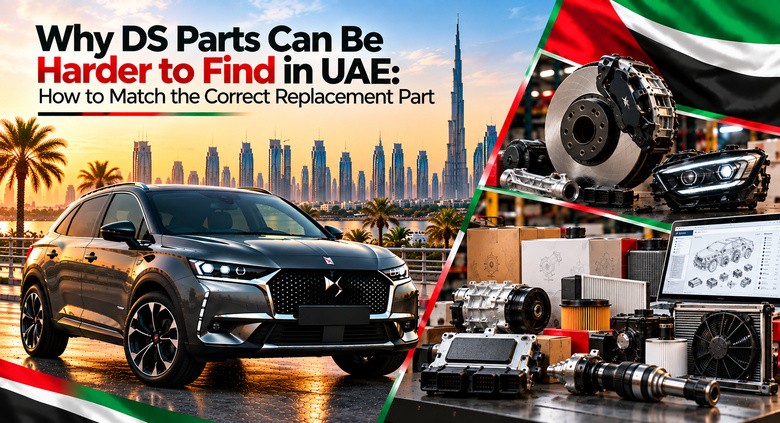
Why DS Parts Can Be Harder to Find in UAE: How to Match the Correct Replacement Part
October 1, 2026
An owner can know exactly what has failed and still struggle to find the right DS spare parts in the UAE. That sounds ridiculous until you try searching for one.
“DS 7 front suspension part” is not really a parts-identification request. It is a starting point. The supplier still needs to know which DS 7, which production period, which engine or drivetrain, which side, which specification and, depending on the component, which exact reference belongs to that vehicle.
That is why a part can appear to be unavailable when it is actually sitting in a supplier catalogue, a European warehouse, a dismantler's stock or inside another listing under a different reference. The problem is often identification rather than existence.
DS's own technical documentation illustrates the point. Its professional documentation includes vehicle-specific diagnosis, repair information and spare-parts catalogues, with VIN-based identification used for technical information.
For UAE owners, the practical lesson is simple: don't start by asking who has a DS part. Start by establishing exactly which DS part your car needs.
Why DS parts can feel harder to find in the UAE
DS Automobiles has a smaller visible parts ecosystem in the UAE than the mass-market brands that dominate local workshops and dismantling yards. That does not mean parts cannot be sourced. It means a supplier is less likely to have every DS component sitting on a shelf waiting for a walk-in customer.
Current UAE parts-market searches show DS 3, DS 4 and DS 7 components available through online catalogues, while used-parts marketplaces and specialist suppliers also operate across the UAE.
The difference matters.
For a common vehicle, a supplier may recognise the part from the model name alone. With a less frequently encountered DS, the request may need to travel through several checks before anyone can quote accurately.
That can make the part seem “rare” even when the underlying component is available.
The real problem is usually fitment, not simply availability
There are two completely different questions:
Can someone source this component?
and
Can someone prove that this component belongs on this exact vehicle?
The first is a stock problem. The second is a technical identification problem.
The second is where DS buyers can get caught out.
A supplier might have a headlight listed for DS 7. Another might have a headlight for DS 7 Crossback. A third may advertise a visually identical lamp without specifying the equipment level or electronic configuration.
Those listings may not represent interchangeable parts.
Before ordering, establish the application.
DS 3 is not one single parts specification
The DS 3 name covers more than one generation and vehicle configuration.
Older DS 3 applications can be quite different from later DS 3 models, while DS 3 Crossback is a separate generation and application. Used-parts catalogues themselves distinguish different DS 3 production periods and model codes.
That distinction becomes critical when searching for:
- headlights
- bumpers
- mirrors
- body trim
- suspension components
- electronic modules
- engine-management components
- interior equipment
- transmission components
Typing “DS 3 brake parts” gives you a category. It does not establish the correct component.
DS 4 creates the same problem in a different form
The DS 4 is another good example of why model names alone are weak identifiers.
Current parts catalogues distinguish the newer DS 4 application from earlier DS 4 and DS 4 Crossback models. One UAE-facing catalogue, for example, identifies the DS 4 2 application and provides year filtering rather than treating every DS 4 as one vehicle.
That is how a buyer should think about the car too.
“DS 4” should immediately trigger another question:
Which DS 4?
The answer may change the component, mounting arrangement, electronics, bodywork or engine-related application.
DS 7 is especially important to identify by generation
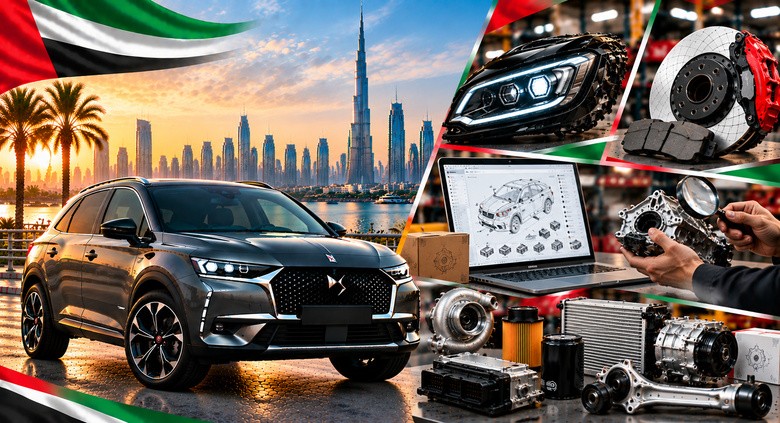
The DS 7 Crossback appeared from 2017, and later DS 7 applications are not automatically interchangeable simply because the badge says DS 7.
Aftermarket component manufacturers also distinguish DS 7 Crossback 2017–2022 from later DS 7 applications.
That means a supplier request such as “I need a DS 7 engine cover” is incomplete.
A useful request would identify:
DS 7 / production year / engine / drivetrain where relevant / VIN / existing part reference / photograph.
That gives the supplier something they can actually verify.
Your VIN is more useful than a photograph
A photograph can help enormously, particularly for body parts, brackets, lamps and visible mechanical components.
But a photograph is not proof of compatibility.
A DS parts catalogue can be searched using vehicle identification, and Stellantis technical documentation explicitly uses VIN-based identification for vehicle-specific information.
That is why the VIN should be supplied early when the component is expensive, electronic, generation-sensitive or difficult to identify.
For a major purchase, give the supplier:
- VIN
- model
- production year
- engine information
- gearbox information where relevant
- existing part number
- photograph of the old component
- photograph of its connector or mounting points if appropriate
The more expensive the mistake, the more useful this information becomes.
A VIN does not magically solve everything
There is a temptation to treat the VIN as an all-powerful answer.
It isn't.
VIN identification narrows the vehicle specification. The supplier still needs to identify the correct component and, in some cases, establish whether the existing part has been superseded, replaced by another reference or supplied as part of a larger assembly.
DS technical documentation distinguishes replacement-part information, diagnosis, repair methods and other vehicle-specific documentation rather than treating parts identification as a simple photograph-matching exercise.
So use the VIN as the foundation, not as a substitute for proper verification.
The old part number can be the fastest route to the answer
If the damaged component is still available, photograph the identification label or stamped reference before throwing it away.
This is particularly useful for:
- ECUs
- sensors
- electronic modules
- lighting units
- compressors
- pumps
- suspension components
- transmission components
- control units
Official technical documentation for the Stellantis service environment allows parts information to be searched using a known part number, while also warning that a reference may not be fitted to the vehicle initially selected.
That last point is important.
Finding a number online does not automatically mean you have found the right application.
Part numbers can change without the part becoming “wrong”
A replacement reference may supersede an older reference.
That can make online searching confusing. One supplier has one number. Another has a different number. Both insist they have the correct component.
Sometimes both can be right.
Parts catalogues can identify replacement or superseded references, and technical documentation distinguishes replacement-part relationships within its catalogue structure.
Ask the supplier a very specific question:
“Is this the current replacement for the number on my vehicle, and can you confirm it against my VIN?”
That is much more useful than asking whether the part is “original”.
Don't confuse a model match with an application match
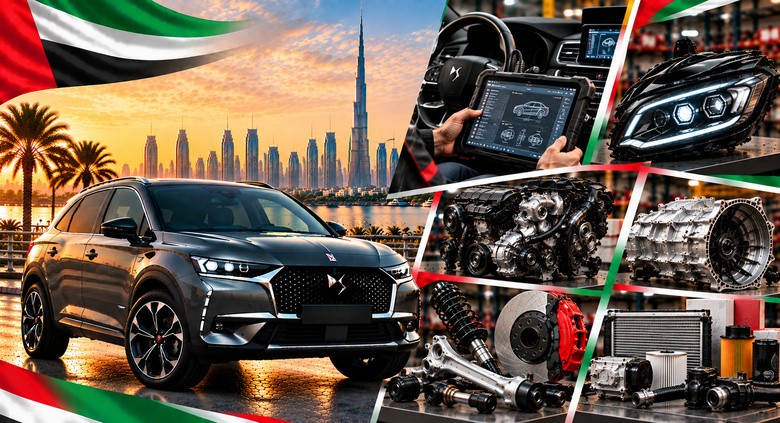
This is one of the easiest mistakes to make when buying online.
A listing may say:
DS 7 — radiator
That sounds convincing.
But the correct radiator can depend on engine, cooling configuration, transmission, hybrid system and production period.
The same principle applies to:
- alternators
- starters
- radiators
- intercoolers
- air-conditioning compressors
- cooling fans
- exhaust components
- engine sensors
- transmission components
A model name gets you into the catalogue. The technical specification gets you to the part.
Engine size alone is not enough
“1.6 petrol” is useful information. It is not always enough.
A DS 7 with a 1.6-litre petrol engine can have additional application differences depending on production period, powertrain configuration and hybrid status.
Current parts listings demonstrate how specific these applications can become. One DS 7 Crossback E-TENSE listing, for example, identifies the model, production start, hybrid powertrain, 1.6-litre engine and engine code before presenting the compatible sensor.
This is why a request like “DS 7 1.6 sensor” can still leave too much room for error.
Engine code plus VIN is much stronger.
Hybrid DS models need another layer of caution
Hybrid versions introduce components that cannot simply be treated as petrol-model equivalents.
Depending on the component, the relevant identification may involve:
- hybrid powertrain
- engine version
- electrical architecture
- cooling arrangement
- control module
- high-voltage system
- calibration or programming requirements
The existence of a petrol DS 7 component does not prove that the equivalent-looking hybrid component is interchangeable.
For expensive electrical or hybrid-system components, the supplier should verify the exact application before you commit to the purchase.
Imported DS cars make the UAE search harder
The UAE is not a single-specification automotive market.
Vehicles arrive through different channels, and imported European vehicles can have equipment or component differences compared with vehicles originally supplied through a particular regional distribution network.
That does not mean an imported DS cannot be repaired properly. It means the buyer should not assume that a UAE search result represents every specification.
For imported cars, give the supplier the VIN and, where useful, the original market or country of specification.
If the car has unusual equipment, mention that too.
A five-minute clarification can save days of chasing the wrong component.
DS electrical parts are where “looks identical” becomes dangerous
A mechanical bracket may tolerate a small misunderstanding.
An electronic module often won't.
A used ECU, body-control module, ABS unit, lighting module, camera, radar component or other electronic assembly may need more than physical fitment.
Potential requirements include:
- correct hardware
- correct software
- correct vehicle application
- coding
- programming
- configuration
- calibration
- immobiliser-related procedures
- post-installation diagnosis
So when someone says, “It is the same connector, so it will work,” that is not enough evidence.
Physical compatibility and electronic compatibility are separate questions.
Headlights deserve their own verification process
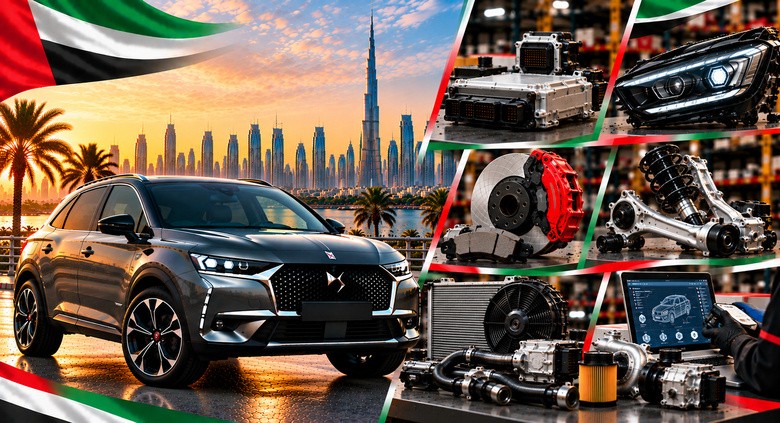
DS lighting can be particularly awkward because a modern lamp is not merely a piece of plastic with bulbs inside.
Depending on the vehicle and specification, a headlight can involve electronics, control functions, sensors, communication and calibration.
A used headlight should therefore be identified by:
vehicle + generation + side + lighting specification + part reference + connector configuration.
Ask for photographs of the actual unit rather than relying on a generic catalogue photograph.
If the supplier cannot provide the reference or clear identification, slow down.
Body parts are easier to compare — but not always easy to match
A bumper, grille, bonnet or mirror can look close enough in a photograph to fool somebody who is buying in a hurry.
That is precisely why visual comparison should be treated as one stage of verification, not the whole process.
Check:
- generation
- facelift status
- front/rear application
- left/right
- parking-sensor provisions
- camera provisions
- headlamp washer openings
- trim mounting
- radar openings
- brackets
- wiring
- colour or finish
- sensor locations
For a body component, the wrong version can still physically arrive, look plausible and only reveal the problem during installation.
That is an expensive way to discover a catalogue mistake.
Mechanical parts can still hide specification differences
Mechanical components are sometimes treated as the easy category.
They aren't always.
A suspension arm, brake component, driveshaft, hub, mount or cooling component may differ by engine, axle, brake package, drivetrain or production period.
Current UAE-facing DS catalogues show that suppliers can filter DS components by model, year and specific application rather than simply by badge.
That is a useful indication of how the buyer should search.
More detail is not bureaucracy. It is fitment protection.
Gearbox parts need especially careful identification
A gearbox request should never stop at:
“DS 7 automatic gearbox.”
You may need the exact gearbox family or code, engine application, drivetrain and production period.
For a complete transmission, the consequences of getting this wrong are obvious: shipping, workshop labour, removal, refitting, fluids, possible programming or adaptation work and a vehicle sitting on a ramp while everybody tries to work out what went wrong.
For internal gearbox components, the identification problem can be even more complicated.
Ask the workshop to identify the transmission before asking a supplier for the part.
Used DS parts can be the practical answer
The UAE has an established used-parts ecosystem, particularly around major automotive industrial areas. Current marketplace sources show used engines, transmissions, body panels, headlights and other components being traded through UAE suppliers and Sharjah-based marketplaces.
That creates an opportunity for DS owners.
A discontinued or awkward-to-source genuine component may be more practical as a used original part than as a new aftermarket replacement — but that depends entirely on the component and its condition.
“Used” describes history, not quality.
Ask where it came from, what vehicle it came from, what mileage is known, whether it was tested, and what happens if it fails after installation.
Donor history matters more for some DS components than others
A used door shell and a used ECU do not carry the same buying risk.
For a body panel, condition and structural integrity may dominate.
For an electronic module, donor specification and compatibility can matter more.
For an engine or gearbox, donor mileage, operating history, testing and warranty become much more significant.
A supplier who can provide the donor vehicle information gives you something useful to evaluate.
A supplier who simply says “tested, good condition” gives you much less.
Why a cheap DS part can become an expensive part
The advertised price is only one line of the repair.
Imagine buying a used electronic module because it is AED 500 cheaper than another option. If it then requires additional programming, fails compatibility checks or has to be removed and returned, the saving can disappear very quickly.
A major replacement calculation should consider:
| Cost element | What to check |
| Part | Exact application and condition |
| Delivery | UAE delivery or special-order freight |
| Labour | Removal and installation |
| Diagnostics | Fault confirmation before and after installation |
| Programming | Required for electronic components? |
| Calibration | Required for sensors/cameras/ADAS? |
| Fluids | Cooling, transmission, A/C or other systems |
| Supporting parts | Seals, clips, mounts, gaskets or fasteners |
| Return | Is the part returnable after installation? |
| Warranty | Written coverage and exclusions |
| VAT | Included or added? |
| Downtime | How long will the vehicle be unavailable? |
This is why comparing part prices without comparing the installation conditions can be misleading.
The UAE market has more than one route to a DS part
A buyer can potentially search through:
Authorised channels
Useful where authenticity, technical support, recalls or exact manufacturer identification matter.
Independent parts suppliers
Potentially useful for new aftermarket, equivalent-quality or imported components.
Used-parts specialists
Useful for discontinued, expensive or hard-to-find original components.
Online UAE marketplaces
Useful for widening the search and finding suppliers outside the buyer's immediate area.
International suppliers
Useful when the UAE stock position is weak, although freight, returns, duties where applicable and delivery time must be considered.
Current UAE marketplaces demonstrate that suppliers increasingly allow searches by vehicle, part number or part category rather than relying only on generic model-name searches.
The sensible route depends on the component.
What to send a UAE supplier before asking for a quote
A good parts request is almost a mini technical specification.
Send:
Vehicle: DS 3 / DS 4 / DS 7 / other
Year: exact production or registration year where known
VIN: complete VIN
Engine: engine size and code if available
Gearbox: type/code where relevant
Part required: exact component
Side/location: left/right, front/rear where relevant
Existing reference: photograph and written number
Condition wanted: new genuine / aftermarket / used / reconditioned
Photos: old part, label, connector, mounting area
Special information: hybrid, imported specification, unusual equipment
Then ask the supplier to confirm fitment before payment.
That single habit removes a surprising amount of ambiguity.
What the workshop should check before you order
Don't make the supplier diagnose the car from a parts request.
The workshop should establish what has actually failed.
A failed sensor does not automatically mean the sensor itself is defective. A cooling warning does not automatically prove the radiator is bad. An electrical fault does not automatically mean the visible module is the failed component.
Depending on the problem, the workshop may need:
- diagnostic trouble-code scanning
- live-data checks
- wiring and connector inspection
- voltage or resistance testing
- pressure testing
- physical inspection
- road testing
- component activation tests
- cooling-system checks
- charging-system checks
- gearbox diagnosis
- calibration checks
The point is simple: replace the failed component, not the component that happens to be easiest to name.
Genuine, OEM, aftermarket and used are not interchangeable terms
A supplier may use “OEM”, “original”, “genuine” and “quality aftermarket” in ways that sound similar but mean different things.
Ask what you are actually buying.
Genuine manufacturer part: supplied as a genuine brand component.
Aftermarket: produced by a non-brand manufacturer, with quality and application depending on the manufacturer and part.
Used genuine: an original component removed from another vehicle.
Reconditioned: a previously used component that has been restored or rebuilt, with the quality depending heavily on the process and parts used.
Stellantis Middle East has publicly warned consumers about counterfeit components and advised customers to use authorised dealers and service centres for genuine parts.
That does not mean every aftermarket component is unsuitable. It means buyers should know exactly which category they are being quoted.
Before You Click Buy: the DS parts checklist
For a difficult-to-source DS component, don't pay until you can answer these questions:
- Have I supplied the VIN?
- Have I confirmed the exact DS model and generation?
- Do I know the production year?
- Is the engine identified correctly?
- Does the gearbox matter for this component?
- Have I checked the existing part number?
- Has the supplier confirmed the reference against the vehicle?
- Is it left/right or front/rear specific?
- Does the connector match?
- Is this a hybrid-specific component?
- Is programming or coding required?
- Is calibration required?
- Is the part new, used or reconditioned?
- If used, what is known about the donor vehicle?
- Has the component actually been tested?
- What is the warranty?
- What is the return policy?
- Does the price include VAT?
- Does the quote include delivery?
- Does the workshop need additional seals, fluids, clips or supporting parts?
If several answers are still “I don't know”, you are not ready to buy.
A simple DS parts decision matrix
| Situation | What to prioritise | What to verify |
| Routine service component | Correct vehicle application | Model/year/engine |
| Body panel | Exact generation and physical specification | Mountings, sensors, trim |
| Headlight | Exact lighting specification | Reference, connector, electronics |
| Suspension component | Vehicle and axle application | Engine, brakes, drivetrain where relevant |
| ECU/module | Vehicle-specific electronic compatibility | VIN, hardware/software, coding |
| Gearbox | Exact transmission application | Gearbox code, engine, drivetrain |
| Used engine | Donor and technical condition | Engine code, mileage, testing, warranty |
| Used gearbox | Donor specification and condition | Gearbox code, mileage, warranty |
| Rare discontinued part | Multiple sourcing channels | Superseded reference, used alternatives |
| Hybrid component | Exact powertrain identification | VIN, hybrid application, calibration |
There is no universal “best” source. The correct route changes with the part.
Where PartFinder UAE fits into the search
For a difficult DS replacement, the useful starting point is not simply searching the model name and choosing the first result.
The better approach is to search with the vehicle identity and component identity together at PartFinder UAE: VIN, generation, engine or gearbox information, existing reference and the exact part required.
That gives a parts marketplace or supplier enough information to work with rather than forcing them to guess what “DS 7 suspension part” means.
For owners dealing with older, imported or less commonly stocked DS vehicles, this approach also makes it easier to compare new, aftermarket and used possibilities without confusing different applications.
Practical rule: identify first, source second
The frustrating thing about difficult DS parts is that the search can make the car look rarer than it really is.
A supplier says “not available”. Another says “we can order it”. A dismantler sends a photograph of something that looks identical. An online catalogue shows three different references. Suddenly a straightforward repair has become a detective story.
Don't solve that by guessing.
Start with the VIN. Add the model generation, engine or gearbox information where relevant. Photograph the existing component and its reference. Ask whether the number has been superseded. Confirm the exact application before paying. If the part is used, investigate its donor history and warranty. If it is electronic, establish whether coding or calibration is involved.
That is the difference between finding a DS part and finding the DS part your car actually needs.
UAE Update Reference: September 2026. Current UAE-facing catalogue and marketplace evidence was checked for DS parts availability and search methods; individual listings and stock positions can change, so availability should be reconfirmed at the time of purchase.
FAQs
Categories
- Audi
- BMW
- Car Accessories
- Car Tips
- Ford
- Land Rover
- Mazda
- Range Rover
- Top 10
- UAE Car Parts
- Used Car Parts
- Toyota
- Replacement Engines
- Nissan
- Hyundai
- Mitsubishi
- Volkswagen
- Honda
- Kia
- Chevrolet
- Dodge
- Jeep
- Subaru
- Renault
- Lexus
- Mercedes
- Suzuki
- Hummer
- Porsche
- Infiniti
- Peugeot
- GMC
- Mini
- Volvo
- Replacement Gearboxes
- MG
- Jaguar
- Skoda
- Cadillac
- Daihatsu
- Fiat
- German Car Parts
- Japanese Car Parts
- Aftermarket Car Parts
- Genuine Car Parts
- New Car Parts
- Reconditioned Car Parts
- European Car Parts
- American Car Parts
- Korean Car Parts
- British Car Parts
- Chinese Car Parts
- Sports/Exotic Car Parts
- Luxury Car Parts
- Performance Car Parts
- SUV/4x4 Spare Parts
- Truck Spare Parts
- EV Car Parts
- Hybrid Car Parts
- Auto Spare Parts in UAE
- Tesla
- Isuzu
- Ram
- Ferrari
- Bentley
- Lamborghini
- Genesis
- Maserati
- Lincoln
- Chrysler
- Opel
- Citroen
- SsangYong
- Seat
- McLaren
- Aston Martin
- Rolls Royce
- Maybach
- Alfa Romeo
- Bugatti
- Scion
- Abu Dhabi Car Parts
- Ajman Car Parts
- Al Khan Car Parts
- Al Sajaa Car Parts
- Deira Car Parts
- Dubai Car Parts
- Fujairah Car Parts
- Industrial Area 6 Car Parts
- Mussafah Car Parts
- Ras Al Khaimah Car Parts
- Sharjah Car Parts
- Umm Al Quwain Car Parts
- Acura
- BYD
- Chery
- Dacia
- DS
- Geely Emgrand